By Renju Jose
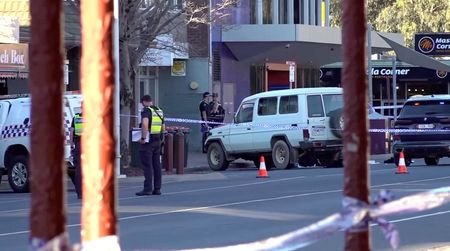
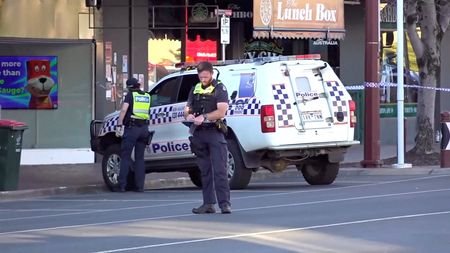
SYDNEY/MELBOURNE, Oct 20 (Reuters) - Doctors have amputated the leg of an Australian lawmaker after a man rammed her with his car and then reversed to hit her a second time, local media and officials said on Tuesday, in an incident being investigated by anti-terrorism police.
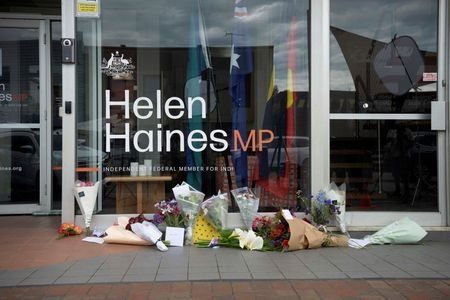
Helen Haines, an independent, underwent surgery overnight and remained in critical condition after Monday's attack in the small rural town of Wangaratta, north of Melbourne.
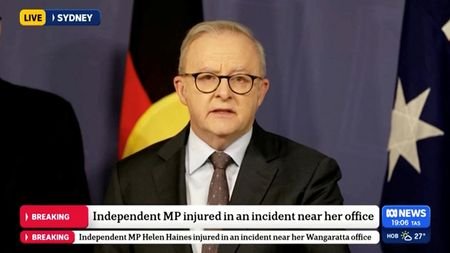
The motive for the attack has yet to be revealed, but Australia’s prime minister has linked it to a climate of ugly, polarised political debate in the country.
"It's clear that there was a deliberate act here. This wasn't an accident, someone just skidding off the road," Albanese told ABC News.
Early investigations suggested the car hit Haines as she was loading or unloading things from the trunk of her car, he said.
Australian media, citing unidentified sources, reported Haines had lost one leg as a result of her injuries and that doctors were working to save the other leg.
A 43-year-old man was arrested following the attack, with counter-terrorism authorities among the multiple agencies involved in the investigation.
Police are considering potential charges, including causing harm to a public official - an offence that carries a maximum penalty of 10 years' imprisonment - as they work to establish a motive for the attack.
"At this stage it appears this is an isolated incident," Australian Federal Police Commissioner Krissy Barrett said.
STRUCK TWO TIMES
Home Affairs Minister Tony Burke told ABC Radio that witnesses said the alleged attacker reversed the vehicle and struck Haines a second time before a bystander intervened.
Ricky Jefferies ran from his barber shop, restraining the attacker and removing a knife from him after initially believing the incident was a car accident, Australian media reported.
"I heard a loud bang with no brakes. It was crazy, I just ran out to the front to see what's happening," Jefferies told reporters outside his shop.
"I didn't realise the seriousness of the situation initially, and once it became relevant I just did what I could and what others were already trying to do."
'TURN TEMPERATURE DOWN'
Violent attacks on politicians are extremely rare in Australia, where federal lawmakers, state leaders and even prime ministers are regularly seen in supermarkets and coffee shops, attending community events and chatting with voters with minimal security.
Haines worked in nursing and midwifery and as an academic before being elected to parliament as an independent in 2019 in the seat of Indi. She retained the seat in 2022 and 2025.
Outside the hospital where Haines is being treated, Melbourne resident Shawn Hill said the attack showed that "the political climate is becoming more and more polarising today."
"No one deserves to be put at risk of anything, especially someone who is serving the people and trying to do what is best for the Australian community," Hill told Reuters.
Albanese urged Australians to engage more respectfully with one another, expressing concern about growing division in the country. He also noted a "significant increase" in threats against politicians in recent years.
"We all have a responsibility to turn the temperature down," Albanese said. "I really don't want to see the character of Australia change."
(Reporting by Renju Jose in Sydney, Melanie Burton and Cordelia Hsu in Melbourne; Editing by Bill Berkrot and Lincoln Feast.)