By Luciana Magalhaes and Brendan O'Boyle
SAO PAULO/BRASILIA, Oct 9 (Reuters) - Two starkly different visions for US-Brazil relations hang in the balance in Brazil’s presidential runoff, but the strategies of both Senator Flavio Bolsonaro and incumbent President Luiz Inacio Lula da Silva come with their own risks, experts said.
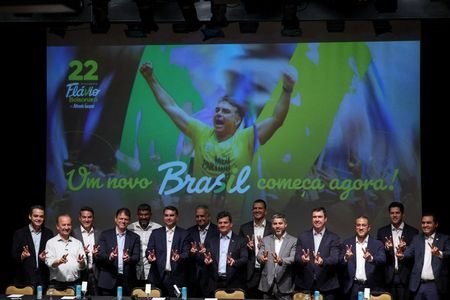
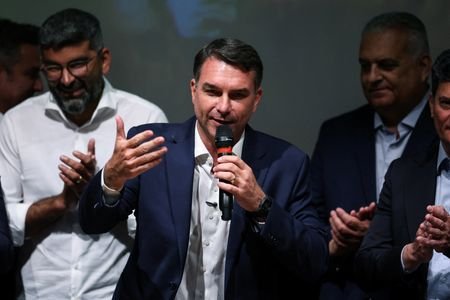
Bolsonaro heads toward the October 25 runoff with momentum after he secured 47% of the first-round vote to Lula’s 45%, following a campaign where both candidates’ relationships with Washington drew scrutiny.
The stakes are high. Brazil’s next president will have to navigate tensions between its first- and second-largest trading partners — China and the US — while shaping strategies on mineral development, industrialization, and regional cooperation.
Brazil and the US established a working group last month to drive negotiations over tariffs and a broader bilateral trade framework, with US access to Brazil's critical minerals and rare earths emerging as a key point of contention as Washington looks to reduce its dependence on China for those minerals.
If the challenger wins, "the Americans may prove reluctant to yield anything to Lula, preferring to wait and negotiate with Bolsonaro," said Rubens Barbosa, a former Brazilian ambassador to the US.
Lula's strategy toward the US has focused on defending Brazil's sovereignty after US President Donald Trump heaped pressure on Brazil to drop charges against Bolsonaro's father, former President Jair Bolsonaro, who is now serving a 27-year sentence for trying to plot a coup.
A nationalist tone has framed Lula's engagement with Washington, while he prioritizes multilateralism and closer ties with the Global South, including the BRICS bloc, which includes Brazil, Russia, India, China and South Africa, among other countries.
Though the approach helped his popularity at home, the leftist has enjoyed checkered progress in negotiations with Washington, experts told Reuters.
If Lula manages to win reelection, an incoming Congress dominated by right-wing parties could push a "weaker Lula" to change tack, said Monica de Bolle, a senior fellow at the Peterson Institute for International Economics in Washington.
"I believe there would be a lot of pressure on Lula to give in to some US demands regarding natural resources, as well as other issues," said de Bolle.
BOLSONARO’S GAMBLES
While "Lula has a well-established foreign policy," said Rubens Ricupero, a former Brazilian diplomat who served in the US and Europe, Bolsonaro's is a "blank slate."
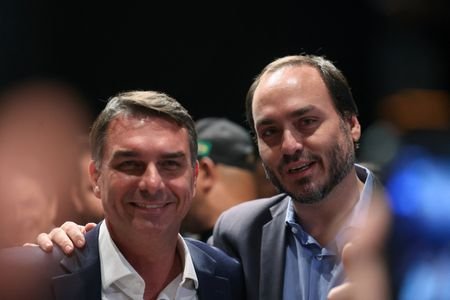
The senator has a friendly relationship with the Trump administration, aided by his brother Eduardo Bolsonaro, a former Brazilian congressman who has resided in the US since early last year and was convicted by Brazil's Supreme Court for inviting US intervention in their father's legal proceedings in 2025.
While neither brother has confirmed the rumors, a person close to the campaign told Reuters that the two have been discussing potential international roles for the younger sibling if the senator becomes Brazil's next president.
If Bolsonaro is elected president "there would be a foreign policy much more aligned with the United States than Brazil traditionally has had,” said de Bolle.
The family's close ties to the Trump administration could secure a more favorable negotiating environment with Washington, though Bolsonaro risks making concessions on key issues like strategic minerals, experts said.
"The path seems clear for good agreements," but Bolsonaro would face questions from supporters about Brazil's autonomy from the US and "more pressure to maintain an independent narrative," said Jean Castro, president of the Brazilian Association of Institutional and Governmental Relations.
Since launching his campaign, Bolsonaro has courted Trump, as well as other right-wing allies abroad like Argentina’s Javier Milei and Colombia’s Abelardo de la Espriella.
Bolsonaro and Trump have already aligned on strategy for combating organized crime. Visiting Washington in May, he urged Trump to designate major Brazilian criminal factions as Foreign Terrorist Organizations, a proposal Washington accepted but which Lula flatly rejected as intervention. Lula instead advocated for a national approach to address security with international cooperation.
Public opinion polls have shown Lula’s popularity got a bump from his frequent disagreements with Trump on trade and security, while other surveys showed Brazilians held Bolsonaro more responsible for tariffs imposed by Trump in July.
"He cannot adopt a stance that could be mistaken for subservience," said Castro.
(Reporting by Luciana Magalhaes; Editing by Brendan O'Boyle, Oliver Griffin and Aurora Ellis)