HONG KONG/PANAMA CITY, Feb 24 (Reuters) - Hong Kong conglomerate CK Hutchison said on Tuesday Panama authorities had threatened its employees with criminal prosecution if they refused to leave two strategic canal ports at the centre of a legal battle that has embroiled Beijing and Washington.
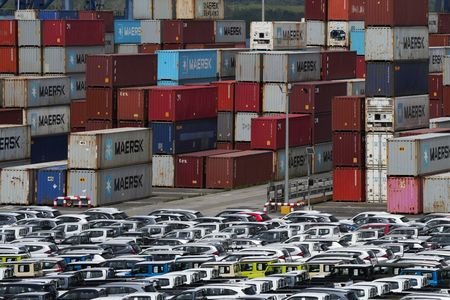
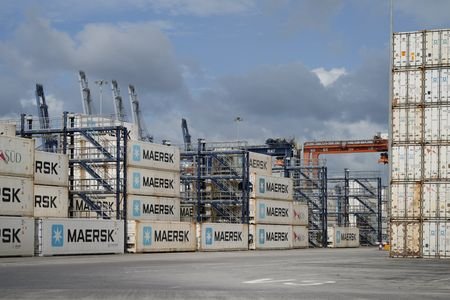
CK Hutchison said Panama's decision to cancel key port contracts and grant temporary licences to Maersk and Mediterranean Shipping (MSC) was 'unlawful' as it considers national and international legal action against Panama and third parties.
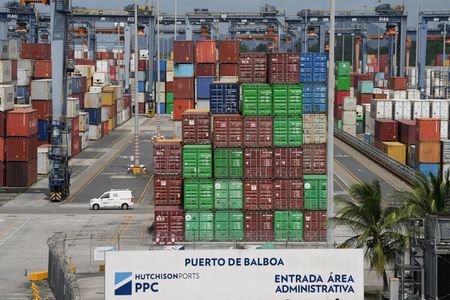
Panama on Monday published in its official gazette a Supreme Court ruling from January canceling key port contracts held by a subsidiary of CK Hutchison known as Panama Ports Company (PPC).
CK HUTCHINSON'S CONCESSIONS ANNULLED
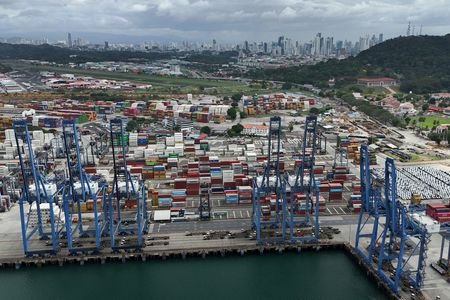
The publication finalizes the legal annulment of concessions for the Balboa and Cristobal terminals near the Panama Canal, which PPC had operated for nearly three decades.
U.S. President Donald Trump has pushed to curb Chinese influence over the Panama Canal, which carries about 5% of global maritime trade.
CK Hutchison said Panamanian authorities had entered the two ports on Monday to remove PPC employees, who had been threatened with criminal prosecution if they defied orders. CK Hutchison said PPC staff were told not to contact the company.
"CKH considers the ruling, the executive decree, the purported termination of PPC’s concession and the takeover of the terminals to be unlawful," it said in a statement to the Hong Kong Stock Exchange.
"The actions by the Panama State also raise serious risks to the operations, health and safety at the Balboa and Cristobal terminals."
Hong Kong's government expressed strong dissatisfaction and opposition to Panama's takeover in a separate statement.
Its shares were down 1.9% in Hong Kong on Tuesday, mirroring the decline in the Hang Seng Index.
The Panama Canal Authority said operations, and communications with foreign authorities, were continuing normally.
The Hong Kong conglomerate said on February 12 it had notified Panama that it would pursue an investment-protection treaty dispute after Maersk signalled its interest in running the ports, and that this could result in legal recourse against APM Terminals Panama, a Maersk subsidiary.
The Panama Maritime Authority (AMP) has taken possession of both ports by decree to ensure uninterrupted operations, said Alberto Aleman Zubieta, head of the technical team overseeing the transition, after the ruling became final upon publication.
MAERSK AND MSC UNITS GET TEMPORARY CONCESSIONS
The government said it had approved two temporary concession contracts with AMP, lasting up to 18 months, for the operation of the Balboa and Cristobal terminals. APM Terminals Panama will operate the Balboa port while TIL Panama, part of MSC, will run operations at Cristobal.
APM Terminals confirmed on Tuesday that it has begun temporary operations at Balboa.
The move could disrupt CK Hutchison's proposed $23 billion sale of dozens of ports worldwide, including the Panamanian terminals, to a consortium led by BlackRock and MSC.
Panamanian President Jose Raul Mulino said the temporary contracts had been issued as a "legitimate tool that respects asset ownership".
"Let me be clear, this does not imply an expropriation of those assets, but rather their use to ensure the operation of the ports until their real value is determined for the corresponding actions. I repeat, this is not an expropriation,” Mulino said in a televised address on Monday afternoon.
Mulino said the arrangement would remain in place while the state develops a new, "competitive" framework for awarding the concession in future, "with the humility not to repeat the mistakes of the past".
He said neither port operations nor employment would be affected during the process.
The Panama president’s office did not immediately respond to a request outside office hours for comment on CK Hutchison's statement.
Maersk and MSC did not immediately have a comment on the matter.
(Reporting by Elida Moreno and Clare Jim; Additional reporting by Aida Pelaez-Fernandez; Writing by Natalia Siniawski and Scott Murdoch; Editing by Kevin Liffey)