By Kate Abnett
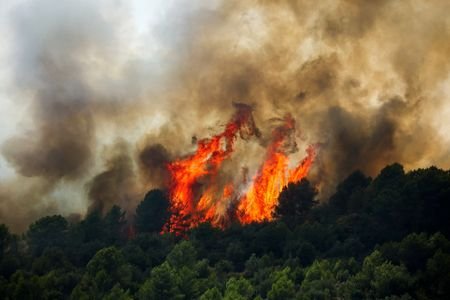
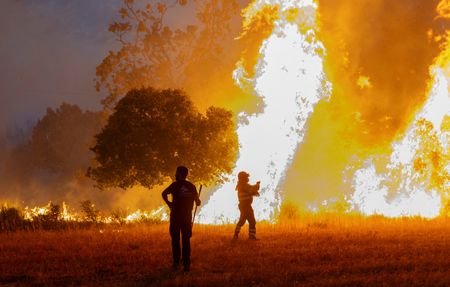
BRUSSELS, July 31 (Reuters) - Human-caused climate change made the extreme weather fuelling wildfires in southwestern France twice as likely, and made the conditions driving blazes in central Spain 20 times more likely, scientists said on Friday.
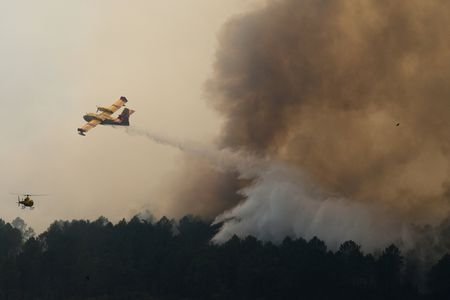
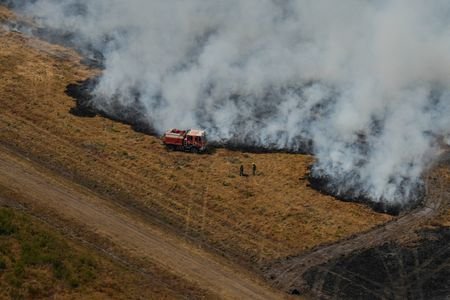
Ongoing wildfires in Spain and France have forced hundreds of thousands of people to evacuate and scorched huge swathes of land.
The World Weather Attribution group of scientists used historical weather observations to assess how "fire-prone" hot, dry and windy conditions, which indicate how difficult it is to suppress a fire once it starts, have changed over time.
Greenhouse gas emissions, mostly from burning coal, oil and gas, have increased the planet's average temperature to around 1.4 Celsius above pre-industrial times, according to the World Meteorological Organization.
In today's climate, extreme fires of this intensity are likely to occur once every 20 years in southwestern France, and once every six years in central Spain, the analysis said.
“We’ve seen repeatedly how climate change increases hot, dry, flammable conditions that are extremely conducive to wildfires," said Clair Barnes, a research associate in extreme weather at Imperial College London, who co-authored the WWA analysis.
"What’s unique about this case is that it’s still early in the season — and with another heatwave looming, these findings are extremely scary," Barnes added.
An increasingly important driver of Europe's wildfire risk is the pattern of a wet winter — which supports vegetation growth — followed by a dry spring and summer, which dries out this vegetation, leaving forests stocked with large volumes of highly flammable fuel for fires.
Reducing wildfire risk therefore requires not only an emergency firefighting response, but more work to prevent fires "through risk-sensitive landscape planning and management," the WWA analysis said. That could include clearing forests of dried-out vegetation ahead of the wildfire season.
Spain had its wettest January for 25 years this year, followed by a summer that the country's meteorological agency has said is the hottest on record. France, too, is currently suffering its fourth heatwave of the year.
Recent scientific studies have confirmed human-caused climate change has made Europe's hot and dry conditions in recent months more likely.
(Reporting by Kate Abnett; Editing by Aurora Ellis)