By Nelson Bocanegra, Luis Jaime Acosta and Alexander Villegas
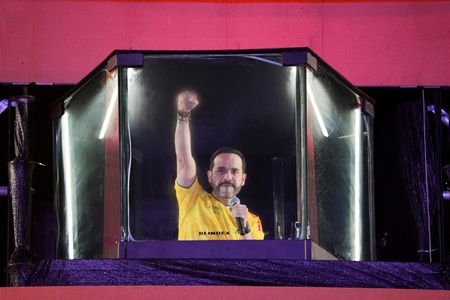
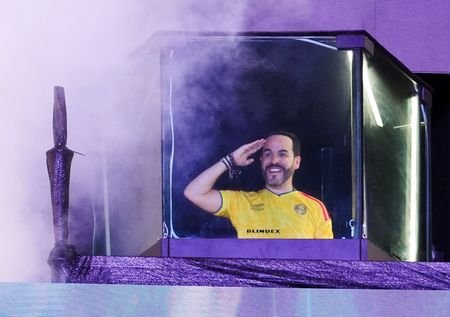
BOGOTA, June 21 (Reuters) - Colombian right-wing candidate Abelardo De La Espriella has clinched a narrow victory in Sunday's presidential election, according to an initial ballot count, as voters bet on his Donald Trump-endorsed promise of a crackdown on crime and a stronger economy.
De La Espriella had 49.66% of the vote while his rival, Senator Ivan Cepeda, trailed by some 250,000 votes at 48.70%, according to the national registrar's tally of just under 100% of ballots in the runoff election.
Cepeda, 63, had pledged to maintain the policies of President Gustavo Petro, a former rebel and the country's first leftist president, including state pension payments for the poor, union-backed labor reforms, a moratorium on new oil projects, and continued peace talks with armed groups.
De La Espriella has blamed Petro for the country's economic and security troubles, including an expansion of armed groups, and vowed to end talks with rebels and criminal groups while boosting the oil and gas sector, lowering taxes and reducing the size of the state by up to 40%. He has said, however, that he will preserve Petro's 23% increase in the minimum wage, along with other popular social measures.
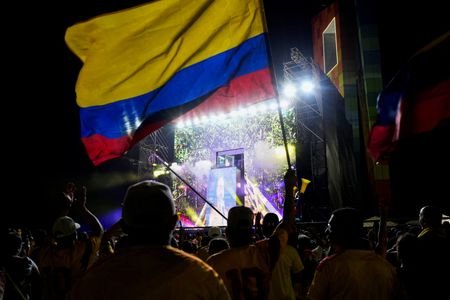
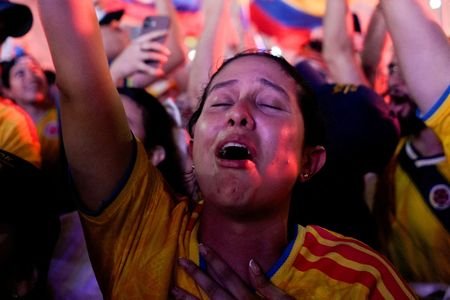
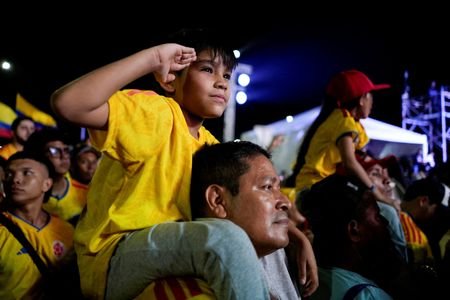
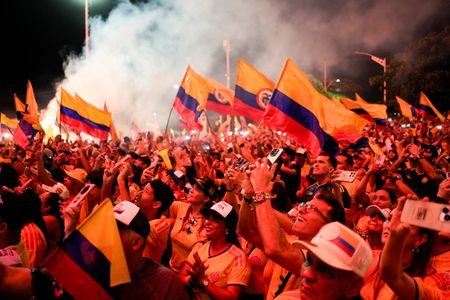
"I will govern for all Colombians, for those who voted for me and for those who chose the other candidate," De La Espriella told a crowd of supporters gathered in the coastal city of Barranquilla, promising to respect all citizens' rights.
He earlier celebrated a congratulatory call from U.S. President Donald Trump, who previously endorsed him. De La Espriella is also a citizen of the U.S. and Italy and has homes in multiple countries.
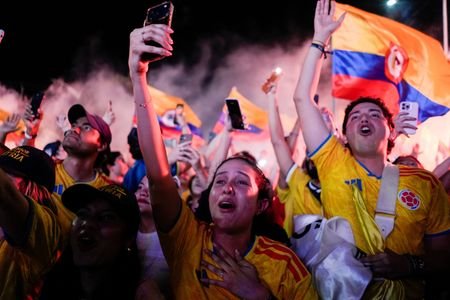
“It is a victory for Colombia — a change after four lost years with no clear direction,” said Viviana Olivos, a 46-year-old mechanical engineer who attended the celebration.
CONGRESS AND CONFLICT
The closeness of the race, with less than one percentage point separating the two candidates, will likely force De La Espriella to water down some of his proposals in order to get support from a divided Congress. Cepeda's Historic Pact party has more seats than any other party in both the Senate and the lower house, although no party has a majority.
De La Espriella, a lawyer with no prior political experience, will also have to grapple with high public debt. He has presented himself as a businessman, but an investigation by local outlet La Silla Vacia found that many of his businesses have been dissolved, are in debt and lost money overall in 2024, with his law firm being his most profitable endeavor.
Major business guilds, including the Colombo-American Chamber of Commerce, the mining association and the banking association, published statements congratulating De La Espriella on his victory. In upper- and middle-class neighborhoods in Bogota and Medellin, flag-waving supporters cheered, honked car horns and set off fireworks.
More than 26.3 million Colombians cast ballots of the 41.4 million eligible to vote. Some 427,000 voters turned in blank ballots, usually seen as a protest vote, the registrar figures showed.
Cepeda told his supporters at an event in Bogota that he would await a final, ballot-by-ballot check of the initial count, saying his campaign is challenging results from some 33,000 ballot boxes, out of 122,000 in total. His supporters are a significant political force, he added, and must have a seat at the table.
"We are open to dialogue; we are willing to reach agreements as long as they are respectful, genuine, and reflected in political actions that benefit the nation and preserve the historical progress we have already achieved,” Cepeda said.
A final verified count, overseen by notaries and judges, is required by Colombian law and was nearly finished late on Sunday night. It was not clear yet whether the final results matched the initial count.
Security was a key concern for many De La Espriella voters, especially in regions where extortion and drug trafficking have risen recently.
While many Cepeda supporters feared his bellicose rhetoric about fighting back against armed groups could return the country, where leftist guerrillas and crime gangs founded by former right-wing paramilitaries have fought each other and the state for more than 60 years, to a more active conflict.
"I am a victim, but Colombia has many victims," Cepeda supporter Margarita Restrepo said at his event in Bogota. Around her neck the 63-year-old wore a photo of her daughter Carol Vanessa Restrepo, who disappeared in 2002 during a security operation ordered by former President Alvaro Uribe, Cepeda's longtime bete noir and a De La Espriella supporter. "Rancor has won again. Unfortunately we are in a country where differences continue."
REGIONAL SHIFT
Voters in Chile, Argentina, Costa Rica, Bolivia and Ecuador have elected right-wing presidents in their most recent elections.
In Peru, where votes from a June 7 contest are still being counted, conservative Keiko Fujimori, daughter of former President Alberto Fujimori, who served 16 years in prison for human rights abuses, appears poised to win the presidency after three failed attempts.
De La Espriella has cast Cepeda, the son of a murdered communist leader, and Petro as allies of criminals, though Petro's government says it has seized more cocaine than any other government. Cepeda has rejected the accusations as lacking evidence.
Cepeda has criticized De La Espriella's work as a lawyer for individuals tied to right-wing paramilitary groups and corruption cases, including Alex Saab, who faces U.S. charges alleging that he laundered money for ousted Venezuelan President Nicolas Maduro. De La Espriella says his professional relationships do not involve any complicity or crime.
Donald Trump has moved to increase the U.S. presence and influence in the region, including by arresting Maduro, conducting deadly strikes in the Caribbean against small boats that he accused of drug trafficking without presenting evidence, and creating the Shield of the Americas, a military alliance of right-wing leaders pledging to fight drug trafficking.
Trump, who has publicly feuded with Petro, was criticized by congressional Democrats for his open endorsement of De La Espriella. Trump said this month the results of Sunday's race are "very important to the future of Colombia and its relationship to the United States."
(Reporting by Nelson Bocanegra, Luis Jaime Acosta, Alexander Villegas, Carlos Vargas and Julia Symmes Cobb; Writing by Julia Symmes Cobb, Editing by Julia Symmes Cobb, Rod Nickel, Edmund Klamann, Aurora Ellis and Kate Mayberry)