By Alvaro Murillo
SAN JOSE, Oct 23 (Reuters) - Costa Rica will deepen cooperation with the US Drug Enforcement Administration to target what the nation's newly re-elected attorney general calls "invisible drug traffickers," including business executives and politicians hiding alleged links to the drug trade behind respectable public profiles.
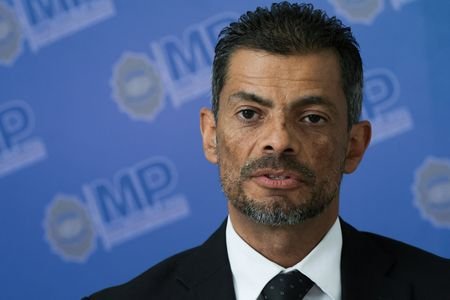
Attorney General Carlo Diaz, who has repeatedly clashed with the government of President Laura Fernandez, was re-elected by the judiciary on Monday to another four-year term. In an interview with Reuters on Thursday, he said investigators would show no leniency if those implicated held senior positions.
"This second phase (of DEA cooperation) focuses on people we have termed 'invisible drug traffickers,'" Diaz said, after an initial phase of joint missions targeted members of criminal organizations.
"These are business people, sometimes professionals or politicians, who are successful or highly visible. But behind that facade lies a direct link with these kinds of activities."
Diaz also hailed Costa Rica's ability to extradite its own nationals to the US as a watershed in the fight against transnational crime, saying 6 people had been sent and another 25 extradition proceedings were underway.
The DEA's office did not immediately respond to a request for comment.
Costa Rica's government has previously collaborated with the DEA to arrest dozens of drug traffickers, who Costa Rican authorities deem responsible for a surge in homicide rates over recent years in the long-peaceful Central American nation.
Officials have said the region serves as a key corridor shifting narcotics from South America to the US.
Fernandez, a conservative ally of President Donald Trump, has aligned Costa Rica closely with Washington on security, joining the US president’s Shield of the Americas initiative against drug trafficking and organized crime.
POLITICAL DIVISIONS
Diaz said DEA officials had directly expressed concern to him about political and institutional divisions in Costa Rica, which he said were hampering the fight against organized crime. He has repeatedly clashed with Fernandez and her predecessor Rodrigo Chaves, accusing the government of seeking to weaken the judiciary.
Despite backing deeper cooperation with the DEA, Diaz rejected Fernandez's suggestion last month that Costa Rica could benefit from US forces operating on its territory.
"If we focus on providing the resources the security forces need, they could take control of the territory without needing to bring in armed forces from other countries," he said.
Fernandez’s government has built a 5,100-capacity prison modeled on El Salvador’s security crackdown, an approach Diaz has questioned amid his broader clashes with the government. He said the prison could ease overcrowding but would not itself curb organized crime, stressing that Costa Rica’s criminal landscape differs sharply from El Salvador’s.
The homicide rate in Costa Rica, long considered one of the region's safest countries, peaked at 17.2 per 100,000 people in 2023, or 906 killings.
"This is one of the most complex moments in our history," Diaz said. "(The DEA) is well aware of the situation."
(Reporting by Alvaro Murillo; Writing by Sarah Morland; Editing by Cassandra Garrison and Nia Williams)