By Elizabeth Pineau and Charlotte Van Campenhout
PARIS, Oct 20 (Reuters) - Overnight curfews in violence-hit zones of France's biggest cities helped bring respite from the nation's worst unrest in years, the government said, ahead of more protests planned for the weekend.
Buoyed by protests in France, crowds have also taken to the streets in other countries, including Italy and Albania, where similar anger over living conditions has led to clashes.
Reeling from a weekend of violence, the French government tried to reassure the public it had learned from security shortcomings that left the centres of cities such as Paris, Marseille and Lyon largely unprotected from rioters and looters moving in after demonstrations.
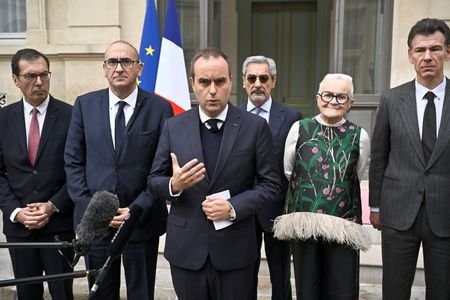
"The targeted curfews have contributed to the calm of last night," Prime Minister Sebastien Lecornu said in a post on X, adding they may be extended further into the week where needed.
In central Paris, police emptied and guarded the Place de la Republique overnight, with a helicopter overhead. In Lille, in the north, where the curfew only applied to minors, officers patrolled the city centre, checking bypassers' identities.
Marseille mayor Benoit Payan said there would be curfews for minors around the commercial areas hardest hit by the weekend's riots, starting Tuesday night.
High-school pupil strikes and demonstrations against falling standards and growing dilapidation have converged with a broader outpouring of anger at rising prices and the sense that health, housing and welfare needs are also no longer being met.
Justice Minister Gerald Darmanin told BFM television that 149 people held at the weekend were in detention awaiting trial. In a separate TV appearance on Monday evening, he said around 2,500 remained in custody for questioning.
BOND YIELDS CLIMB FURTHER
The unrest has stoked a febrile political atmosphere six months from a presidential election, with candidates from the far-right and hard-left leading the pack, according to opinion polls.
French government bond yields – the premium investors demand for holding the country's debt – climbed further on Tuesday over fears of more protests, with ten-year debt reaching its highest yield level in 24 years.
Scrambling to find a way out of the crisis and re-centre attention on passing a budget bill, Lecornu has invited political parties from both his government and the opposition to meet for consultations on Thursday.
Marine Le Pen's far-right National Rally said it would send a representative. It remained unclear if the hard-left France Unbowed party led by Jean-Luc Melenchon would also join.
For now, the relative calm on the streets hands the government a much-needed breather after weeks of protests that have strained police resources.
But new challenges await next Saturday with more demonstrations planned.
"We carry on," France's main student union UNEF said on social media, pledging to keep up the pressure on President Emmanuel Macron and his government to fix what students and pupils say is a broken and under-financed education system.
Separately, groups identifying themselves as "Gilets Jaunes" (Yellow Vests) called for scattered protest actions against spiralling fuel costs.
The yellow vest movement, largely inactive in recent years, sprung up in 2018 during Macron's first term over plans to raise petrol taxes. Weekly traffic blockades and waves of street violence continued for months until the government got its cheque book out.
'DEFENDING MILAN'
Lecornu vowed on Monday that the government would learn lessons from last weekend's protests and ensuing chaos.
"There were things that went well, and things that were screwed up," he said. "My determination to restore order is absolute."
France's main labour unions, including the CGT – often the driving force behind large organised demonstrations – have not joined the calls for protests on Saturday.
In Italy, Prime Minister Giorgia Meloni's cabinet was due to discuss a response to two days of unrest in the heart of Milan at the weekend and clashes in other northern cities including Bologna, Brescia, Bergamo and Turin.
That response would include the dispatch of 500 soldiers to help "defend Milan", Deputy Prime Minister Matteo Salvini said.
In Milan's main shopping district, some shops boarded their windows or removed stock from displays after looting. The city centre was quiet on Tuesday, according to a Reuters journalist.
Protesters, many of them students, were also taking to the streets for a seventh straight day in Albania's capital Tirana against the government of Prime Minister Edi Rama.
(Reporting by Jean-Stephane Brosse and Elizabeth Pineau in Paris, Elvira Pollina in Milan, Keith Weir in London, Charlotte Van Campenhout in Amsterdam and Ivana Sekularac in Belgrade; Writing by Tassilo Hummel; Editing by Kevin Liffey and Andrew Cawthorne)