SAN SALVADOR/PORT-AU-PRINCE, Oct 24 (Reuters) - Four bodies handed over to Salvadoran forces on Saturday do not belong to the four soldiers who had been ambushed the previous Sunday outside the capital of Haiti, El Salvador President Nayib Bukele said, contradicting a New York Times report.
"They are not our men," Bukele said in a post on X, hours after The New York Times reported that the bodies had been found and were believed to be those of the Salvadoran soldiers.
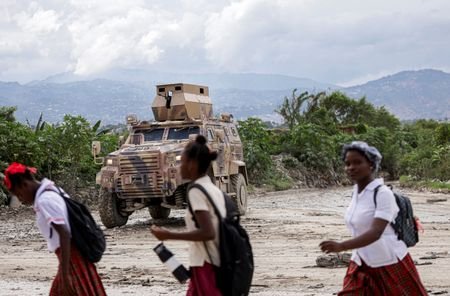
The four went missing on Sunday after they jumped from a burning armored vehicle that came under attack on the outskirts of Port-au-Prince while they were returning from a market to their base.
Bukele said the four bodies handed over included a child, a man much taller than the Salvadorans and a soldier from another country. He shared photos of a soldier's identification from Chad.
The ambush was the first major attack on the Gang Suppression Force, a UN-authorized multinational mission, since it began operations in Haiti this year. The international security mission declined to comment on the matter.
Earlier this week, Bukele said gangs were holding the four men and that El Salvador had launched a military operation to bring them back unharmed. Additional Salvadoran troops were later deployed to support search and security operations.
No group has publicly claimed responsibility for the attack. Local media have linked the ambush to gangs operating in the area, including powerful armed groups Chen Mechan and 400 Mawozo.
A year into its mandate, the GSF has about 2,000 troops on the ground, well below its authorized ceiling of 5,500. An earlier Kenyan-led security effort struggled with chronic shortages of money, equipment and personnel.
Haiti's gangs have expanded sharply since the 2021 assassination of President Jovenel Moise, taking control of large parts of Port-au-Prince and displacing 1.4 million to 1.5 million people.
(Reporting by Kylie Madry in Mexico City, Harold Isaac in Port-au-Prince and Gerardo Arbaiza in San Salvador; Writing by Sarah Morland; Editing by Alistair Bell, Rod Nickel and David Gregorio)