By Jan Strupczewski
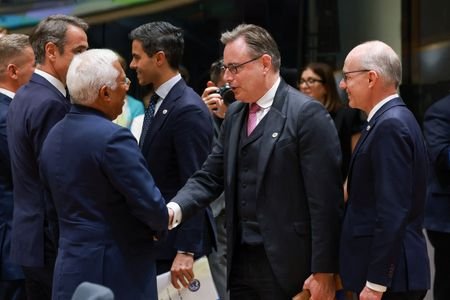
BRUSSELS, June 19 (Reuters) - European Union leaders headed for a clash over the bloc's budget on Friday after both net contributors and beneficiaries criticised an initial proposal on what the EU should pay for from 2028 to 2034 - and where the money should come from.
The EU budget is how the 27-member bloc finances all of its policies - from supporting farmers and developing new technology to student exchange programmes and equalising standards of living across member states.
According to the European Commission's proposal, the 2028-2034 budget should be €2 trillion ($2.3 trillion).
BITTER FIGHT FOR UNANIMOUS DEAL
Richer EU countries pay more into the budget than they get out of it, while poorer ones receive more than they pay. Every seven years, the two groups fight bitterly to reach a unanimous deal needed for the budget to pass.
The first compromise proposal prepared by the Cypriot EU presidency last week reduced the Commission proposal by 2%, which was not enough for some and too much for others.
As he entered Friday's talks, German Chancellor Friedrich Merz, whose country is the biggest net contributor, said that proposal was "far too high".
"The figures need to be brought down," Merz told reporters.
The Cypriot proposal also allocates more money within the budget for farmers and cohesion policies at the expense of areas including research and innovation, irking countries trying to compete with the industries of the U.S. and China.
The Netherlands, another net budget contributor, has objected to the compromise outline because it focused too much on areas seen as traditional spending - rather than confronting new challenges such as defence and modernisation.
"We all want a Europe that is more secure and more competitive, and we need a budget that fits that," said Dutch Prime Minister Rob Jetten as he arrived at the EU summit. "We can't do it with a budget from the 1990s," he added.
Spain, which is a small, but still net beneficiary, said the budget was too small and that spending on farmers and cohesion should be hiked due to inflation.
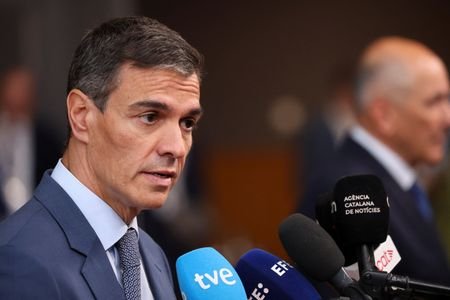
"The proposal ... is even more inadequate than the one initially proposed by the European Commission, and we therefore certainly do not agree with it at all," Prime Minister Pedro Sanchez said.
ELECTIONS PILE ON PRESSURE
Legally, EU governments need to agree on the budget by the end of 2027.
But because of elections in France, Italy, Poland, Spain, Greece, Estonia, Finland and Slovakia next year, a deal should be struck by the end of this year, so as not to become hostage to election campaigning.
To help reduce national contributions of the net payers while keeping the spending ambitions of the net beneficiaries, EU leaders have to agree on new sources of revenue that would not come directly from national coffers.
"We can only spend as much money as we have," Merz said. "Today, at the European Council, I will reiterate my request that we do not allow the European Union to take on further debt."
Among the proposed options, rejected by some countries and supported by others, is a share of the cash that EU governments get from selling CO2 emissions permits to companies and a share of the tax on goods imported into the EU that were made in countries where climate policies are weaker than in the EU.
Other options include a tax on non-collected e-waste, a share of the tobacco excise duty and an annual lump-sum contribution from large firms operating and selling in the EU.
Further proposals include a levy on extreme wealth, on digital services, online gambling and crypto asset capital gains.
While leaders are unlikely to make decisions on Friday on concrete new revenue streams, they will indicate their preferences to allow the incoming Irish EU presidency to prepare a new compromise proposal for October.
($1 = 0.8727 euros)
(Reporting by Jan Strupczewski; Editing by Lincoln Feast and Helen Popper)