By Krishna N. Das
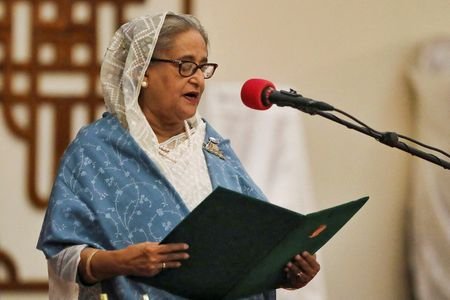
NEW DELHI, Nov 9 (Reuters) - Ousted Bangladeshi Prime Minister Sheikh Hasina requested on Monday a new passport and identity card so she can return from self-imposed exile in India, according to a letter seen by Reuters, her first such communication since fleeing in 2024, but the government swiftly rejected her request.
The request marks the clearest step by Hasina to act on her plan to return to Bangladesh in December, more than two years after a deadly uprising ended her long rule, raising the prospect of fresh political and legal tensions in a country where her party is now banned.
She has told Reuters she plans to return to surrender before a court, and her aides said on Monday the date would be announced once various formalities were completed. Bangladesh's war-crimes court sentenced her to death in November last year in her absence for ordering a deadly crackdown on the student-led uprising, though she has denied the charges from exile.
"In view of the reported revocation of her existing Bangladeshi passport and National Identity Card (NID) by the Interim Government and other authorities, I respectfully request that you take the necessary steps to issue a new Bangladeshi passport and National Identity Card for our client," Hasina's lawyers at London-based Matrix Chambers wrote to Preeti Rahman, acting high commissioner at Bangladesh's embassy in Delhi.
The letter asked for the applications to be processed "expeditiously" on the basis of her Bangladeshi nationality and in accordance with "obligations arising under international human rights instruments".
But the Bangladeshi government said the country does not provide "passport to a terrorist".
"She is a fugitive criminal. We have an active extradition treaty with India. We want her handed over," Bangladesh state minister for foreign affairs, Humaiun Kobir, told reporters.
"Should we treat her like an ordinary commercial traveller and tell her to come and visit her in-laws’ residence?"
HASINA EXIT COULD IMPROVE BANGLADESH-INDIA TIES
India's foreign ministry did not immediately respond to a request for comment. In April, the ministry said it was examining Bangladesh's request to extradite her and that it wanted to "engage constructively with the new government and further strengthen bilateral ties".
Hasina's Awami League party was the country's largest before it was banned following her fall. Many of her party colleagues have either been jailed or are in self-imposed exile in India or elsewhere.
Having ruled Bangladesh for 20 years as prime minister across multiple terms, Hasina still enjoys support among sections of the population, and a return could sharpen political divisions as the government in Dhaka seeks to restore stability after more than two years of upheaval.
On the other hand, it could improve Bangladesh's strained ties with India, which deteriorated sharply after New Delhi gave her refuge.
(Reporting by Krishna N. Das in New Delhi; Additional reporting by Ruma Paul in Dhaka; Editing by Stephen Coates)