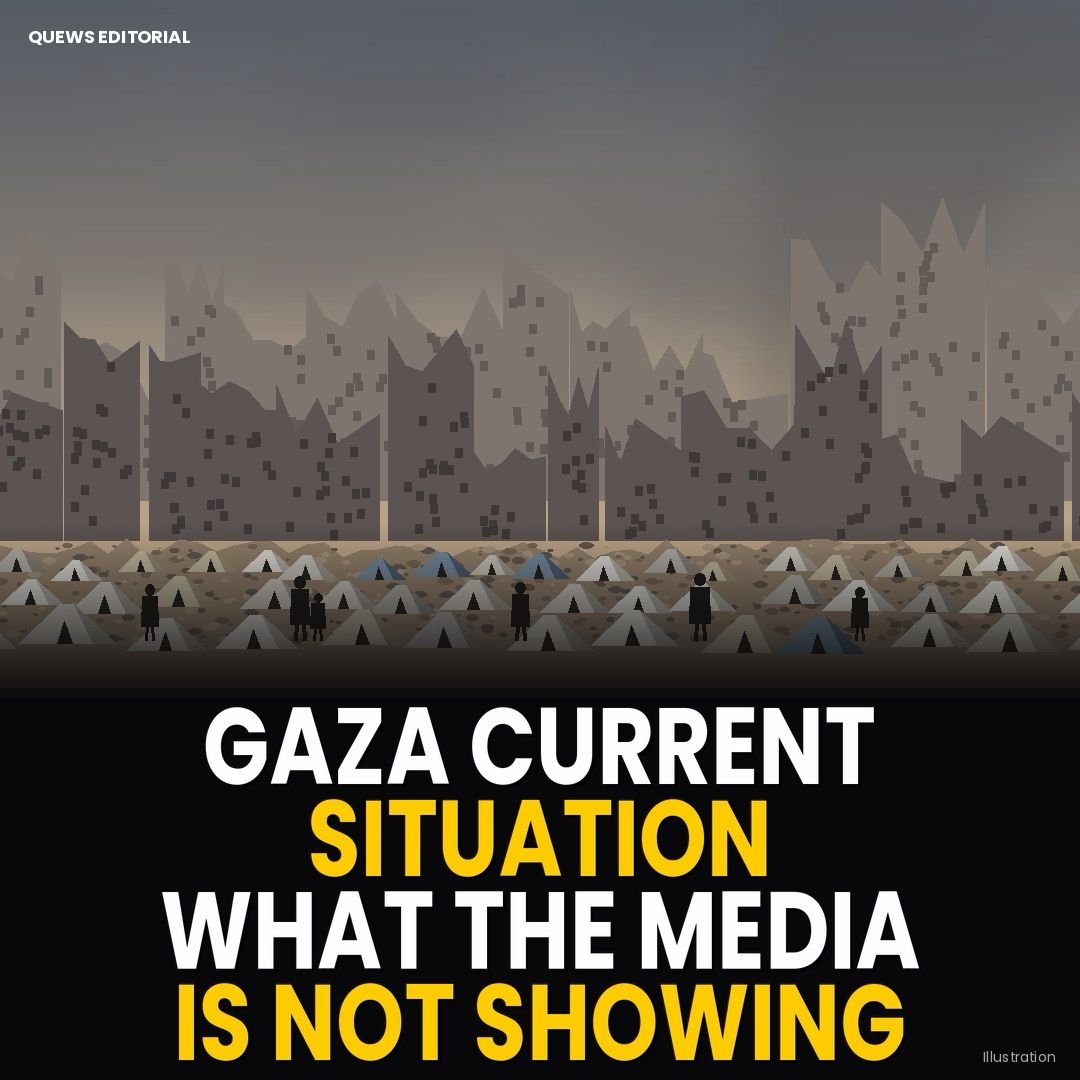
A year after the October 2025 ceasefire, Gaza has slipped off most front pages. The crisis has not. Here is what the daily headlines tend to leave out.
When the ceasefire took effect on 10 October 2025, many people around the world assumed the worst was over. The bombing would stop, aid would flow, and rebuilding would begin. Twelve months on, the cameras have largely moved elsewhere, but more than two million people in Gaza are still living with the war's consequences every day.
This article draws on the latest UN situation reports, aid agency statements and news coverage from the past few weeks. It looks at five things that rarely make the headlines: the violence that never fully stopped, the reporters who still cannot get in, the hunger that is getting worse again, the children facing another winter in tents, and the political deadlock holding everything back.
1. A ceasefire in name only
The guns did not fall silent. On 9 October 2026, more than 100 humanitarian, human rights and civil society groups issued a joint statement saying the ceasefire exists only on paper, with Palestinians still being killed and injured daily and restrictions blocking aid, equipment and rebuilding materials (Al Jazeera). UN Secretary-General António Guterres has said the truce has not yet delivered security, enough aid, or a credible path to recovery (NBC News).
The numbers are stark, though they vary by source:
- The UN Human Rights Office has verified 1,076 conflict-related deaths between the ceasefire announcement and the end of July 2026, including 331 near the so-called "Yellow Line" that separates Israeli-held areas from the rest of Gaza (OCHA, 15 Oct 2026).
- Gaza's Health Ministry puts the figure higher: 1,534 Palestinians killed and 5,486 injured since the truce began (Anadolu via A News).
- UNICEF reports that 340 children have been killed since the ceasefire agreement (UN News).
The front line is also moving. On 11 October, Israeli forces reportedly shifted the Yellow Line markers westward near Ash Shuja'iyyeh junction in Gaza City, an area already hosting displaced families, raising fears of new displacement (OCHA). Just yesterday, 21 October, drone and gunfire incidents in Gaza City and near Khan Younis killed several people, while naval fire disrupted fishermen off the coast (A News).
2. A story told without outside witnesses
One big reason Gaza gets less coverage is simple: foreign journalists still cannot go there. More than three years into the war and over a year into the ceasefire, Israel has not allowed international media to enter Gaza independently (NPR, 15 Oct 2026).
In April 2026, leaders of more than two dozen major news organisations, including the Associated Press, publicly urged Israel to lift the ban. They argued that being on the ground lets reporters test official claims from every side and talk directly with civilians (AP via Joplin Globe). Israel has said the restriction is about safety and protecting troop positions, and the army has occasionally taken reporters in on tightly controlled visits (Arab News). A petition from the Foreign Press Association is still waiting on Israel's Supreme Court.
The result is that almost every image and report you see from inside Gaza comes from local Palestinian journalists, who work under constant danger. When outside reporters cannot verify events for themselves, many newsrooms run fewer stories, hedge more heavily, or skip them altogether. Over time, as press freedom advocates have warned, that absence starts to feel normal, and the story fades.
3. Hunger has not ended, and aid is now shrinking
On 19 October 2026, the UN World Food Programme announced it was cutting food assistance in Gaza by about a third because of a funding shortfall (WFP). What that means on the ground:
- 500,000 people lose monthly food aid; WFP now supports 1.1 million people, down from 1.6 million.
- Rations are cut in half: one food parcel instead of two, plus a smaller bag of flour.
- Cash support is reduced for 75,000 families, and in some hard-to-reach areas families now get a hot meal only every other day (Bernama, NewsBytes).
This is happening while 1.4 million people, about two-thirds of Gaza's population, still face crisis-level hunger or worse, including around 200,000 in emergency conditions (Bernama). WFP says it received less than half its usual funding for Palestine this year and needs US$450 million to keep going through March 2027. Part of the drop comes from sharp US cuts to UN agency funding (Euronews).
There is a detail many reports miss. Markets in Gaza are better stocked than a year ago, and Israel's aid coordination body COGAT says around 1.78 million tonnes of food entered between October 2025 and June 2026, with staple prices falling sharply (AJC). But with unemployment above 80 per cent, most families simply cannot afford what is on the shelves (NewsBytes). Food being present in Gaza is not the same as people being able to eat.
4. Children, tents and another winter
According to UNICEF, 800,000 children in Gaza are still displaced, and most of them live in tents or in damaged buildings that could collapse (UN News). The UN estimates around 1.2 million people have lost their homes (Euronews).
The health picture is fragile. The UN's mid-October update recorded a drop in drinking-water production compared with September and noted that infectious diseases remain widespread in crowded displacement sites with poor water and sanitation (OCHA, 2 Oct, OCHA, 15 Oct). Supported bakeries are producing about 280 tonnes of bread a day, which covers only a third of estimated needs.
The rainy season is coming. Last winter, heavy rain flooded tents and shelters, and aid groups are now racing to prepare displacement sites before the storms return. Their work is slowed by ongoing limits on bringing in shelter and repair materials (WAM).
There are small signs of resilience that also go unreported. Since the ceasefire, more than 560,000 children have returned to some form of learning, many in tent classrooms and over 200 UNICEF-supported centres (UN News).
5. Why recovery is stuck
Under the US-backed 20-point plan, the ceasefire's second phase was meant to bring Hamas's disarmament, a gradual Israeli withdrawal, a Palestinian technocratic committee to run daily affairs, and an international stabilisation force (Arab News / Reuters). In practice, the two sides disagree on what must come first.
- Israel's position: there will be no withdrawal from the Yellow Line until Hamas is genuinely disarmed and Gaza fully demilitarised. Israeli officials say any delay would let Hamas regroup (Tribune, Jordan News).
- Hamas's position: it says it has met its first-phase obligations and has agreed in principle to a written second-phase package, but only if Israel first fully implements phase one (Tribune).
Meanwhile, the two sides also tell very different stories about aid. Israel says record amounts have entered and accuses Hamas of diverting supplies; UN agencies and NGOs say access is still restricted and needs far outstrip supply (AJC, Al Jazeera). Readers should treat casualty and aid figures from any party to the conflict with care, and compare them with UN-verified data where possible.
While this standoff continues, rebuilding cannot properly begin. On 21 October, the leaders of Qatar and France jointly called for Israeli forces to withdraw under the agreed arrangements and for aid to enter without conditions (Al Jazeera).
Why this matters
A ceasefire is not the same as peace, and a quiet news cycle is not the same as a quiet Gaza. The people living there are still dealing with daily strikes, shrinking food aid, flooded tents and no clear end to the political standoff.
If you want to follow what is really happening, a few sources are worth checking regularly: the UN OCHA situation reports, WFP and UNICEF updates, and the work of Palestinian journalists reporting from inside Gaza. Supporting reputable humanitarian organisations, and sharing verified information rather than rumours, are two practical ways readers can help keep this story from disappearing.
Sources
- OCHA Humanitarian Situation Report, 15 October 2026
- OCHA Humanitarian Situation Report, 2 October 2026
- WFP: Funding cuts force WFP to drastically reduce lifesaving assistance in Gaza
- UN News: Gaza, 340 children killed despite ceasefire agreement
- Al Jazeera: Gaza ceasefire exists in name only, more than 100 NGOs say
- NBC News: One year on, Gaza ceasefire exists in name only
- NPR: Three years on, Israel still bars foreign journalists from entering Gaza
- AP: Media organizations call on Israel to allow foreign reporters access to Gaza
- Euronews: UN food agency to cut aid to 500,000 people in Gaza
- Bernama: UN food agency cuts Gaza assistance by one-third
- Arab News / Reuters: Hamas moving toward disarmament deal, Israel says no withdrawal until demilitarisation
- Express Tribune: Hamas agrees to written second-phase deal tied to Israeli compliance
- AJC: Humanitarian aid in Gaza, what's really happening
- Al Jazeera: Qatar, France call for Gaza ceasefire implementation
A News / Anadolu: Israeli attacks kill 4 Palestinians in Gaza