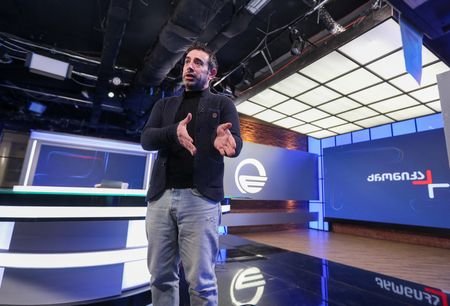
TBILISI, Feb 27 (Reuters) - A major pro-government television channel in Georgia, sanctioned by Britain for spreading "Russian disinformation", defended its editorial policy on Friday against what it called an attack on free speech amid souring relations between Tbilisi and the West.
"Censoring the Georgian audience is simply unthinkable, and no revision or change of editorial policy is planned," Irakli Chikhladze, deputy director of the Imedi broadcaster, told Reuters.
"We are doing objective journalism and no sanctions or labels will apply," he said.
Britain imposed sanctions on Tuesday on Imedi and another Georgian channel, PosTV, accusing them of promoting false narratives about the war in Ukraine. It singled out Imedi for portraying the Ukrainian government as illegitimate, or a puppet of the West.
The move drew condemnation from Georgia's ruling party, and Tbilisi raised its concerns with the British ambassador, who was summoned to the foreign ministry on Thursday.
Once seen as one of the more democratic and pro-Western former Soviet states, Georgia has grown more authoritarian since the war in Ukraine began and has expanded economic ties with Russia. Relations with Western governments have slumped.
Chikhladze rejected claims that Imedi is pro-Russian in an interview with Reuters at the channel's Tbilisi offices. The founder of PosTV also condemned the sanctions.
Imedi has broad reach, with around 30% of Georgians tuning in regularly, according to Natia Songulashvili, head of its information service.
The broadcaster was until recently owned by Irakli Rukhadze, a Georgian-born U.S. citizen based in Britain, who sold his shares this month to an entity called Prime Media Global.
Chikhladze did not address how Imedi will operate under the sanctions, which freeze any assets or properties it holds in Britain and bar its owners from running other UK-based companies.
(Reporting by Reuters. Writing by Lucy Papachristou. Editing by Mark Potter)