BERLIN, Feb 25 (Reuters) - Germany plans to modernise its main security authorities and enlist AI in its fight against organised crime, as it cracks down on financial offences, money laundering and drug-related cases, the ministries of finance, interior affairs and justice said on Wednesday.
The ministries aim to modernise Germany's customs and federal criminal police, or BKA, among others by expanding their legal and technical capabilities and increasing their staff.
According to the BKA, organised crime remains one of the greatest threats to internal security, causing an estimated 2.64 billion euros ($3.1 billion) economic damage in 2024.
"We are ensuring that the investigating authorities hit the perpetrators where it hurts most: their money," Finance Minister Lars Klingbeil said in a statement.
The ministries aim to enable more rapid confiscation of assets from dubious sources, including cash, luxury cars and houses.
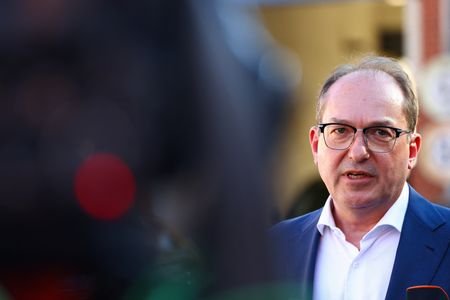
Interior Minister Alexander Dobrindt said the BKA would get more staff, powers and enforcement authority. The plan also calls for joint data analysis centres and investigation teams between customs and the BKA to tackle money laundering and narcotics.
Klingbeil said customs and BKA will be able to access each other's data and use artificial intelligence to identify perpetrators and sift through large volumes of information.
While local police carry out routine policing and most crime investigations under laws set by each of the 16 federal states, federal police are responsible for border, rail and aviation security.
The BKA acts as Germany's federal investigative authority, handling serious and organised crime with national and transnational scope, often coordinating complex cases that cross state or international borders.
Justice Minister Stefanie Hubig said organised crime undermines trust in the rule of law and must not be allowed to pay off, noting perpetrators should be swiftly identified, prosecuted and punished.
The BKA reported that in 2024, illegal drug trafficking accounted for 40% of organised crime proceedings, or 259 out of 650 cases, while money laundering was involved in 146 cases for a total volume of around 230 million euros.
($1 = 0.8488 euros)
(Reporting by Christian Kraemer, writing by Linda Pasquini, Editing by Kirsti Knolle and Hugh Lawson)