By Miranda Murray and Andreas Boeckler
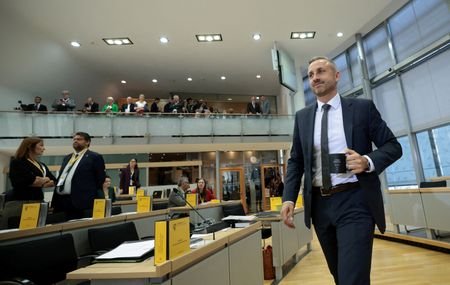
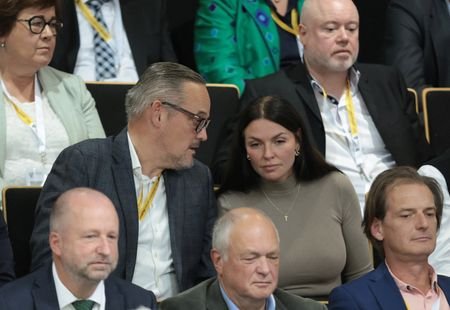
MAGDEBURG, Germany, Oct 6 (Reuters) - The far-right Alternative for Germany convened for the first sitting of the Saxony-Anhalt state parliament on Tuesday but, a month after its landmark election win, the party still lacks a clear path to forming what would be its first state government.
Despite winning the vote in the September 6 election in the eastern German state, the AfD fell three seats short of the absolute majority that candidate Ulrich Siegmund had aimed for.
Siegmund said before Tuesday's sitting that he aimed to win parliamentary backing to become state premier in a first round of voting that he said would only take place in December, giving him more time to build support. He did not elaborate.
The party has so far failed to secure enough support from potential partners or publicly win over defectors from rivals, leading to a stalemate in its efforts to form a government.
'FIREWALL' COMPLICATIONS
The impasse underlines a challenge that has dogged the AfD for years: translating growing electoral support into executive power in a political system where mainstream parties have refused to cooperate with it under the "firewall" policy.
Founded in 2013 as a eurosceptic movement, the AfD won over voters with an increasingly hardline opposition to immigration after around a million people fled to Germany in 2015.
The party has since become a dominant political force in much of eastern Germany, especially among voters disillusioned with the mainstream parties, though many remain strongly opposed to cutting any deals with the AfD.
About 400 protesters gathered peacefully on Tuesday outside the state parliament in Magdeburg and read aloud Germany's constitution ahead of the session, with dozens holding up a long red banner that read: "No cooperation with the extreme right."
SYMBOLIC VICTORY
Tuesday's inaugural sitting, which the state constitution requires to take place within 30 days of the election, nevertheless offered the AfD a symbolic victory.
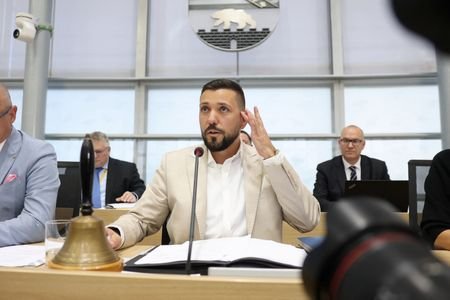
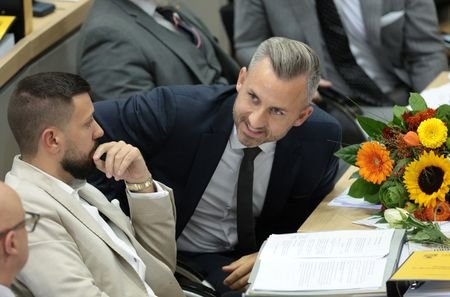
Tobias Rausch, a 35-year-old real estate entrepreneur and Siegmund confidant, was elected president of the state parliament with support from the left-wing populist BSW, becoming the first AfD member to hold one of the highest offices in a German state legislature.
Rausch used his inaugural speech to call on lawmakers to work together, adding that "the days of political firewalls should be a thing of the past".
The AfD's success in Saxony-Anhalt and two other state elections in September has put Chancellor Friedrich Merz's struggling government under pressure and raised questions within his conservatives about the effectiveness of the firewall.
The AfD has been working for weeks to win over lawmakers from Merz's party, whose support halved from the last state election, but no defections have been announced so far.
RELIABLE PARTNERS WITH THE BSW?
Tuesday's vote was also closely watched for signs of whether the AfD can reliably count on the BSW, the only party that has not explicitly ruled out cooperation, though it has rejected the idea of joining the AfD in a coalition government.
The BSW, which like the AfD opposes mass immigration and wants to restore energy ties with Russia, has said it would abstain in any vote for Siegmund for state premier.
That could lead to the AfD forming a minority government with passive tolerance from the BSW, under a model seen in neighbouring Thuringia, though Siegmund has previously rejected such a setup as making him too reliant on the smaller party.
Siegmund has also floated the possibility of new elections if he does not secure the required majority the first time around.
In Tuesday's secret ballot to become state parliament leader, Rausch secured 48 votes, suggesting he attracted support not only from his own party and the BSW - totalling 44 votes - but also from at least four other lawmakers.
(Reporting by Miranda Murray and Andreas BoecklerEditing by Gareth Jones)