By Andreas Rinke
BERLIN, April 21 (Reuters) - German Chancellor Friedrich Merz's coalition has been shaken by internal squabbling as it grapples with a long-promised package of reforms to the tax, pensions and health systems and looks for ways to dampen a surge in fuel prices caused by the Iran war.
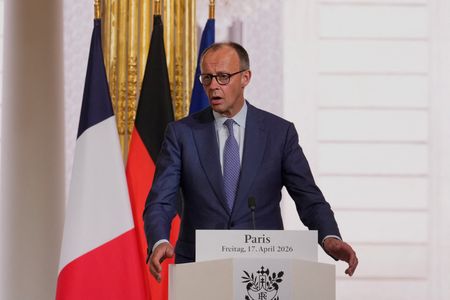
Merz, whose conservative Christian Democratic Union (CDU) has been overtaken by the far-right Alternative for Germany (AfD) party in opinion polls, expressed frustration with his centre-left Social Democrat (SPD) coalition partners on Monday.
"What we have achieved so far is not enough for me," he said at an event hosted by Germany's main banking association, calling on the Social Democrats to "help break down some of the deadlocks we have unfortunately faced time and again over the past few weeks and months".
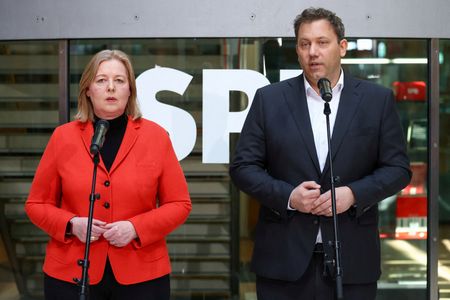
On Tuesday, several senior Social Democrats responded angrily to the comments, which its general secretary Tim Kluessendorf said were "unacceptable".
The spat comes as the weekly Politbarometer poll published by the ZDF public broadcaster on Sunday showed the AfD leading all the other parties with 26% support, ahead of the CDU and its CSU sister party on 25%, with the SPD trailing on 12% behind the opposition Greens.
With Germany's economy weakened by two years of recession and its industry struggling to match stifling competition from rampant Chinese exporters, the coalition split threatens to derail Merz's plans to lay down a sweeping package of reforms before the end of the summer.
Discussion has begun on measures to stabilize funding for the public health system, which faces a deficit set to explode from some 15 billion euros ($17.6 billion) next year to 42 billion euros by 2030. But it remains unclear how the changes will be financed from a government budget under heavy strain.
PENSION POLEMICS
A push for a comprehensive reform of the creaking pensions system, under increasing strain as the population ages, was put on ice last year after a revolt from younger members of the CDU parliamentary party.
A specially appointed commission is due to present proposals to stabilize the system but Merz roused hackles in the SPD by declaring on Monday that in years to come, the statutory pension would only be enough for a basic income and most people would need to supplement it with extra savings.
"If the Chancellor intends to slash the state pension down to a basic pension, he will face fierce opposition from the Social Democrats," Kluessendorf said.
The pressure facing the coalition was underlined last month by elections in the two western states of Baden-Wuerttemberg and Rhineland-Palatinate, which both saw the AfD make strong gains and handed stinging defeats to the SPD.
Adding to Merz's problems, the government has faced pressure to respond to the surge in fuel prices.
The government has moved to help motorists by limiting price rises at the petrol pump to once daily, but the coalition partners have disagreed over other measures including proposals for windfall taxes on oil companies or temporary cuts to energy taxes paid by consumers.
($1 = 0.8508 euros)
(Writing by James Mackenzie; Editing by Andrew Cawthorne)