(Corrects timing of Allied-Zijin deal in paragraph 20)
By Maxwell Akalaare Adombila
DAKAR, April 28 (Reuters) - International mining companies are likely to keep investing in Mali, one of Africa's most resource-rich countries, even though attacks on Saturday that killed the defence minister have increased concerns about supply routes, industry executives and analysts said.
Mali is one of Africa’s biggest producers of gold, which has hit record high levels on international markets. It also has significant lithium, uranium and copper deposits.
But for decades it has battled insurgents and the resulting unrest has allowed the military to stage recurrent coups.
On Saturday, after rival insurgent groups demonstrated unprecedented coordination, an alliance of al Qaeda-linked militants and separatist rebels killed Mali's defence minister, hit the capital's airport and drove Russian soldiers out of a desert town over a thousand kilometres (620 miles) away.
MALI'S GOVERNMENT SAYS THE SITUATION IS UNDER CONTROL
Mali's government has said operations to deal with the rebels are ongoing, but that the situation is under control.
The mines ministry did not immediately respond to requests for comment.
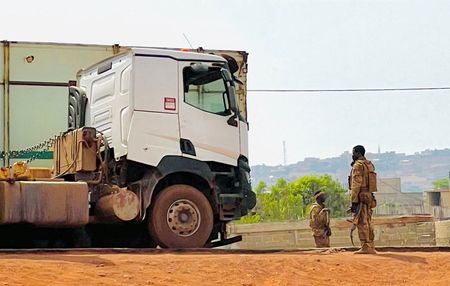
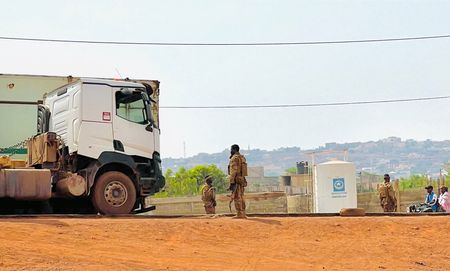
Three mining executives, who spoke on condition of anonymity, and two analysts said the instability had increased concern over supply routes and asset security as insurgents sometimes block delivery of fuel and other supplies.
Vincent Rouget, of Control Risks, said "security and terrorism risks on supply routes will prevail".
Daniel van Dalen, a senior analyst at risk consultancy Signal Risk, said the likelihood of another coup had risen and that any related unrest could spread to commercial mining operations.
"There is a credible risk that such reactions could extend to foreign interests, particularly Western-linked assets," he said.
Already, Mali had become less attractive to international miners as the military‑led government, dependent on mining for revenue after seizing power in 2021, changed the mining code.
The reforms raised taxes and increased the amount of equity held by the state and reduced that held by international companies.
Barrick regained operational control of its flagship Loulo‑Gounkoto complex earlier this year after a near two‑year standoff with the government.
BALANCE OF RISK AND REWARD
Despite the strained relations, many miners have continued to invest, especially as industrial mining is concentrated in the south, which has been relatively sheltered from the unrest.
Australian-listed Resolute said on Tuesday its Syama gold mine in southern Mali was fully operational and that the upsurge in violence had had no impact on staff safety, logistics or output.
One mining executive with operations across the Sahel, in central Mali, said the potential for returns from high gold prices and good quality ore offset the risks.
Chinese miners are more bullish, in some cases picking up assets after other operators decided to reduce their exposure.
Canadian-listed Allied agreed in January to sell its Malian operations to China's Zijin.
A source at Zijin said the company had professional armed security, while a senior official at Ganfeng Lithium, which owns 65% of Mali’s Goulamina lithium project, said the mine was well away from affected areas and that the company was well prepared for any eventualities.
(Reporting by Maxwell Akalaare Adombila; Additional reporting by Tom Daly in London; editing by Barbara Lewis)