By Jose Luis Gonzalez and Sarah Morland
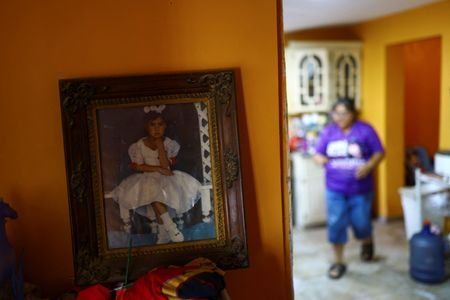
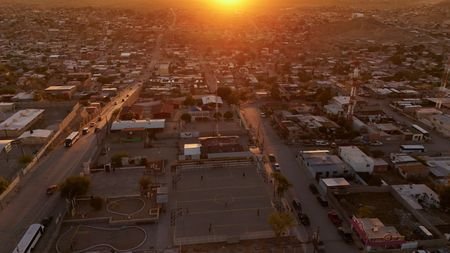
CIUDAD JUAREZ, Mexico, June 24 (Reuters) - Norma Laguna's daughter Idaly Juache was a striker for a soccer team in Mexico's Ciudad Juarez, a stone's throw from the Texas border. Two days after playing in her Sunday night game, in 2010, the 19-year-old went missing.
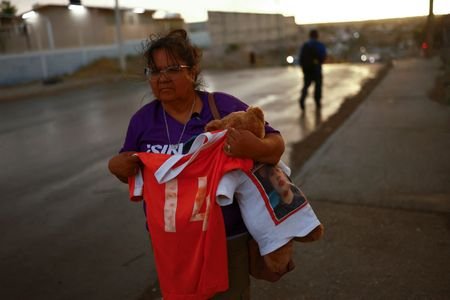
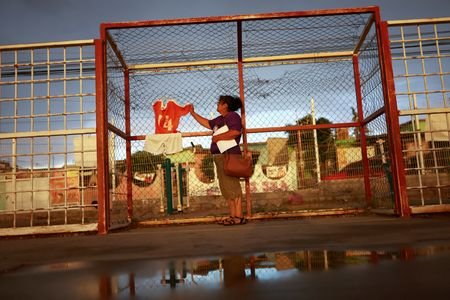
Laguna still keeps her daughter's orange soccer jersey with the number 14. As the World Cup returns to Mexico for the first time in 40 years, Laguna says the soccer reminds her of her lost daughter and the life she should have had.
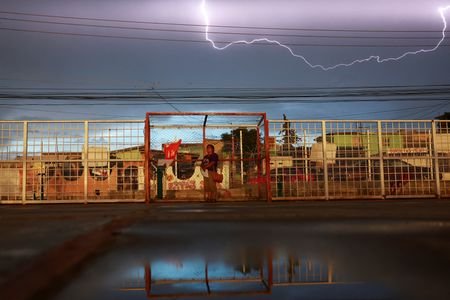
"Many years have passed but time hasn't moved on for us, it feels like yesterday," Laguna told Reuters as boys played on the pitch where her daughter used to train every Sunday without fail.
"She would have loved to be watching the World Cup today."
Two years after Juache disappeared, a 10-centimeter-wide (4-inch-wide) piece of skull was found in a dry riverbed some 70 km (45 miles) away, alongside the remains of some 26 other women and teenage girls. It was identified as belonging to Juache, but brought little closure for Laguna.
"My daughter didn't leave me in pieces, she left whole," she said.
Mexico counts more than 135,000 missing people, a figure that has surged since 2006 when then-President Felipe Calderon launched a war against the country's drug cartels.
While the government maintains that helping "madres buscadoras" (mothers who search) is a priority, the relatives of lost loved ones complain of an inefficient bureaucracy and lack of financial support as they take on investigations themselves, often in dangerous areas where violent cartels operate.
They also argue the high rates of unresolved cases obscure the extent of violent crime in the Latin American country.
When Laguna began searching for her daughter, she was initially forced to take her three other young daughters with her as she couldn't leave them home alone. She spent two years scouring the city, following up on reported sightings of Juache being forced to work in bars and hotels downtown.
She joined one of the hundreds of grassroots collectives of families across Mexico searching for lost loved ones. Many of these joined protests in the capital on the opening day of the World Cup as relatives sought to use the international attention to rally support.
GROUPS KEEP SEARCHING
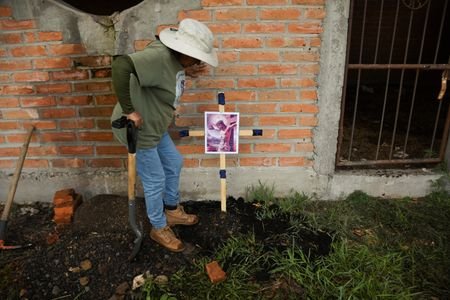
Over 1,200 km (745 miles) to the south of Ciudad Juarez, on the outskirts of Jerez in central Zacatecas state, Ely Araiza, the leader of searchers' group Las Escarabajos, was following up on an anonymous tip that had identified suspected burial sites at an old ranch.
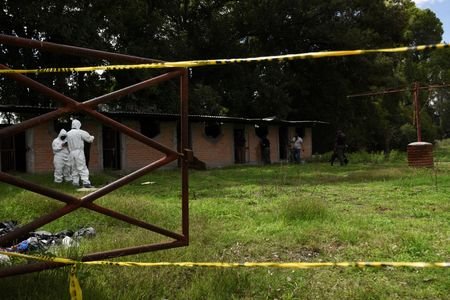
Warned the ranch was under near-constant armed guard, Araiza had waited about a week to follow up; when she arrived the entrance was padlocked but she and a handful of other searchers managed to climb in through a flattened piece of wire fence.
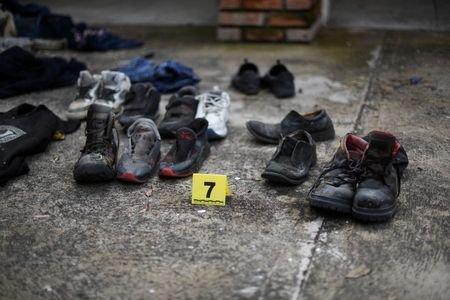
By the end of Monday, Araiza and others had uncovered four bodies, likely men, including one who was found buried wearing a blindfold. They also found several shoes and items of clothing scattered around the property, which made them suspect it had been used to hold kidnap victims.
As they worked, a local shopkeeper - whose two brothers went missing a year ago - brought the mothers some food at the ranch, next to a local baseball field.
They called the state attorney general's office, which, after obtaining a search warrant, sent in investigators with trained dogs and a security detail.
In a video message, the Zacatecas attorney general's office said it would maintain "permanent coordination with the families" and use all available resources to identify the bodies and locate other missing people.
Araiza estimated it could take two weeks to conduct the DNA tests before the results can be cross-referenced with missing people's reports across the state.
"We have a lot of missing people in Jerez," she said.
TEENAGER ALSO MISSING
The extent of the missing persons crisis prompted a U.N. committee on enforced disappearances in April to invoke - for the first time ever - a mechanism calling for other nations to support Mexican investigations and forensic work.
President Claudia Sheinbaum strongly rejected the measure, saying it was intended for use when a state is complicit in disappearances and that her country's systems were not overwhelmed.
In Juache's case, a court sentenced five men to 697 years in prison in 2015 on charges of luring her and 10 other young women on the false promise of better jobs before forcing them to sell sex and drugs and ultimately murdering them.
But 14 years after her daughter's disappearance, Laguna's grandson Edgar Ruiz also went missing, after catching a ride away from the same soccer pitch where his aunt once played.
He was 17 years old at the time, and has been missing two years.
"We just want to know what happened," she said. "I started on this path for my daughter and today I will keep searching for my grandson."
(Reporting by Jose Luis Gonzalez, Edgar Chavez and Sarah Morland; Writing by Sarah Morland; Editing by Stephen Eisenhammer and Lincoln Feast.)