By Marco Aquino
LIMA, Dec 24 (Reuters) - At least 34 candidates have registered to compete in Peru's 2026 presidential election, the electoral office said on Wednesday, a record number for a country that has been defined by political volatility in recent years, with many former leaders imprisoned or ousted.
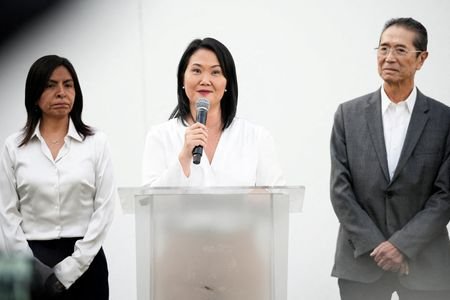
The candidates for the April 12 election include a comedian, a former soccer player, and Keiko Fujimori, the daughter of late former president Alberto Fujimori, who is planning to run for the fourth time.
In the last presidential election in 2021, 18 candidates participated.
The electoral office will publish the final list of candidates on March 14, said its head Roberto Burneo at a press conference. Any Peruvian can file an objection against a candidate and claim they do not meet legal requirements.
Presidential terms in Peru have often been cut short amid impeachments, resignations or accusations of corruption. Dina Boluarte's midnight removal last October made her the sixth consecutive president in Peru to fail to complete a full term.
The last president to finish a term was Ollanta Humala, who served from 2011 to 2016, but received a 15-year prison sentence for money laundering earlier this year.
CROWDED FIELD, NO CLEAR LEADER
The list of registered candidates includes the former right-wing mayor of Lima, Rafael López Aliaga, known as "Porky" for his resemblance to a famous cartoon character.
Conservative Fujimori will try again after attempts in 2011, 2016 and 2021, when she was defeated by leftist Pedro Castillo, who was impeached and arrested in late 2022.
Other candidates include Vladimir Cerrón, a fugitive from justice and leader of the Marxist party Peru Libre that brought Castillo to the presidency, Carlos Álvarez, a popular comedian and impersonator of former presidents, George Forsyth, a former soccer goalkeeper, and Mario Vizcarra, brother of jailed former president Martín Vizcarra.
With distrust high in traditional parties and politicians, an Ipsos Peru poll released last Sunday indicated that almost half of Peruvians (48%) do not know who to vote for, will cancel their ballot or do not have a favorite candidate.
As such, it is likely there will be no outright winner in the election's first round and that it will go to a run-off on June 7, according to analysts.
(Report by Marco Aquino; Writing by Leila Miller; Editing by Lisa Shumaker and Rosalba O'Brien)