By Katya Golubkova, Yuka Obayashi and Nidhi Verma
TOKYO/NEW DELHI, March 2 (Reuters) - The widening Iranian conflict is disrupting oil flows to several Asian countries as vessels are bottled up within the Middle East Gulf and crude and transport costs are rising, industry sources and analysts said on Monday.
The disruptions highlight the risks to Asia, the world's biggest oil consuming region, which sources 60% of its oil from Middle Eastern producers, from the fighting between the U.S. and Israel on one side and Iran.
U.S. President Donald Trump signalled the U.S.-Israeli military assault could continue for weeks, which could mean a prolonged disruption of traffic through the Strait of Hormuz, a pinch point through which some 20% of global oil output and a similar share of liquefied natural gas transits via ships from Middle East producers.
Attacks on Sunday damaged three tankers and killed one seafarer while the initial attacks caused some 200 ships to drop anchor near the Strait to avoid any risk. On Monday, ship insurers cancelled war risk cover while industry sources expect tanker freight rates to jump as shippers keep vessels away.
"Iran has not officially shut the Strait of Hormuz but risk aversion from shippers is a real phenomenon. Transit volumes have already declined with vessels parking outside the Strait," Citi analysts said in a note.
Global oil prices are up about 9% on Monday after earlier surging by as much as 13%. [O/R]
"Some crude oil tankers bound for Japan from the Middle East are waiting in the Persian Gulf, avoiding passage through the Strait of Hormuz," Japan's Chief Cabinet Secretary Minoru Kihara told a briefing.
Japanese trading house Itochu is experiencing "some impact" on shipments of crude and petroleum products from the Gulf and will source supplies from outside of the Middle East, it said in an emailed statement.
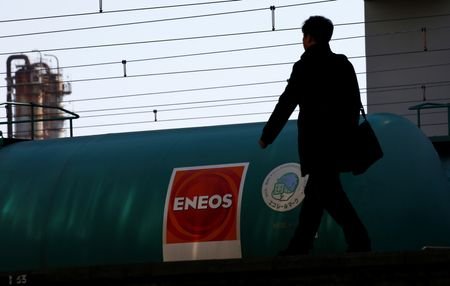
Eneos, Japan's biggest refiner, said it will assess the impact on future crude procurement while monitoring the situation.
An extended disruption of the Strait would push oil prices higher and could cause supply shortages to China and India, the world's biggest and third-biggest oil importers, forcing countries to tap stockpiles and reducing refinery operations.
The International Energy Agency, made up of mostly developed economies, requires members to hold oil stocks equivalent to at least 90 days of net oil imports.
Japan's Kihara said the country had no immediate plans to release its strategic reserves, one of the world's largest.
Indonesian state-owned energy company Pertamina has prepared risk mitigation measures and is optimising its refinery operations to ensure fuel and liquefied petroleum gas supply, it said in a statement. The country is Southeast Asia's biggest gasoline importer.
INDIA MAY TAP RUSSIAN OIL IF CRISIS PERSISTS
Some Indian refiners have already told Middle East suppliers that they are unable to get ships to load crude, sources at two companies said.
India's oil ministry and refiners met during the weekend to consider options for mitigating the impact of the crisis on the country's energy security, the sources said.
The refiners will look at all options, including Russian oil if New Delhi approves, should the crisis continue for more than 10-15 days, the sources said.
"Alternative routes to get oil from the Middle East are costly and availability is not there as ships are not willing to go through that route," said one of the sources.
India will take the necessary steps to ensure domestic availability of refined fuels at affordable rates, the federal oil ministry said on Monday after meeting with company officials.
LNG SQUEEZE
The loss of LNG supply from Qatar, Oman and the United Arab Emirates would hit Asian buyers hardest, especially Pakistan, India and Bangladesh, analysts said.
"Those countries face a choice between attracting LNG cargoes from other producers and reducing gas demand either by fuel switching or outright demand curtailment," said Rystad Energy analysts in a note.
China and Japan are the world's two largest LNG importers. Japan, however, sources most of its supply from Australia. The country's utilities have LNG inventory worth about three weeks of domestic consumption, Kihara said.
(Reporting by Katya Golubkova and Yuka Obayashi in Tokyo, Nidhi Verma in New Delhi, Florence Tan, Emily Chow, Jeslyn Lerh and Trixie Yap in Singapore, Fransiska Nangoy in Jakarta; Additional reporting by Tamiyuki Kihara and Kantaro Komiya; Writing by Florence Tan; Editing by Tom Hogue and Christian Schmollinger)