By Asif Shahzad, Ariba Shahid, Parisa Hafezi and Maya Gebeily
ISLAMABAD/DUBAI/BEIRUT/WASHINGTON, April 10 (Reuters) - Iran's negotiating team arrived in Islamabad on Friday for peace talks with the United States, even as Tehran insisted on measures it said needed to be addressed first, throwing last-minute doubt over the meetings scheduled in Pakistan.
U.S. President Donald Trump announced a two-week ceasefire in the six-week war on Tuesday, just hours before a deadline after which Trump had threatened to destroy Iran's civilisation.
The ceasefire has halted U.S. and Israeli airstrikes on Iran. But it has not ended Iran's blockade of the Strait of Hormuz, which has caused the biggest-ever disruption to global energy supplies, or calmed a parallel war between Israel and Iran-backed Hezbollah in Lebanon.
Iran's parliamentary Speaker Mohammad Baqer Qalibaf said on X that Washington had previously agreed to unblock Iranian assets and to a ceasefire in Lebanon, and added that talks would not start until those pledges are fulfilled.
Iranian state media reported that Qalibaf arrived in Islamabad on Friday and the delegation includes senior political, military and economic officials, including Iran's foreign minister, defence council secretary, central bank governor and several members of parliament.
While there was no immediate comment from the White House on the Iranian demands, Trump said in a social media post that the only reason the Iranians were alive was to negotiate a deal.
"The Iranians don’t seem to realize they have no cards, other than a short term extortion of the World by using International Waterways. The only reason they are alive today is to negotiate!" he said.
U.S. Vice President JD Vance, who will lead the U.S. delegation, said he expected a positive outcome as he headed to Pakistan, but added: "If they're going to try to play us, then they're going to find the negotiating team is not that receptive."
Iran has been unable to obtain tens of billions of dollars of its assets in foreign banks, mainly from exports of oil and gas, due to U.S. sanctions on its banking and energy sectors.
Pakistani Prime Minister Shehbaz Sharif, in a national address on Friday night, laid out the stakes of the talks.
"The permanent ceasefire is the next difficult phase, which is to resolve the complicated issues through negotiation. This, as called in English, is a make-or-break phase," Sharif said.
ISRAELI-HEZBOLLAH FIGHTING CONTINUES
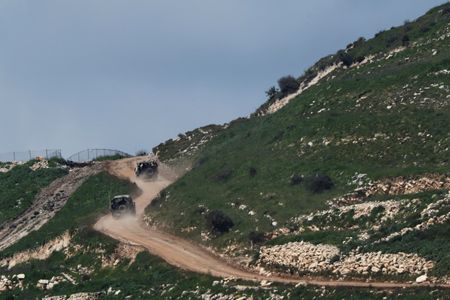
Israel and the U.S. have said the campaign against militant group Hezbollah in Lebanon is not part of the agreed ceasefire.
Lebanon's presidency said Lebanon and Israel held a telephone call between their ambassadors in Washington on Friday. It said the call was part of efforts to secure a ceasefire and launch negotiations, adding that the two sides agreed to hold a first meeting on Tuesday at the U.S. State Department under U.S. mediation.
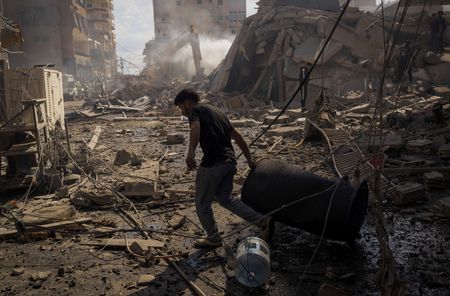
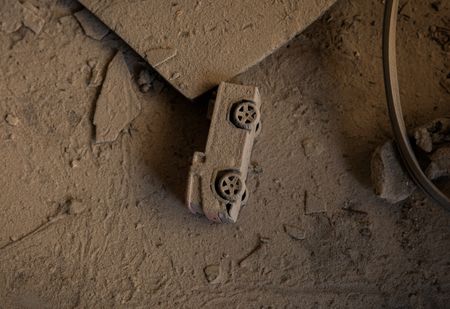
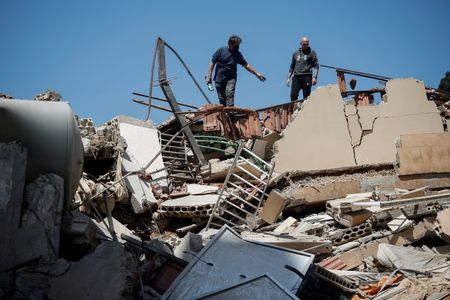
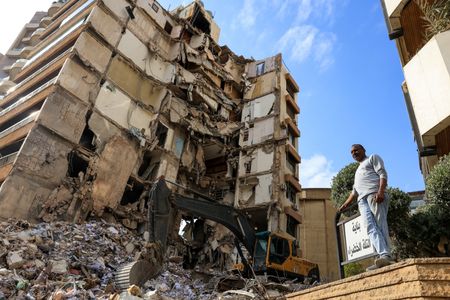
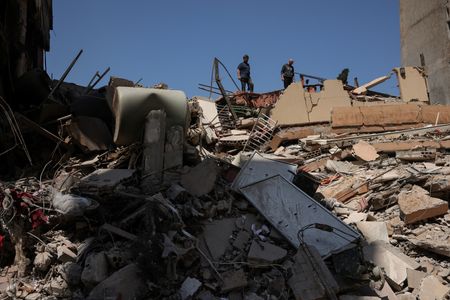
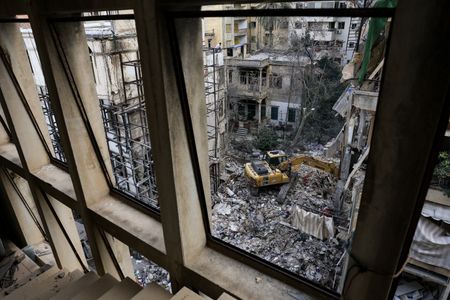
Israel launched the biggest attack of the war hours after the ceasefire was announced, killing more than 350 people in surprise strikes on heavily populated areas, Lebanese authorities said.
Israeli strikes continued across southern Lebanon on Friday. One strike on a government building in the city of Nabatieh killed 13 members of Lebanon's state security forces, President Joseph Aoun said in a statement.
Hezbollah said in a statement on its Telegram channel that it fired rocket salvos at northern Israeli towns in response.
Lebanese authorities say at least 1,953 people have been killed in Israeli strikes since March 2.
IRANIAN HARD LINE
The hard line taken by Iran's leaders ahead of the negotiations followed a defiant message from its new Supreme Leader Ayatollah Mojtaba Khamenei on Thursday.
Khamenei, yet to be seen in public since taking over from his father, who was killed on the war's first day, said Iran would demand compensation for all wartime damage.
"We will certainly not leave unpunished the criminal aggressors who attacked our country," he said.
Although Trump has declared victory and degraded Iran's military capabilities, the war has not achieved many of the aims he set out at the start: to deprive Iran of the ability to strike its neighbours, dismantle its nuclear programme, and make it easier for its people to overthrow their government.
Iran still possesses missiles and drones capable of hitting its neighbours and a stockpile of more than 400 kg (900 pounds) of uranium enriched near the level needed to make a bomb. Its clerical rulers, who faced a popular uprising just months ago, withstood the onslaught with no sign of organised opposition.
Tehran's agenda at the talks includes major new concessions, including the end of sanctions that crippled its economy for years, and acknowledgment of its authority over the strait, where it aims to collect transit fees and control access in what would amount to a huge shift in regional power.
Iran's ships were sailing through the strait unimpeded on Friday, while those of other countries remained hemmed inside.
Disruption to energy supplies has fed inflation and slowed the global economy, with an impact expected to last for months even if negotiators succeed in reopening the strait.
U.S. monthly inflation data released on Friday, the first to show the war's impact, showed consumer prices rose by 0.9% in March, the fastest rate since the mid-2022 inflation shock that eroded support for Trump's predecessor Joe Biden.
(Additional reporting by Maayan Lubell in Jerusalem, Ariba Shahid in Islamabad and other Reuters bureausWriting by Peter Graff, Sharon Singleton and Idrees AliEditing by Gareth Jones, Alexander Smith, Rod Nickel)