BEIRUT/JERUSALEM, June 19 (Reuters) - At least 18 people were killed in Israeli strikes on southern Lebanon on Friday, Lebanon's health ministry said, while the Israeli military said four soldiers were killed in one of the deadliest single incidents since the latest escalation began.
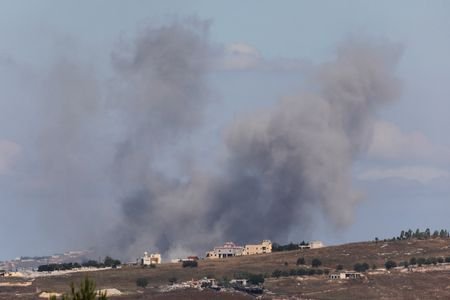
The Lebanese health ministry said intensive airstrikes since midnight had hampered rescue and evacuation efforts, reporting a preliminary toll of 18 dead and 33 wounded that was expected to rise.
Residents and Lebanese media said airstrikes and shelling hit several towns in the Nabatieh district overnight and into early Friday, in what Lebanon's state news agency NNA described as one of the heaviest bombardments in recent weeks.
Israel said the strikes targeted what it described as Hezbollah operatives and infrastructure across several areas of southern Lebanon and were carried out in response to repeated ceasefire violations by the Iran-backed group.
Hezbollah said its fighters ambushed an Israeli force advancing near Ali al-Taher hill in southern Lebanon, destroying three Merkava tanks with guided missiles and targeting troops with rocket and artillery fire. The group said clashes were ongoing.
The escalation came a day after Israel published a map showing an expanded military control zone in southern Lebanon and said it would not rule out carrying out attacks beyond it, raising questions over a U.S.-brokered agreement reached on Wednesday to end the U.S.-Israeli war with Iran.
The agreement calls for an end to hostilities on all fronts, including Lebanon, and for parties to respect Lebanon's territorial integrity and sovereignty.
A senior Israeli official said Israel was engaged in "stubborn negotiations" with U.S. President Donald Trump's administration over maintaining troops up to 10 km (6.2 miles) inside southern Lebanon as it pursues Hezbollah.
Israel has rejected calls to withdraw its forces from southern Lebanon, while Hezbollah has continued attacks on Israeli positions, including with explosive drones that have killed and wounded troops this week.
(Reporting by Jana Choukeir in Dubai and Maya Gebeily in Beirut; Editing by Clarence Fernandez, Aidan Lewis)