By Jana Choukeir
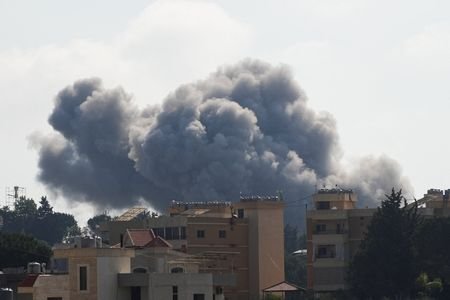
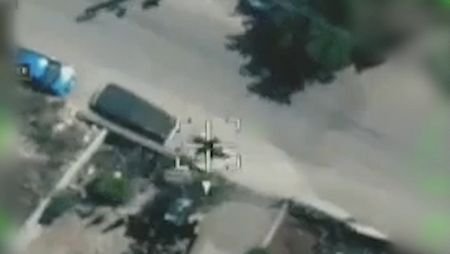
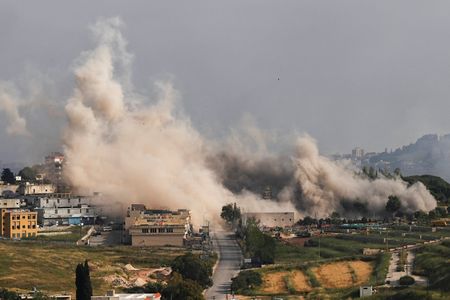
May 26 (Reuters) - Israel pounded Lebanon with more than 120 air strikes on Tuesday in one of the heaviest days of bombing in weeks, Lebanese security sources said, as Israeli Prime Minister Benjamin Netanyahu said his military was deepening its operations in the country.
The bombing raids further strained a ceasefire announced on April 16 that was meant to halt fighting between Israel and the Lebanese armed group Hezbollah, and came as Iran said the United States had violated a separate truce by striking southern Iran.
Lebanese security sources told Reuters that Israeli strikes had hit across southern and eastern Lebanon on Tuesday.
Lebanon's health ministry said Israeli strikes in recent hours had killed 31 people and wounded 40, state news agency NNA reported early on Wednesday.
It said 14 people were killed in the town of Burj al-Shamali in southern Lebanon, including two children and three women.
Some strikes hit near the Beaufort Castle, a nearly 900-year-old fortress in southern Lebanon that UNESCO has described as one of the best-preserved examples of medieval castles in the region. At least three strikes also hit near Lebanon's largest water reservoir at the Qaraoun Dam in east Lebanon, Lebanon’s National News Agency said.
In a statement on Tuesday, Netanyahu said the Israeli military "is operating with large forces in the field and capturing and controlling areas."
"We are fortifying the security strip to protect the northern communities," he said in a reference to a self-declared security zone occupied by Israeli troops several kilometres inside southern Lebanon.
HEZBOLLAH FIRES AT ISRAELI TANKS
Two sources said on Tuesday that the Israeli military had expanded its ground operations in southern Lebanon past the security zone but gave no further details on the extent of the advance beyond the so-called Yellow Line.
That line, separate from the U.N.-demarcated "Blue Line" marking the frontier between Lebanon and Israel after Israel's withdrawal in 2000, forms part of a proposed buffer zone extending 5 km to 10 km (3 miles to 6 miles) into southern Lebanon.
Israel's military had ordered residents not to return to dozens of villages in the zone, and its troops have been destroying homes in the area.
An Israeli military official said the military was "operating in a targeted manner beyond the Forward Defense Line in order to remove direct threats to the citizens of the State of Israel" and Israeli soldiers, "in accordance with the directives of the political echelon."
Netanyahu said on Monday Israel would intensify its strikes against Hezbollah, while a U.S. official said the Iran-backed group had ignored warnings to halt attacks that risked undermining negotiations to end the U.S.-Israeli war on Iran.
Hezbollah said on Tuesday it had targeted Israeli forces and tanks advancing toward the southern Lebanese town of Zawtar al-Sharqiya with explosive drones, rockets and artillery.
Lebanon's health ministry says the cumulative toll from the Israeli offensive since March 2, when Hezbollah fired projectiles into Israel in response to the start of the Iran war, had reached 3,213 dead and 9,737 wounded as of May 26.
The Israeli military said that 10 of its soldiers had been killed since the April 16 ceasefire, six of them by Hezbollah's explosive drones.
The World Health Organization has said at least 608 people in Lebanon have been killed in Israeli attacks since the truce.
Hezbollah has not released figures for its own casualties.
(Reporting by Jana Choukeir, Maya Gebeily and Menna Alaa El Din, Additional reporting by Emily Rose in Jerusalem and Enas Alashray in Cairo; Editing by Kevin Liffey, Sharon Singleton, Hugh Lawson, Bill Berkrot and Sanjeev Miglani)