By Rami Ayyub, Alexander Cornwell, Nayera Abdallah, Maha El Dahan and Laila Bassam
JERUSALEM/TEL AVIV/DUBAI/BEIRUT, March 2 (Reuters) - Israel launched new air strikes targeting Tehran and expanded its military campaign to include attacks on Iran-backed Hezbollah militants in Lebanon on Monday, as U.S. President Donald Trump signaled the U.S.-Israeli military assault on Iranian targets could continue for weeks.
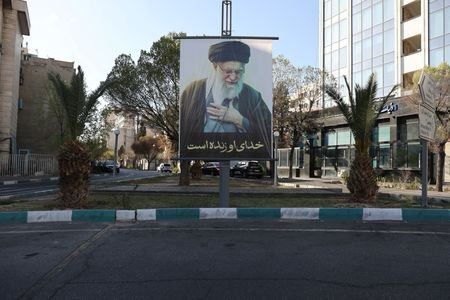
Israel said it was attacking sites connected to Lebanon's Shi'ite Muslim Hezbollah militants, one of Tehran's principal allies in the Middle East, after Hezbollah acknowledged launching missiles and drones toward Israel in retaliation for the killing of Iran's Supreme Leader Ali Khamenei.
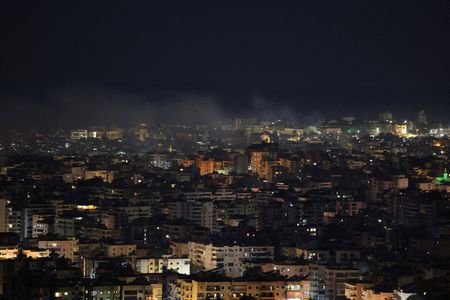
Israel carried out air strikes on the Hezbollah-controlled southern suburbs of Beirut, with more than a dozen explosions rocking the Lebanese capital. Israel said it also struck senior Hezbollah militants near Beirut.
The Hezbollah and Israel tit-for-tat attacks, which follow a U.S.-brokered ceasefire in 2024, widen the conflict that has spread through the Middle East since the United States and Israel attacked Iran on Saturday, sending oil prices soaring and snarling air travel.
The Israeli military said Hezbollah was "fully responsible for any escalation" and warned residents of dozens of villages in southern and eastern Lebanon to evacuate.
Shortly after 7:00 a.m. (0500 GMT) air raid sirens were triggered across Israel, including in Tel Aviv and Jerusalem, warning of a fresh Iranian attack.
A new wave of missiles is being launched from central parts of Iran towards "enemy locations", Iran's state media said on Monday morning.
ASSAULT TO CONTINUE UNABATED, WHITE HOUSE SAYS
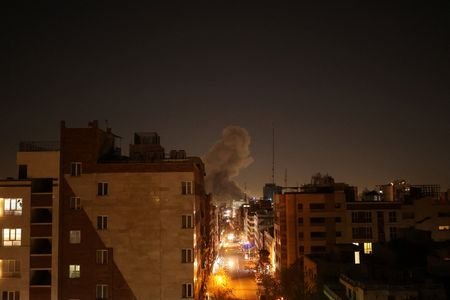
The Israeli military said late on Sunday that its air force had established aerial superiority over Tehran, and that a wave of strikes across the capital had targeted intelligence, security, and military command centers.
Sounds of explosions were heard in different parts of the Iranian capital Tehran on Monday morning, according to state media, while Reuters witnesses heard loud blasts in Dubai and the Qatari capital Doha.
Kuwait said its air defences intercepted hostile drones, in a third consecutive day of Iranian retaliatory strikes on neighbouring Gulf states.
Britain's Royal Air Force base Akrotiri in Cyprus was hit by a suspected drone strike overnight, but damage was limited and there were no casualties, Cypriot authorities and the UK's Ministry of Defence said on Monday.
A senior White House official told Reuters that while Trump would at some point talk with new potential leadership in Iran, the military campaign would go on. The official did not identify any individuals as part of the new leadership.
"President Trump said new potential leadership in Iran has indicated they want to talk and eventually he will talk. For now, Operation Epic Fury continues unabated," the official said.
Iran's President Masoud Pezeshkian on Sunday said a leadership council composed of himself, the judiciary head and a member of the powerful Guardian Council had temporarily assumed the duties of Supreme Leader.
In an X post on Monday, Ali Larijani, who was adviser to Iran's Khamenei, said his country would not negotiate with Trump. He said the U.S. president had "delusional ambitions" and was now worried about U.S. casualties.
FIRST US CASUALTIES
The first U.S. casualties of the campaign, including the deaths of three service personnel were confirmed on Sunday. Two U.S. officials, speaking on condition of anonymity, told Reuters the U.S. service members were killed on a base in Kuwait.
Trump paid tribute to the three killed as "true American patriots" but warned that there will likely be more casualties. "That's the way it is," he said.
An extended military campaign could pose a major political risk for Trump's Republican party ahead of U.S. midterm elections that could decide the fate of Congress. Only around one in four Americans approve of the operation, according to a Reuters/Ipsos poll on Sunday.
But in a video posted on Sunday, Trump vowed military strikes on Iran will continue until "all our objectives are achieved" without providing specifics. He said the assault had so far wiped out Iran's military command and destroyed nine Iranian navy ships and a naval building.
American aircraft and warships have struck more than 1,000 Iranian targets since the start of major combat operations on Saturday, the U.S. military said.
Trump called on Iran's military and police, including the powerful Islamic Revolutionary Guards Corps, to stop fighting, promising immunity for those who surrender and threatening "certain death" for those who resist. He reiterated calls for the Iranian people to revolt against the government.
"I call upon all Iranian patriots who yearn for freedom to seize this moment, to be brave, be bold, be heroic and take back your country," Trump said in the pre-recorded video. "America is with you."
In interviews with multiple news outlets, Trump said the military campaign against Iran could continue for at least four weeks.
EXISTENTIAL CHALLENGE FOR IRAN
Following the death of Khamenei, Iran faces a power vacuum that could leave it in chaos, but the Trump administration has not outlined longer-term aims for the country.
Iran's Revolutionary Guards said on Sunday they had hit three U.S. and UK oil tankers in the Gulf and the Strait of Hormuz, and attacked military bases in Kuwait and Bahrain with drones and missiles. Shipping data showed hundreds of vessels including oil and gas tankers dropping anchor in nearby waters with traders expecting sharp jumps in crude oil prices on Monday.
Global air travel was also heavily disrupted as continued air strikes kept major Middle Eastern airports closed, including Dubai — the world's busiest international hub — in one of the biggest aviation interruptions in recent years. Asian airline shares plunged on Monday, with some major carriers down more than 5%.
It remained unclear what the longer-term prospects were for Iran to rebuild its leadership and replace 86-year-old Khamenei, who had held power since the death of the founder of the Islamic Republic, Ayatollah Ruhollah Khomeini in 1989.
Experts said that while his death and those of other Iranian leaders would deal Iran a major blow, it would not necessarily spell the end of Iran's entrenched clerical rule or the sway of the elite Revolutionary Guards over the population.
Still, it was too early to say how the Iranian people would respond to the changes. A new analysis of Iranian social media from Redpoint Advisors, a global intelligence firm, suggests the public is already looking beyond Khamenei for his replacement.
(Additional reporting by Parisa Hafezi in Dubai, Reporting by Reuters bureaux; Writing by Michael Georgy, James Mackenzie, Nathan Layne, Andrew Goudsward and Martin Petty; Editing by Sergio Non, Raju Gopalakrishnan, Hugh Lawson, William Maclean, Bill Berkrot and Michael Perry)