By Steven Scheer and Alexander Cornwell
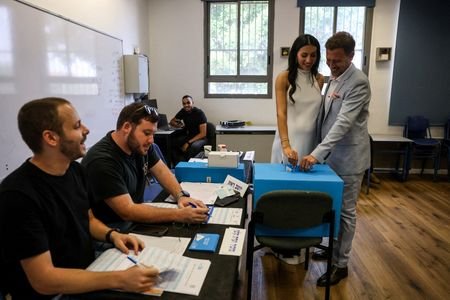
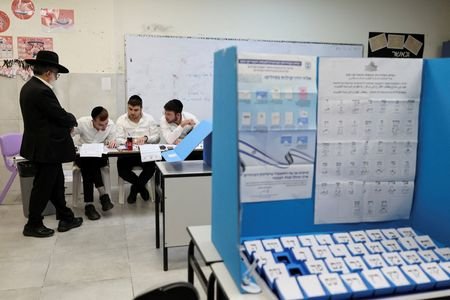
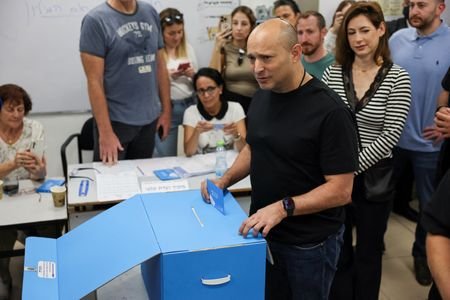
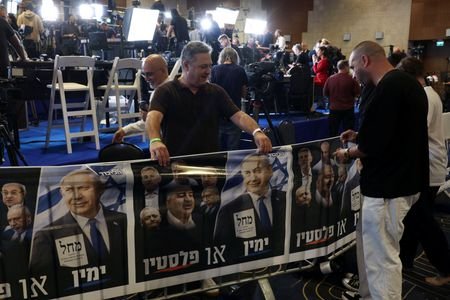
JERUSALEM, Oct 27 (Reuters) - Israel's election ended in an apparent deadlock on Tuesday, exit polls by major television networks showed, with neither Prime Minister Benjamin Netanyahu nor his main rival Gadi Eisenkot on track for a majority in the 120-seat Knesset.
The stalemate could work in Netanyahu's favour, allowing the long-serving prime minister to remain in power in a caretaker capacity while parties try to forge a governing coalition.
Final results could take days, and Israel's fragmented political system leaves smaller parties potential kingmakers. No single party has ever won 61 seats outright in the 120-seat Knesset, making coalitions the norm.
The vote drew record turnout as Israelis passed wartime judgment on Netanyahu in the first election since the Hamas-led attacks of October 7, 2023, and the ensuing wars in Gaza, Lebanon and Iran.
The policies of Netanyahu's right-wing coalition have been divisive at home and deepened Israel's international isolation, but he has portrayed himself as the leader with the mettle to face down Israel's foes.
Netanyahu, 77, has served as prime minister for nearly 19 of the past 30 years and has repeatedly survived political crises. He entered the election facing longstanding corruption charges, which he denies, and criticism over intelligence failures that allowed Hamas-led militants to kill 1,200 people and take 251 hostages.
Eisenkot, 66, a hawkish former military chief who lost a son and two nephews in the Gaza war, emerged as Netanyahu's strongest challenger, stressing his security credentials while positioning himself as a centrist domestically.
He entered politics only four years ago and joined Netanyahu's war cabinet after the Hamas attack, but quit eight months later, criticising the prime minister's leadership.
Unless one of them can assemble a majority, Israel faces prolonged coalition talks or another election.
(Additional reporting by Maayan Lubell and Rami Ayyub in Jerusalem, Lili Bayer in Tel Aviv; Writing by Tom Perry and Michael Georgy; Editing by Howard Goller, Joe Bavier, Peter Graff and Kevin Liffey)