By Alexander Cornwell and Nazih Osseiran
TEL AVIV/BEIRUT, March 24 (Reuters) - Israel will occupy southern Lebanon up to the Litani River to create a "defensive buffer", Defence Minister Israel Katz said on Tuesday, spelling out for the first time Israel's intent to seize territory amounting to nearly a tenth of Lebanon.
At a meeting with the military chief of staff, Katz said Israeli forces would "control the remaining bridges and the security zone up to the Litani," a river that meets the Mediterranean about 30 km (20 miles) north of Israel's border.
Lebanese armed group Hezbollah said it would fight to prevent Israeli troops from occupying southern Lebanon, calling such a move an "existential threat" to the Lebanese state.
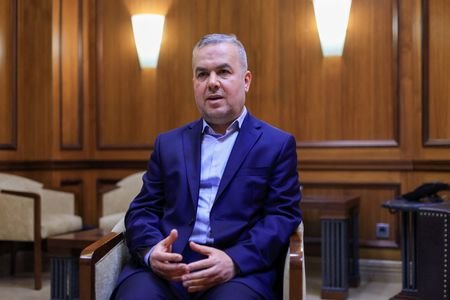
Senior Hezbollah lawmaker Hassan Fadlallah said any Israeli occupation south of the Litani would be met with resistance. "We have no choice but to confront this aggression and cling to the land," he told Reuters.
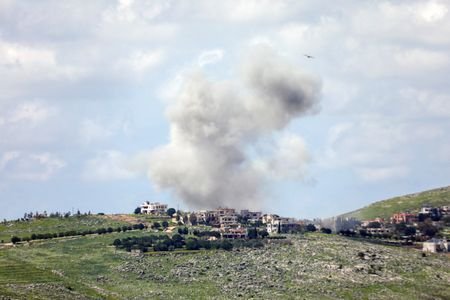
Israel has destroyed five bridges over the river since March 13 and accelerated the demolition of homes in Lebanese villages near the border, part of what it says is a campaign against Hezbollah rather than civilians. Under international law, attacks on civilian infrastructure, including homes and bridges, are generally prohibited.
Katz has previously warned Lebanon's government it would lose territory if it failed to disarm Hezbollah, the militant group backed by Tehran that drew Lebanon into the U.S.-Israeli war on Iran when it fired into Israel on March 2.
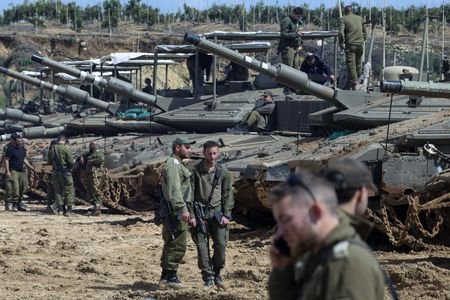
The Israeli military declined to comment on Katz's remarks. It has previously said ground troops were carrying out limited, targeted raids near the border. Israel has repeatedly invaded Lebanon in recent decades, and occupied the south until 2000.
ISRAEL SEEKS DEFENSIVE BUFFER LIKE IN GAZA, SAYS KATZ
Katz had said there could be no homes or residents in areas of southern Lebanon where there was "terror", in an apparent reference to Hezbollah, whose fighters have continued to launch daily rocket and drone attacks into Israel and battle Israeli troops in southern Lebanese villages.
He said forces were establishing a "forward defensive line", destroying infrastructure used by Hezbollah, including homes he described as "terrorist outposts".
For the second time this week, Katz compared the approach to that taken by the Israeli military in Gaza, saying buildings near the border were being cleared and demolished "to create a defensive buffer and push the threat away from communities".
On Monday, influential Finance Minister Bezalel Smotrich said Israel should annex southern Lebanon up to the river.
There was no immediate comment from the Lebanese government. Residents who have fled the south decried the silence.
"If our government isn’t standing with us, what is it we can do?" said Najib Hussein Halawi, who fled his hometown of Kfar Kila near the border weeks ago. He says the village is in ruins.
Israel's strikes across southern Lebanon and parts of Beirut have caused widespread destruction and killed more than 1,000 people, according to Lebanese authorities, with over a million residents forced from their homes. The U.N. human rights chief has criticised Israel's actions, particularly its use of evacuation orders.
'PAY THE PRICE FOR SOMEONE ELSE'
Among those killed are almost 120 children, 80 women and 40 medical personnel, according to Lebanon's health ministry, which does not otherwise distinguish between civilians and militants. Two Israeli soldiers have been killed in fighting in Lebanon.
An overnight strike hit an apartment in Bchamoun, a mountainous area southeast of Beirut, killing three people, including a three-year-old girl, according to the health ministry. The blast tore open walls and scorched furniture in a neighbouring apartment.
Its owner, Rawaa Eido, told Reuters that militants who expect to be targeted should not be staying in residential buildings. "We don’t have any political affiliation to anyone at all...Why - when they’re being targeted - do they want to hide in houses among people?” she said, in tears. There was no comment from the Israeli military.
Lebanon on Tuesday declared the Iranian ambassador persona non grata and gave him until Sunday to leave, after ordering the departure of dozens of other Iranian nationals, including diplomats, earlier this month. It said the move did not represent a severing of diplomatic ties with Iran. Israeli Foreign Minister Gideon Saar, in a post on X, praised Lebanon's decision.
President Donald Trump on Monday said Washington and Tehran could soon reach an agreement on ending the war following what he has described as talks between U.S. and Iranian officials. Iran has denied there have been any negotiations with the U.S.
It is unclear if a ceasefire in Lebanon would be part of any agreement on ending the U.S.-Israeli war on Iran.
(Reporting by Alexander Cornwell in Tel Aviv; Nazih Osseiran and Maya Gebeilly, Laila Bassam and Tom Perry in Beirut, additional reporting by Omri Taasan in Jerusalem; Editing by Andrew Heavens, William Maclean, Ros Russell)