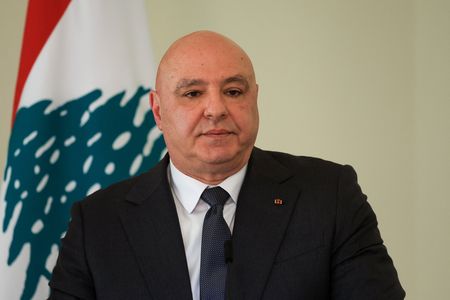
BEIRUT, April 17 (Reuters) - Lebanese President Joseph Aoun said on Friday that a ceasefire agreed to by his country should be transformed into "permanent agreements," without saying whether he was referring to a prospective peace deal with Israel.
The televised address was his first speech since the U.S. brokered a ceasefire to end six weeks of fighting between Israel and Iran-backed armed group Hezbollah on Thursday. The text of the deal says Israel and Lebanon would hold direct talks to produce "peace between the two countries."
Aoun thanked U.S. President Donald Trump and regional countries for helping secure the ceasefire.
'A NEW PHASE'
"Now, we all stand before a new phase: the transition from working towards a ceasefire to working towards permanent agreements that preserve the rights of our people, the unity of our land, and the sovereignty of our nation," he said.
Hezbollah has said it opposes direct talks with Israel and its lawmakers on Friday criticised the government for agreeing to hold such negotiations.
Without mentioning Israel, Aoun said, "These negotiations are not a sign of weakness, nor a retreat, nor a concession."
He only mentioned Israel when saying his goal was to stop Israeli attacks on Lebanon and secure the withdrawal of Israeli troops from Lebanese territory. Israel's defence minister said on Friday Israeli troops would continue to demolish homes in southern Lebanon that he said were being used by Hezbollah.
Aoun said he was prepared to "bear full responsibility for these choices, and I am ready to go wherever necessary to liberate my land, protect my people, and save my country."
Trump on Thursday said he would invite Aoun and Israeli Prime Minister Benjamin Netanyahu to the White House for talks between the two countries. It was not immediately clear if a date was set for the talks, which would be a major milestone for Lebanon and Israel.
Aoun made several apparent references to Iran and Hezbollah in his address, without mentioning them directly. Hezbollah pulled Lebanon into the regional war by firing into Israel on March 2 in support of Tehran.
"Today, we negotiate for ourselves and decide for ourselves. We are no longer a card in anyone's game, nor an arena for anyone's wars, and we never will be again," he said.
"To those who gamble with the fate of Lebanon and the lives of the Lebanese, I say enough!"
(Reporting by Enas Alashray, Laila Bassam and Maya Gebeily; Editing by Alison Williams and Rod Nickel)