By Olivier Holmey
LONDON, May 27 (Reuters) - When in April 1968, years into the Vietnam War, communist forces declared their openness to a negotiated peace, Michael Nelson was quick to flag Reuters as being first with the market-moving news in the United States, well ahead of Dow Jones, the country's then dominant financial news service.
The young Reuters executive took out a full-page advertisement in the Wall Street Journal: "Vietcong willing to talk and it takes Wall Street 21 minutes to find out".
The scoop — and Nelson's quip — earned Reuters an influx of new clients, allowing the century-old British news agency to become a serious player on the other side of the Atlantic.
Over a 36-year career with Reuters, from graduate trainee to general manager in the company's then headquarters at 85 Fleet Street in London, Nelson aggressively expanded its reach.
As he helped transform the agency into an international multimedia giant, he also shaped the broader news industry, becoming, in the 1960s, one of the leading forces behind the instant, computerised dissemination of information.
Nelson died on April 30, the day of his 97th birthday, after a short illness, his daughter Shivaun told Reuters. His funeral was held on Tuesday at Mortlake in London.
He is survived by his wife Helga, their children Patrick, Paul and Shivaun, and Paul's children Emilio, Felix and Alba.
'CON AMORE'
Nelson was born in Bromley, then a town on the outskirts of London, in 1929, the third child of Thomas Alfred Nelson, a joiner who was drafted in both world wars, and his wife Dorothy Pretoria Bevan.
The family moved to London five weeks before the start of the Blitz, Nazi Germany's months-long bombardment of the British capital. Later, an incendiary bomb dropped through the roof of their home, setting Nelson's bed alight.
Although war disrupted education for Nelson, who overcame a childhood stammer, his mother's determination and her salary as a ministerial clerk secured him a place at a fee-paying school.
Nelson, whose parents could not afford a telephone, went on to study history at the University of Oxford. He did not excel, but one of his tutors, the great modern historian A. J. P. Taylor, noted he treated the discipline "con amore" — with love.
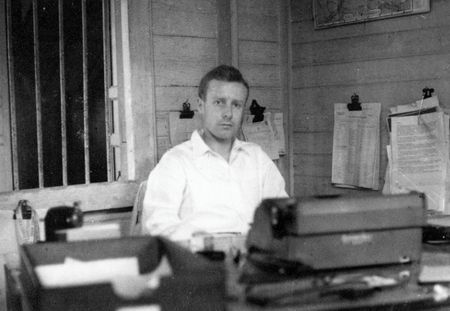
Eager to travel, Nelson applied to three international news agencies. Reuters hired him as a trainee in 1952. Two years later he took over the Bangkok bureau, where as well as being a reporter and editor, he was responsible for selling the service.
It was an early taste of management for Nelson, who, like the agency's founder Paul Julius Reuter before him, would come to shine more as a news entrepreneur than as a journalist.
INFORMATION INDUSTRY REVOLUTION
Rising through the ranks, he became sole manager of Comtelburo, Reuters' economic news service, at 33. The following year, he signed a deal for Reuters to acquire rights outside North America to Ultronic's Stockmaster product.
Until then, distributing financial data had been an arduous task, involving phone lines, messengers and mail. Stockmaster fed the latest stock market prices to a Reuters computer in London, which then served clients internationally.
"It was the greatest revolution in the information industry since the invention of the teleprinter," Nelson said.
In 1967, Nelson rose to the position of general manager. He soon pushed for the development of Reuter Monitor, which allowed dealers to access real-time foreign exchange rates on terminals, an essential tool from the early 1970s onwards, as the collapse of the Bretton Woods system upended currency markets.
Clients flocked to the service.
As a result, the newspaper publishing groups that owned the agency found themselves sitting on "a potential gold mine", the New York Times reported at the time.
In June 1984, Reuters listed on the London Stock Exchange, valuing the company at more than $1 billion. Newspaper owners received more than £150 million ($200 million) after tax from sales of their shares, the UK's Press Gazette reported.
According to "The Price of Truth: The Story of the Reuters Millions", by John Lawrenson and future Financial Times editor Lionel Barber, Reuters would not have entered the computerised business without Nelson. Had it not taken that early gamble, the authors said, Reuters might have ended up as "just the foreign desk of the Press Association", Britain's national newswire.
'WAR OF THE BLACK HEAVENS'
In 1984, Nelson secured the acquisition of the foreign photography business of U.S. news agency UPI. The next year, at his recommendation, Reuters acquired majority control of newsreel group Visnews, giving it the full range of news services: text, pictures and video.
Nelson retired from Reuters on his 60th birthday in 1989, with writing once again filling some of his time.
On a visit to Warsaw and Budapest soon after, he was told of the importance of Western radio stations, particularly Radio Free Europe, in the downfall of communism. His book on the subject, "War of the Black Heavens", with a foreword by former Polish president Lech Walesa, took him seven years to write.
In 1956, sent to Karachi to gather information on a protest condemning Britain's invasion of Egypt, Nelson was greeted by a hail of stones. He said he narrowly avoided death thanks to his driver, who brought him to safety despite the car being badly damaged.
Some five decades later, Nelson pledged profits from the sales of his memoir to the Pakistani charity SOS Children, as a token of thanks to the driver.
(Editing by Alexander Smith)