By Julie Zhu and Federico Maccioni
HONG KONG/DUBAI, March 6 (Reuters) - Emirati airlines resumed some flights to global cities from the war-hit Gulf on Friday, but a Lufthansa jet that was headed to the region diverted over safety fears and an Air France repatriation flight was forced to turn back due to missile fire.
The outbreak of the U.S.-Israel war against Iran has led to flight cancellations across the Middle East, leaving airlines and governments scrambling to support thousands of stranded passengers. Shares in carriers from New Zealand to Japan have slid meanwhile, as the conflict drives up fuel prices.
Passengers have paid huge sums to get out of the Middle East, with last-minute dashes to the airport, overland trips to less impacted hubs and fighter jets at times escorting passenger planes out. Some described it as "absolute chaos".
With most airspace in the region still closed over missile and drone concerns, some people with deep pockets have turned to private jets while charter flights and limited commercial services struggle to evacuate tens of thousands of travellers.
A Lufthansa flight to Saudi capital Riyadh diverted to Cairo on Friday over safety concerns after a similar move by an Air France flight late on Thursday.
"(It) reflects the instability in the region and the complexity of repatriation operations," French Transport Minister Philippe Tabarot said.
Britain's first repatriation flight from Oman landed at London's Stansted Airport early on Friday after delays. Similar repatriation flights arrived or were due to arrive back in countries from Poland to Portugal.
IRAN WAR SHOWS AIR TRAFFIC IS 'EXPOSED, VULNERABLE'
With the conflict showing little sign of easing, wider aviation and air cargo disruption looked set to linger.
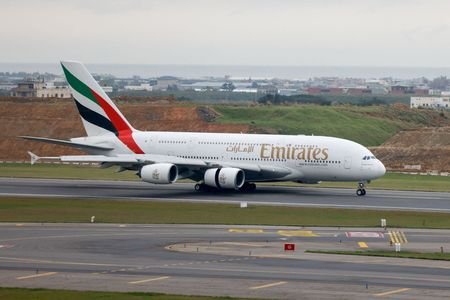
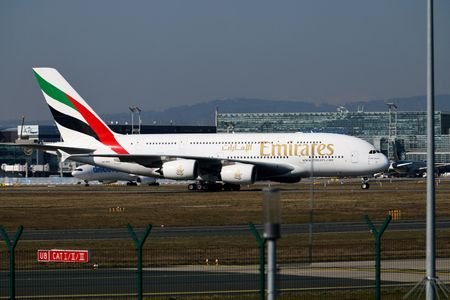
While major carrier Emirates said on Friday it was targeting "a return to 100% of its network" in the coming days, EU aviation regulator EASA extended a warning about high risks until March 11.
Lufthansa on Friday flagged an uncertain outlook despite better-than-expected results. "The war in the Middle East proves once again how exposed air traffic is, and how vulnerable it remains," its CEO Carsten Spohr said.
The limited operations at Middle Eastern hubs have hit travellers on routes from Europe to the Asia-Pacific region particularly hard.
Combined, Emirates, Qatar Airways and Etihad normally fly about one-third of passengers from Europe to Asia and more than half of all passengers from Europe to Australia, New Zealand and nearby Pacific Islands, according to Cirium data.
As of Thursday, traffic at Dubai's DXB airport, normally the world's busiest international travel hub, had almost doubled from Wednesday, but remained only about 25% of normal levels, flight-tracking website Flightradar24 said.
Abu Dhabi-based Etihad said on Friday it would resume a limited flight schedule through March 19, with flights operating to and from Abu Dhabi and around 70 destinations including London, Paris, Frankfurt, Delhi, New York, Toronto and Tel Aviv.
Dubai-based Emirates said it was operating a reduced flight schedule to 82 destinations including London, Sydney, Singapore and New York, with customers transiting in Dubai only accepted if their connecting flight was operating.
Qatar's Doha hub remains shut, though it has been arranging a limited number of relief flights from Oman and Saudi Arabia.
Airline flydubai is expected to resume operations and operate flights from United Arab Emirates to Israel starting early next week, it said.
JET FUEL PRICES SOAR
Higher oil prices have sent jet fuel costs soaring, with Singapore jet fuel reaching a record high of $225 a barrel this week, which traders attributed to concerns about supply shortages from Middle Eastern refiners. Oil prices pulled back slightly on Friday.
"As well as lost revenue, airlines are likely to be affected by higher fuel prices," Fitch Ratings said.
Fuel hedging varies by airline, but Fitch said most carriers in Europe, the Middle East and Africa were about 50% to 80% hedged for the next three months.
($1 = 0.7481 pounds)
(Reporting by Julie Zhu in Hong Kong; Additional reporting by Trixie Yap in Singapore, Federico Maccioni in Dubai, Alan Charlish in Gdansk, Ilona Wissenbach in Frankfurt, Joanna Plucinska in London and David Latona in Madrid; Writing by Anne Marie Roantree; Editing by Jamie Freed, Jan Harvey, Philippa Fletcher)