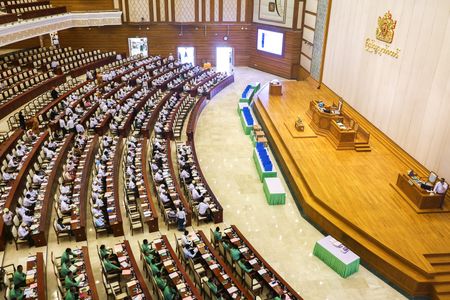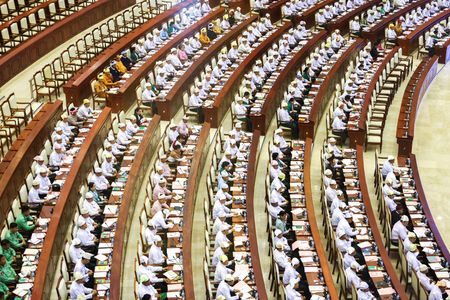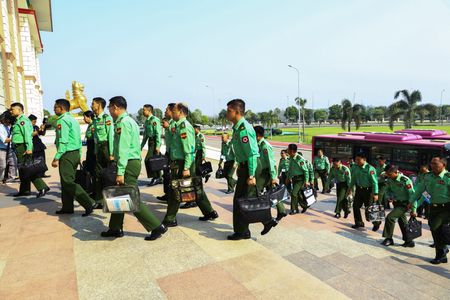
March 16 (Reuters) - Myanmar's parliament convened on Monday for the first time since a coup five years ago, in one of the final steps in a nominal return to democracy where its powerful military retains tight control.
The gathering of the new parliament comes after a recent phased election dominated by the army-backed Union Solidarity and Development Party amid low voter turnout and no viable opposition.
USDP chairman and retired brigadier-general Khin Yi was elected lower house speaker on Monday. Reuters had earlier reported Khin Yi had been touted for the role, which is seen by some analysts as pivotal for the military in advancing its agenda.
Myanmar has been plagued by civil war and a humanitarian crisis affecting millions of its people since its generals staged a 2021 coup against the government of Nobel laureate Aung San Suu Kyi, just as it was preparing for a second five-year term in office following a landslide election win.
Many Western countries have dismissed the latest election as a sham designed to entrench military rule and earn the generals legitimacy after five years as pariahs tainted by sanctions and barred from top international summits.
MILITARY-DOMINATED LEGISLATURE
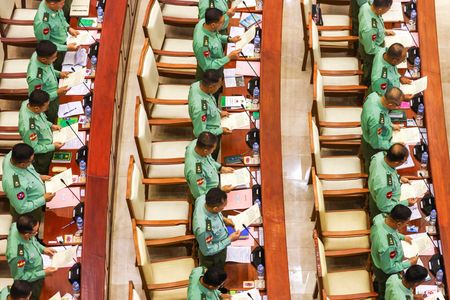
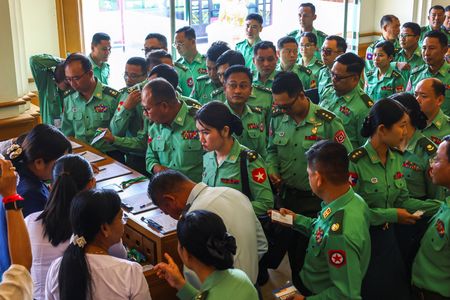
The USDP, created by the military in 2010, won 81% of available seats and will be joined in the bicameral parliament by scores of military officers hand-picked by the armed forces, which under the constitution is allocated a quarter of legislative seats.
The military's big representation and its influence over the USDP effectively puts the legislature under its control, giving the top brass the power to determine the presidency, with junta chief and coup leader Min Aung Hlaing widely expected to take the post himself.
"This level of control makes it clear that one can expect nothing substantial from this body; it is evidently a parliament that will operate solely at the whim of the military leader," said Htin Kyaw Aye, an independent analyst.
"It is merely a manoeuvre by the military leadership to shift power from their left hand to their right hand," he said.
'SUPERBODY' TO BE FORMED
In addition, a new five-member panel, the Union Consultative Council, will be established in what some experts have called a "superbody" that would allow Min Aung Hlaing to maintain his grip on both military and civilian administration.
The junta has defied criticism of the election, insisting it reflected the will of the people. It has said a new government would be formed in April and has predicted an easing of sanctions and greater international engagement and foreign investment.
A commentary in Monday's state-run Global New Light of Myanmar on the formation of parliament said the entire country was hoping for the best political conditions where the national interest is prioritised.
"In carrying out political activities, they must act courageously for the good of the nation, free from personal bias, party bias, and feelings of favouritism or hostility," it said.
(Reporting by Reuters Staff; Writing by Martin Petty; Editing by Raju Gopalakrishnan)