The EDITH study will compare AI assisted screening with existing practice while assessing cancer detection and the effect on patients and staff
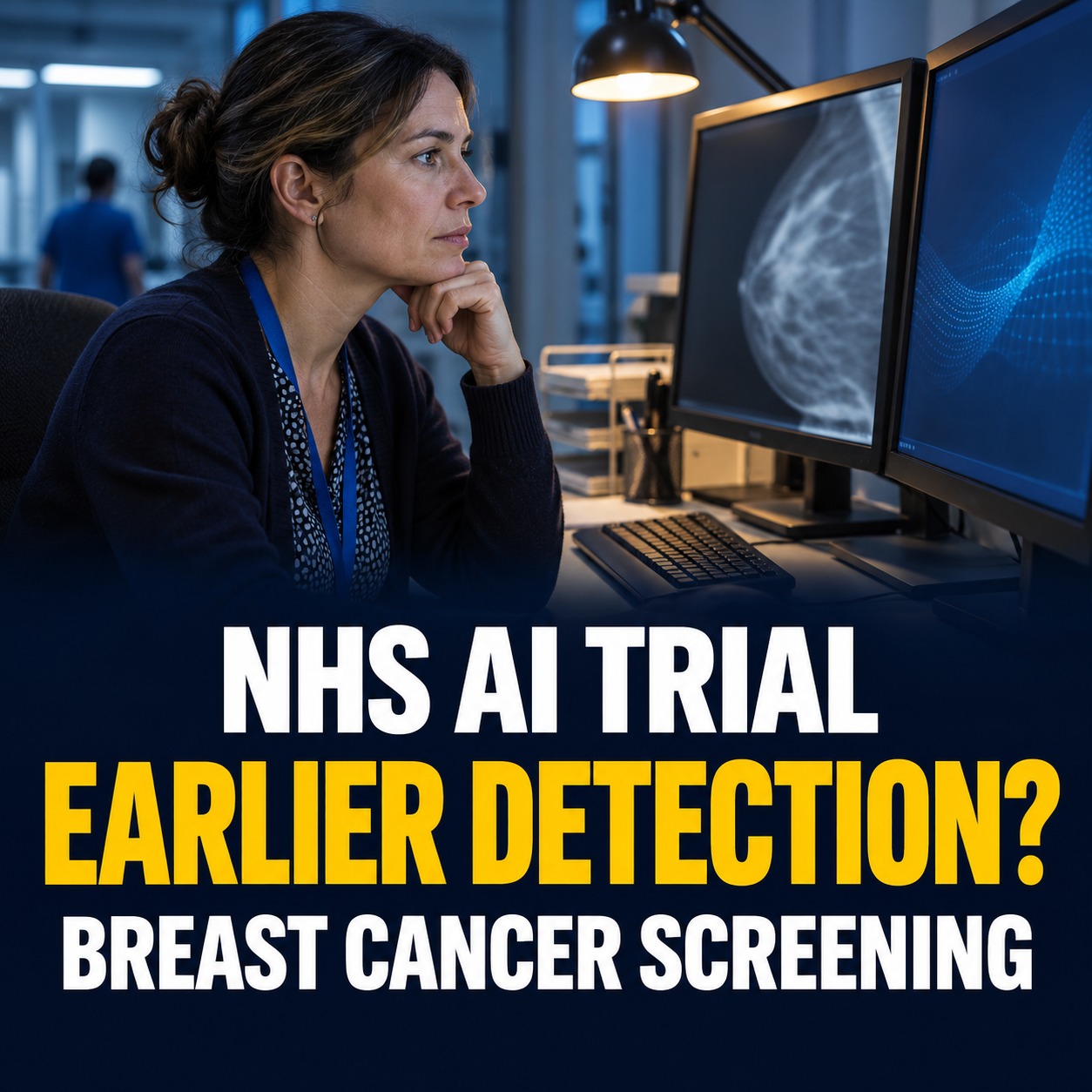
A major NHS breast screening trial is assessing whether artificial intelligence can help clinical staff identify cancer more effectively while reducing the work required to review mammograms.
The EDITH study plans to involve around 660,000 women at approximately 30 screening centres. Its purpose is to establish how AI performs in routine screening, including its benefits, limitations and costs. The trial is an evaluation of the technology, with results still to come.
What EDITH is testing
EDITH stands for Early Detection using Information Technology in Health. The Health Research Authority describes it as a comparison between standard screening, in which two NHS experts review breast images, and approaches that combine human expertise with AI.
The study was announced in February 2025 and is supported by £11 million through the National Institute for Health and Care Research, according to a government answer published by Parliament in March 2026. Its continuing rollout brings a question about AI into everyday clinical practice: does assistance improve the service patients receive?
How clinical oversight will work
The published NIHR study listing explains that participants will be allocated to three groups. One follows the existing two-reader approach. In another, AI checks for possible findings after a human reader has examined the images. A third uses AI first to assess the likelihood of cancer and help determine the subsequent reading pathway.
All images will still be examined by a human expert. Warwick's participant information says final cancer detection decisions will involve at least two human experts. This oversight is central to the design: researchers are testing different ways of supporting clinical judgement.
Why finding more abnormalities is not the only measure
Researchers will measure which cancers are found, recalls for further tests and cancers appearing between screening rounds. They will also compare performance across patient groups.
The participant information notes that AI may flag areas that are not cancer. Extra investigations can cause anxiety, so higher detection must be weighed against unnecessary follow-up.
EDITH will also assess workload and the experiences of staff and patients. These measures will help establish whether the technology is useful in a working screening service.
What participation means
Women attending participating centres will receive information about the research with their screening invitation. The Health Research Authority says women who do not want AI assistance can opt out.
The study includes follow-up after screening to establish whether participants develop cancer later. This is important because an assessment based only on the initial appointment would not show every cancer missed by a screening pathway.
The trial's recruitment target describes the planned scale of the research. It should not be read as a count of women already screened or evidence that the new approach has improved outcomes.
Impact and conclusion
EDITH could provide evidence for decisions about the wider use of AI in NHS screening. If assistance improves detection and makes effective use of clinical time, it may help services manage demand. Adoption will also depend on the effect on patients and the reliability of the different approaches. The value of this trial lies in testing those questions before treating potential benefits as established results.
Sources
Health Research Authority EDITH study summary
University of Warwick EDITH public information and safeguards
NIHR Be Part of Research EDITH study details
UK Parliament 23 March 2026 answer on funding and the trial announcement