By Kyu-seok Shim
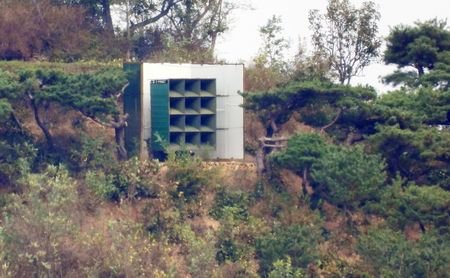
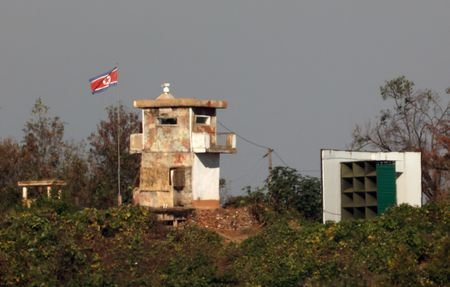
SEOUL, Oct 22 (Reuters) - North Korea will place anti-South Korea loudspeakers on standby along the entire border within days and has put unspecified new countermeasures on alert, Kim Yo Jong, the powerful sister of North Korea's leader, said on Thursday.
The statement came with a warning to Seoul of "the most horrible and distressing situation" if South Korea continued what Pyongyang calls interference in the North's internal affairs.
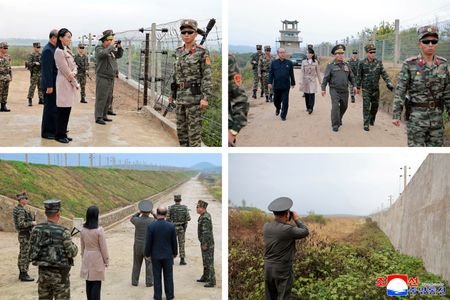
On Wednesday evening, after she visited fortification sites with senior military officials, Kim said North Korea would activate anti-South Korea loudspeakers across the border by the end of October.
She said North Korean tactical units had taken up new positions and accused South Korean troops of conducting warning broadcasts and warning shots at multiple locations near the border. South Korea said warning shots had been fired as "legitimate and defensive measures".
Kim warned that North Korean troops would "mercilessly eliminate" South Korean forces if warning fire resulted in harm to North Korean territory or personnel.
South Korea's military and Unification Ministry urged North Korea to return to talks to resolve differences. The military said Kim's statements showed that measures taken with the UN Command to strengthen control in the demilitarized zone were having an effect.
The defence ministry told a news briefing that Seoul would take "proportionate measures" if North Korea acted on its threats, although no decision had been made.
LOUDSPEAKER THREAT ADDS PRESSURE ON SEOUL
The fresh threats from Pyongyang are a blow to South Korean President Lee Jae Myung’s efforts to ease inter-Korean hostility, and raise tensions along the heavily fortified frontier to their highest level since he took office in June last year.
Both North and South Korea have historically used loudspeakers to broadcast propaganda across the border, with South Korean broadcasts featuring K-pop music and news that have long irked Pyongyang and prompted tit-for-tat responses.
The two Koreas are separated by a demilitarized zone established after the 1950-53 Korean War ended in an armistice. North Korea has been reinforcing its side of the DMZ with mines, barriers and fencing since 2024 as it seeks to establish what it calls a permanent border with South Korea.
South Korea says North Korean mines planted as part of its fortification activity in the DMZ caused a blast last month that seriously wounded two soldiers. North Korea denies responsibility, calling the incident a South Korean fabrication.
Seoul's Foreign Ministry on Thursday said it would send a letter to the UN Security Council saying the blast was caused by mines planted by North Korea and constituted a violation of the Korean War armistice.
The letter will demand an apology from Pyongyang and urge dialogue to prevent escalation, a ministry spokesperson told a briefing.
Since taking office, Lee has pursued a policy of diplomatic engagement and tension reduction with North Korea despite Pyongyang's refusal to resume dialogue and its designation of South Korea as a hostile state.
His administration halted South Korean loudspeaker broadcasts and dismantled fixed border loudspeakers last year, steps Seoul described as key confidence-building measures, and after which North Korea suspended its own broadcasts toward the South.
Lim Eul-chul, a professor at Seoul's Kyungnam University, said Kim's latest warnings did not necessarily mean the loudspeakers would be immediately activated.
But they presented Lee's administration with an "enormous dilemma", he said, as it faced a choice between maintaining its policy of peaceful engagement and containing aggressive North Korean military activity along the border.
(Reporting by Kyu-seok Shim, Jack Kim and Joyce Lee; Editing by Stephen Coates and Kate Mayberry)