By Scott DiSavino
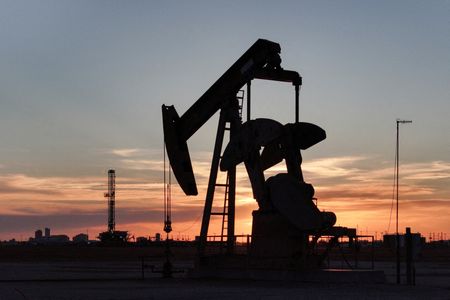
NEW YORK, March 9 (Reuters) - Oil prices jumped about 7% on Monday to settle at their highest since 2022 as Saudi Arabia and other OPEC members cut supplies during the expanding U.S.-Israeli war with Iran.
Shortly after settlement, prices turned negative following news of a phone call between U.S. President Donald Trump and Russian President Vladimir Putin. Prices fell further in post-settlement trade, dropping by over 5%, after Reuters reported that sources said the Trump administration was mulling a further easing of sanctions on Russian oil to help tame global energy prices.
Earlier, Putin had said Moscow was ready to supply oil and natural gas to Europe.
Separately, Trump said in a CBS News interview that he thinks the war against Iran "is very complete" and that Washington was "very far ahead" of his initial four- to five-week estimated time frame.
During Monday's trading session, prices soared by as much as 29%. At settlement, Brent futures were up $6.27, or 6.8%, to $98.96 a barrel. U.S. West Texas Intermediate (WTI) crude rose $3.87, or 4.3%, to $94.77.
Those were the highest settlement prices for Brent and WTI since August 2022. Even after prices fell post-settlement, both benchmarks were still up over 35% since the Iran war began.
At its session peak, Brent hit a high of $119.50 a barrel and WTI to $119.48. Those were the highest intraday prices for both crude benchmarks since June 2022, comparable with all-time highs of $147.50 a barrel for Brent and $147.27 for WTI in July 2008.
Prices retreated from those intraday highs for various reasons, including worries about inflation and news the U.S. and other Group of Seven (G7) countries were considering tapping strategic petroleum reserves.
IRAN'S HARDLINERS
In addition to energy supply disruptions, oil prices got a boost on Monday after Iran's hardliners staged a show of force, taking to the streets to proclaim their loyalty to new Supreme Leader Ayatollah Mojtaba Khamenei, whose rise appeared to dash hopes of a swift end to war in the Middle East.
Saudi oil giant Aramco began cutting output at two of its oilfields, adding to reductions by the United Arab Emirates, Iraq, Kuwait and Qatar as shipments continue to be blocked and they run out of storage.
The war has virtually shut the Strait of Hormuz, through which roughly one-fifth of the world's oil and liquefied natural gas passes. A Greek-operated oil tanker, however, sailed through the Strait with a cargo of Saudi crude in a sign that some commercial vessels are still attempting to navigate the vital passage.
Data analytics firm Kpler said that even if the strait opens on Tuesday, it would likely take six to seven weeks for exports to return to full capacity from the Gulf.
Saudi Aramco, which can divert some flows via the Red Sea port of Yanbu, has offered more than 4 million barrels of Saudi crude in rare tenders to counteract Hormuz being shut.
TRUMP'S OPTIONS TO TAME PRICES
As the market retreated relentlessly from session highs, analysts cited several factors including the possibility of a coordinated release of crude from strategic reserves, fears that soaring energy prices will cause inflation to skyrocket and lead to weaker economic growth, and profit-taking in a technically overbought market.
Trump is expected to review a set of options to tame oil prices, including a possible joint effort with other countries to release crude from strategic reserves.
Trump said he would hold a press conference after markets close on Monday, but gave no details about what he would discuss.
Other options include restricting U.S. exports, intervening in oil futures markets, waiving some federal taxes and lifting legal requirements that domestic fuel move only on U.S.-flagged ships, the sources said, speaking on condition of anonymity.
"Alternatives are limited, such as tapping strategic oil reserves, but in comparison to the potential magnitude of the supply disruption if the Strait (of Hormuz) stays closed longer, they are a drop in the ocean," UBS analyst Giovanni Staunovo said.
G7 nations said they were prepared to implement "necessary measures" in response to surging global oil prices, but stopped short of committing to release emergency reserves.
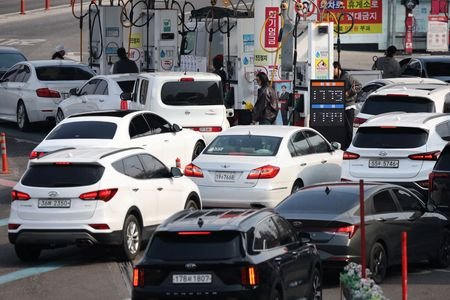
Airline stocks were hammered, while airfares soared as the Iran war sent jet fuel and other oil prices surging, sparking fears of a deep travel slump and the potential for the widespread grounding of planes.
To combat rising inflation, central banks generally boost interest rates, which lifts borrowing costs. This can slow economic growth and reduce energy demand.
On the technical side, WTI was the most overbought on record, and Brent was the most since 1990.
SIGNS OF SUPPLY SHORTAGES
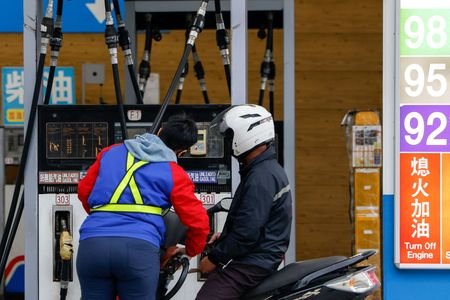
Pakistan's Prime Minister Shehbaz Sharif said schools would close for two weeks and office workers would work more from home as he announced a range of measures to cut fuel use and government spending to cope with surging oil prices due to the Iran war.
In Hungary, Prime Minister Viktor Orban announced a cap on fuel prices after an emergency government meeting on Monday and urged the European Union to suspend sanctions on Russian energy related to Moscow's war in Ukraine.
(Reporting by Scott DiSavino in New York and Shadia Nasralla in London; Additional reporting by Seher Dareen, Enes Tunagur, Yuka Obayashi, Sudarshan Varadhan, Rae Wee, Tim Gardner; Editing by Jamie Freed, Muralikumar Anantharaman, Kirsten Donovan, Will Dunham and David Gregorio)