By Bernadette Christina and Ananda Teresia
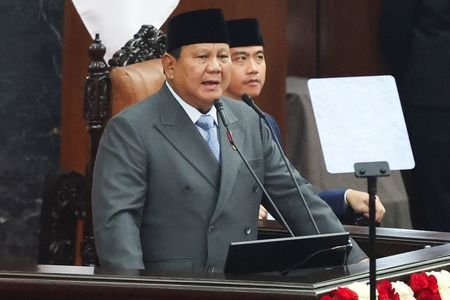
JAKARTA, Aug 14 (Reuters) - Indonesian President Prabowo Subianto announced a plan on Friday to create a new exchange that will set prices for the country's strategic commodities by the start of next year, in a fresh gambit to leverage the country's vast natural resources to boost growth.
Since taking office in 2024, Prabowo has pushed policies that expand state influence over critical minerals in the resource-rich nation, a major global supplier of palm oil, nickel products and thermal coal, as well as copper, bauxite and natural gas.
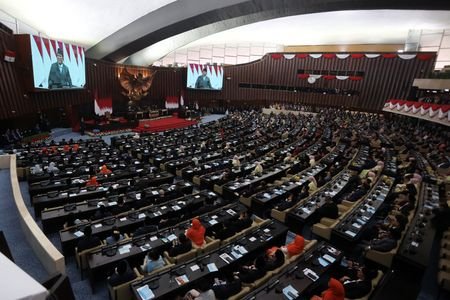
The announcement, made during Prabowo's speech on his 2027 budget proposal, followed remarks to reassure markets over the role of a new state export firm, Danantara Sumberdaya Indonesia, which will monitor key commodity shipments, but would not take control of exports.
"If they don't want to pay the prices we set, then don't buy them," Prabowo said in a fiery speech in parliament. "Better to keep those commodities, nickel, tin, gold in the ground for our children, grandchildren," he added.
"Our coal, our gas, our oil... let them remain in the ground. We drink the coffee ourselves."
The exchange for strategic minerals and commodities is expected to be operational by January 1, 2027 to develop reference prices for Indonesia's main commodity exports, Prabowo said.
Rules for the new bourse will be introduced by September 17, the chief of Indonesia's Financial Services Authority, which will oversees the commodity exchange, Friderica Widyasari Dewi told journalists later.
Prabowo used his Independence Day speeches to highlight his plan to secure more revenue from Indonesia's natural resources, at a time when his approval rating is falling and there is growing investor scepticism over his ambitious policies and plans to control commodity exports.
Indonesia launched a palm oil bourse in 2023, but transactions remain light.
Past efforts by regional and global exchanges to develop alternative palm oil futures have done little to dent Bursa Malaysia Derivatives' dominance as the global price setter.
Indonesia also has exchanges for tin products.
"Indonesia must not forever remain a country where commodities are extracted while their prices and profits are determined elsewhere," he said. "We do not merely want to be a global producer of commodities; we must become a price-setter."
Prabowo did not elaborate which commodities will be included in the new bourse.
'CHEATED NO MORE'
Global commodity markets were rattled in May when Prabowo unveiled his plan to centralise exports of palm oil, coal and ferroalloy under DSI to tackle under-invoicing, and investors have since sought clarity over the scope of DSI's role.
"We do not want the Indonesian people to be cheated anymore," he told parliament on Friday, saying that the new export entity had identified a potential $5 billion in export proceeds from differences in reported and actual prices.
Prabowo said that in its first two months of operation, DSI has monitored more than 6,500 transactions for the three key commodities and overseen $14 billion in exports.
Soon, this monitoring would expand to cover 50 ports and, "in the short term, DSI will manage all strategic commodity exports, not only three," the president said.
In a report after the speech, Bank Danamon analyst Irman Faiz said it would be important "to ensure that tighter oversight does not increase transaction costs for exporters or discourage private investment".
One Singapore-based metals trader, who asked not to be named as they were not authorised to speak to media, said they would prefer not to use the new bourse.
"Personally I don't think the market will use it unless specific export rules are associated."
PROBLEMS NOT YET RESOLVED
Prabowo also acknowledged Indonesia had encountered issues during his term, but said those were on the way to being addressed.
He said investment is still growing and creating jobs and economic growth could reach 6% by the end of the year.
Prabowo took office in October 2024 after a sweeping election victory built on promises to root out corruption, lift economic growth from 5% to 8% and give free meals to tens of millions of children.
But his administration has struggled this year with a depreciating rupiah and a poorly performing stock market, as well as concerns over government overspending and central bank independence.
(Reporting by Bernadette Christina, Ananda Teresia and Fransiska Nangoy in Jakarta; additional reporting by Solomon Cefai in Singapore; Writing by Gibran Peshimam, Fransiska Nangoy; Editing by Martin Petty, John Mair, Elaine Hardcastle)