
By Dr. Hamid Khan Al-Mashriqi
International Strategic Affairs Expert and Analyst
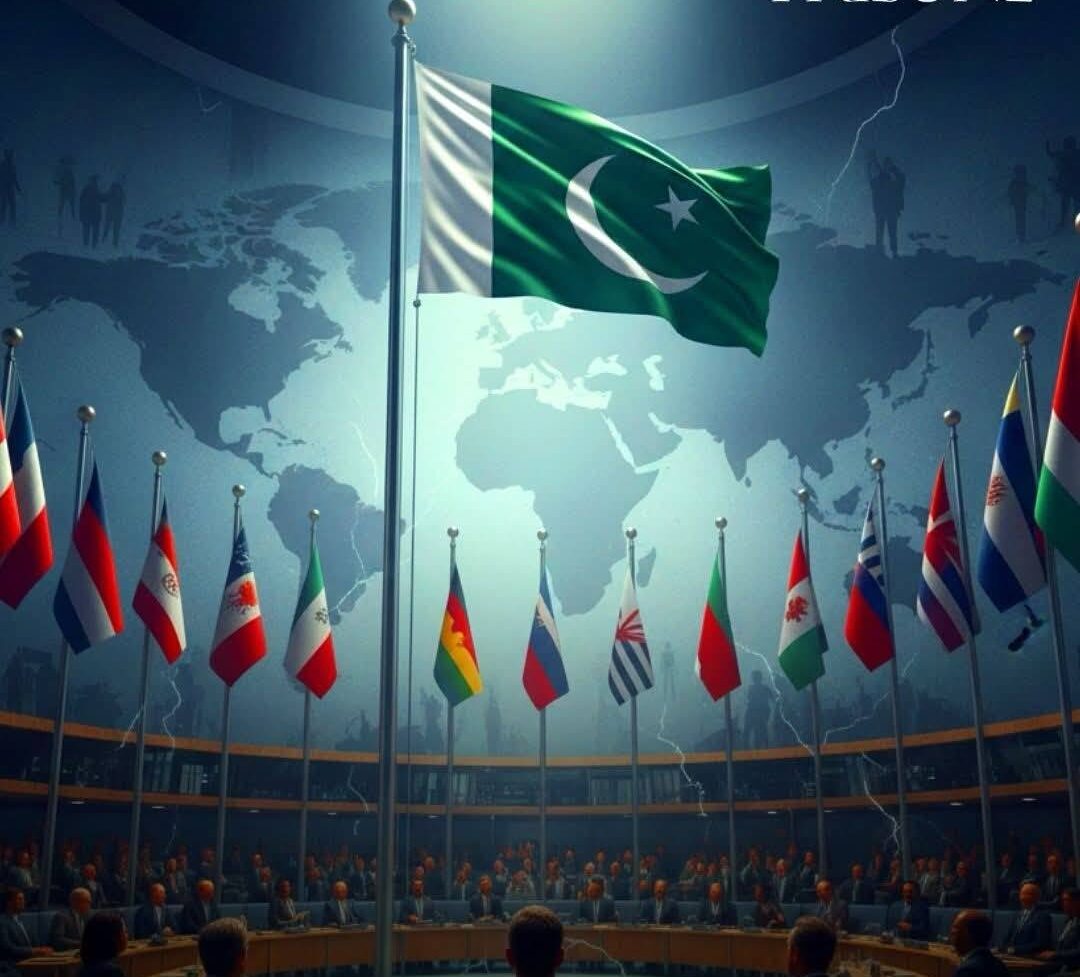
Recent regional developments have underlined a profound shift in Pakistan’s strategic and diplomatic standing. What only days earlier appeared to be a limited bilateral confrontation between Pakistan and India evolved into a moment that drew the attention of major world capitals, with Islamabad emerging as a key center of diplomatic engagement.
At the outset of the Pakistan-India crisis, several international voices treated the matter as a conventional dispute to be managed solely by the two neighboring states. Yet events unfolded differently. Pakistan’s measured military preparedness, national unity, and diplomatic clarity transformed the situation. What followed was not merely the containment of a dangerous confrontation but the emergence of Pakistan as a credible actor capable of influencing wider regional stability.
Pakistan’s response demonstrated a critical strategic principle: strength, when combined with restraint, creates legitimacy. The country proved that it possesses both the capability to defend its sovereignty and the maturity to prevent escalation. This combination altered international perceptions. Instead of being viewed through the prism of internal political challenges or outdated regional assumptions, Pakistan projected itself as a stable and responsible state.
A particularly significant development was the shift in global diplomatic focus. International attention increasingly turned toward Islamabad, not only because of the India-Pakistan situation but also due to Pakistan’s broader role in regional de-escalation efforts. This transformation reflects a larger geopolitical reality: states that can communicate with multiple rival actors simultaneously become indispensable in times of crisis.
Pakistan’s engagement across multiple diplomatic fronts has been especially noteworthy. Whether interacting with American officials, regional powers, or key Middle Eastern stakeholders, Islamabad has demonstrated an ability to maintain dialogue without becoming captive to any single bloc. This balanced diplomacy is increasingly rare in a polarized international environment.
The evolving tensions involving Iran, the United States, and Israel further highlighted Pakistan’s growing strategic relevance. At a time when many analysts feared that regional escalation could spiral into a much wider conflict, Pakistan positioned itself as a stabilizing force. Through sustained engagement with diverse actors, it contributed to efforts aimed at reducing tensions and preserving channels for negotiation.
The significance of this role should not be underestimated. In international politics, influence is not measured solely by military size or economic weight. It is also measured by trust, access, and the ability to create space for dialogue when confrontation appears inevitable. Pakistan’s recent diplomatic conduct has shown that it increasingly possesses these attributes.
Another crucial aspect of recent developments has been the exposure of aggressive political narratives in the region. Repeated attempts by adversarial forces to manufacture crises for domestic political gain have gradually lost credibility. Pakistan’s firm but disciplined posture has helped shift the narrative from accusation to accountability.
 Equally important is the message conveyed by Pakistan’s internal cohesion. National unity during moments of external pressure sends a powerful signal internationally. It tells the world that despite political differences, the state retains strategic continuity and institutional resilience when core national interests are at stake. Pakistan’s recent diplomatic successes also carry a deeper symbolic meaning. For decades, global diplomacy has traditionally been associated with capitals such as Washington, London, Paris, Geneva, and Vienna. Today, Islamabad is increasingly being recognized as an important venue of strategic consultation and regional mediation.
This development did not occur by chance. It is rooted in the sacrifices of the nation’s armed forces, the resilience of its people, and the long historical vision of those who struggled for the creation and survival of Pakistan. The country’s present standing reflects decades of endurance, institutional learning, and strategic adaptation.
In conclusion, Pakistan’s recent role marks more than a temporary diplomatic success. It represents the consolidation of a new strategic identity. Pakistan has shown that it is not merely a state reacting to regional crises but a country increasingly capable of shaping outcomes. In an era defined by instability, this is perhaps Pakistan’s most significant geopolitical achievement.