By Daniel Ramos and Monica Machicao
LA PAZ, Feb 28 (Reuters) - Anger swelled in a poor Bolivian city where a plane crash left banknotes strewn on the ground, prompting authorities to burn the notes they collected and use tear gas to disperse those they accused of trying to pick them up.
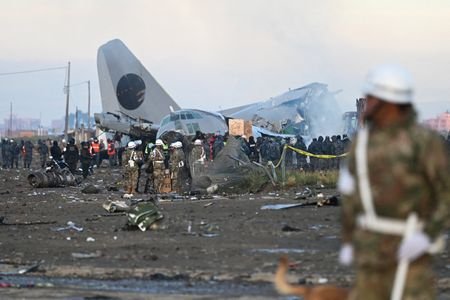
The Bolivian Air Force Hercules aircraft crashed in the populous city of El Alto on Friday evening, killing 22 people and injuring 30. Four children are among the dead and the plane's first pilot is in intensive care, authorities said on Saturday.
About 3,000 people arrived soon after the crash "with a tremendously aggressive attitude wielding sticks and stones" to gather the notes on the ground, Vice Interior Minister Hernan Paredes said. Security forces responded with tear gas and 49 were arrested for vandalism, he said.
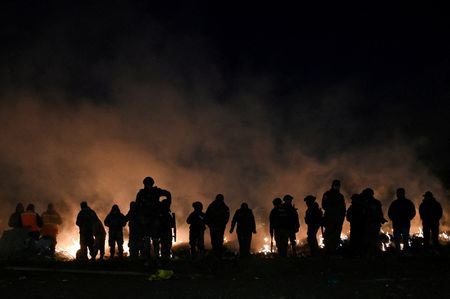
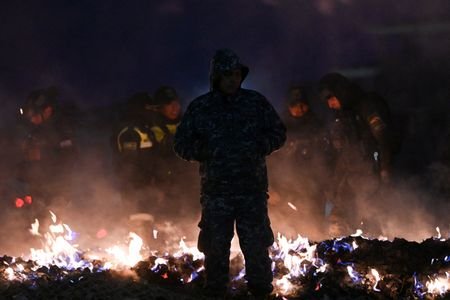
Authorities then began burning the plane's 18 tons of banknotes, which they said were being transported to replace older notes. They said the bills had no legal value and their possession constituted a crime.
"Look at all the money they burned, there are poor families that need that money," said local resident Marcelino Poma. "We need to rise up in El Alto. They took our gasoline subsidy, they hurt our household budgets, now they're taking all the money out of the country."
Small groups of people continued to protest on Saturday.
Only nine bodies have been identified so far, Bolivia's police chief Mirko Sokol said, as many were too disfigured.
The plane was on course to crash into 40 two- and four-storey buildings located just a few meters away, but avoided a bigger tragedy as the pilots executed a quick turn, Paredes said.
"We are in shock," said Cesar Mamani, a family member of one of the victims, calling for justice for those who died. "We truly detest the government's and the armed forces' lack of safety measures."
President Rodrigo Paz lamented a "day of great sorrow for El Alto and the nation," saying the crash was being investigated. Authorities are still searching for the aircraft's black box.
El Alto is one of Bolivia's poorest and fastest-growing major cities. It developed as people migrated to La Paz seeking work in the late 20th century, with many settling above the world's highest capital city, where residents now commute by cable car.
(Reporting by Daniel Ramos and Monica Machicao; Writing by Sarah Morland, editing by Deepa Babington)