By Yimou Lee and Ben Blanchard
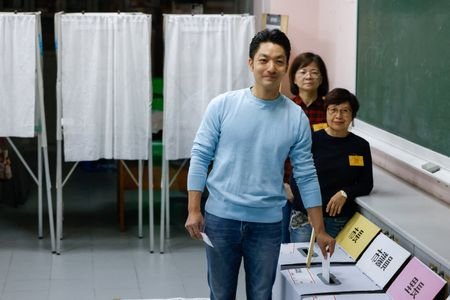
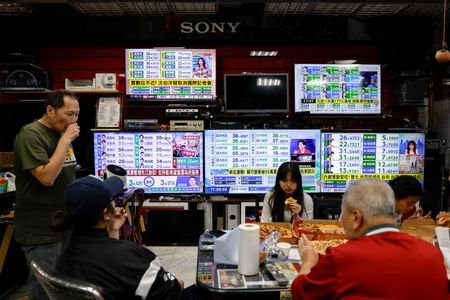
TAIPEI, Nov 28 (Reuters) - Taiwan's ruling party made gains in local elections on Saturday closely watched by China, though the opposition held onto the capital Taipei after a closely fought race with a lawmaker Beijing has sanctioned.
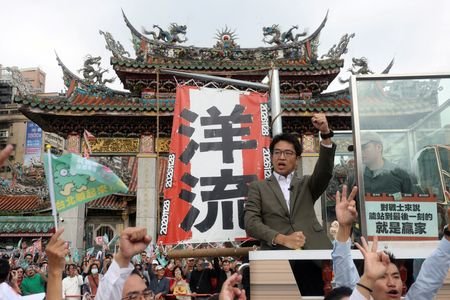
Campaigning in the races in all of Taiwan's 22 cities and counties focused on such issues as transport and the environment, rather than Taipei's contested ties with Beijing.
China views Taiwan as its own territory but exercises no control over it. Taiwan's government rejects those sovereignty claims.
For Taiwan's six largest cities, the ruling Democratic Progressive Party (DPP) and the opposition Kuomintang (KMT) won three each, with the DPP capturing back Taichung, the island's second-most-populous city, the election results showed.
In total, the DPP won at least nine of Taiwan's cities and counties, an increase from the five it captured four years ago.
In Taipei, the KMT's mayor Chiang Wan-an won a tough reelection battle with the DPP's Puma Shen, an academic-turned-lawmaker and expert on China's information warfare whom Chinese police want for what they call "separatism" and whom Beijing has sanctioned.
In his concession speech, Shen said while he had long studied disinformation, the result was real and Taiwan's democracy could be trusted.
"Just as I said earlier in an interview with foreign media, I made it very clear to them that no matter who wins in the end, it will be a victory for Taipei and a victory for democracy," he said.
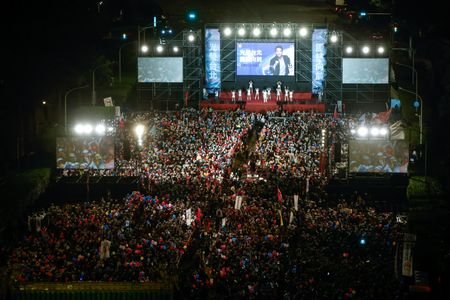
Chiang thanked Shen.
"Together, we have completed a celebration of democracy," he said.
The DPP has only won the Taipei mayorship once, in 1994.
CHINESE WARPLANES ENCIRCLE TAIWAN AHEAD OF VOTE
China refuses to talk to President Lai Ching-te, whom it also calls a "separatist". He says only Taiwan's people can decide their future.
Thirty-three Chinese warplanes encircled Taiwan on Friday ahead of the vote along with eight warships, Taiwan's defence ministry said. Chinese state media also launched another concerted attack on Shen the same day, saying the US had backed him and "deeply interfered" in the vote. The US State Department had no immediate comment.
The KMT traditionally favours close ties with Beijing. Its chair, Cheng Li-wun, met Chinese President Xi Jinping in April.
Manoeuvring for presidential and parliamentary elections, to be held early in 2028, will begin in earnest after Saturday's vote.
While Lai will almost certainly stand for a second term, the maximum allowed under the constitution, the KMT has not confirmed its candidate.
(Reporting by Ben Blanchard and Yimou Lee; Editing by William Mallard, Alison Williams and Emelia Sithole-Matarise)