By Dmitry Antonov and Vladimir Soldatkin
MOSCOW, March 3 (Reuters) - Russia warned on Tuesday that the war launched by the U.S. and Israel against Iran could result in the very outcome they were seeking to prevent, by spurring both Iran and its Arab neighbours to seek to acquire nuclear weapons.
U.S. President Donald Trump cited Iran's pursuit of nuclear weapons - something Tehran denies - as one of the reasons why the United States and Israel launched attacks on Saturday that killed Supreme Leader Ayatollah Ali Khamenei, igniting a war that has spread across the Middle East.
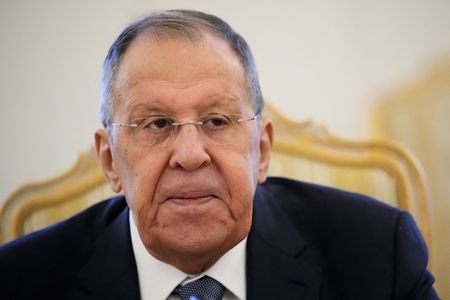
Russian Foreign Minister Sergei Lavrov said the logical consequence would be that "forces will emerge in Iran... in favour of doing exactly what the Americans want to avoid – acquiring a nuclear bomb. Because the U.S. doesn't attack those who have nuclear bombs."
Lavrov told a press conference that Arab countries could also join the race to build a bomb. The risk was now growing that "the nuclear proliferation problem will begin to spiral out of control", he said.
"The seemingly paradoxical declared noble goal of starting a war to prevent the proliferation of nuclear weapons could stimulate completely opposite trends."
He said Moscow had still seen no evidence that Iran was developing nuclear weapons. Israel is widely seen as the region's only nuclear-armed state, which it neither confirms nor denies.
Russia has close ties with Iran, which it sees as crucial to maintaining its influence in the Middle East, especially since their mutual ally, Syrian president Bashar al-Assad, was toppled in December 2024.
President Vladimir Putin has called Khamenei's killing a cynical murder. Moscow has urged an immediate cessation of hostilities.
The Kremlin said on Tuesday that Putin, who spoke with Gulf Arab leaders on Monday, would convey to Iran their concerns about its military strikes on them since the war started.
"Putin will certainly make every effort to contribute to at least a slight easing of tensions," Kremlin spokesman Dmitry Peskov told reporters.
(Reporting by Dmitry Antonov and Vladimir Soldatkin; Writing by Mark Trevelyan and Lucy Papachristou)