By Olesya Astakhova
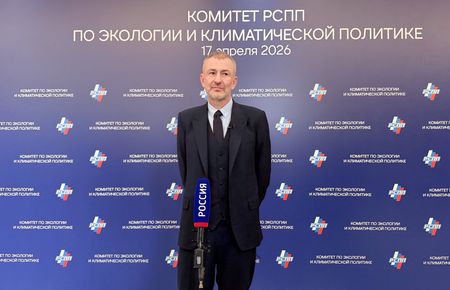
MOSCOW, April 17 - Drone attacks in recent months are having a significant impact on the Russian nitrogen fertiliser industry, billionaire Andrei Melnichenko, founder of fertiliser producer EuroChem, told reporters on Friday.
Shortages and rising prices due to the blockade of the Strait of Hormuz, conduit for about a third of global fertiliser trade, are a major concern in terms of global food security.
Russia accounts for about one-fifth of the global trade, but limited capacity, domestic export caps and recent Ukrainian attacks on major plants all constrain its ability to ramp up fertiliser output.
"Well-known events occurring on our country's territory are leading to increased drone attacks on Russian (fertiliser) enterprises," Melnichenko told reporters on the sidelines of a conference in Moscow, adding that the impact was "significant enough".
A Ukrainian drone attack on Dorogobuzh, one of Russia's largest fertiliser plants, owned by major producer Acron, on February 25 killed seven people and has temporarily knocked out about 5% of the country's overall production capacity.
Dorogobuzh accounts for 11% of Russia's ammonium nitrate output and 9% of its NPK fertiliser production, a mixture of nitrogen, phosphorus and potassium. The plant is expected to be operational again in May.
EuroChem is building a major new production plant with a capacity of 1.1 million tons of ammonia and 1.4 million tons of urea in the Leningrad region, which has been a frequent target of drone attacks in recent months.
Melnichenko said that although prices for all three major types of fertilisers had risen, in his view the effective closure of the Strait of Hormuz has had no impact on the trade in potash, while disruption to phosphate trading was temporary as Middle East producers switch to ports outside the Gulf.
This, he estimated, would happen more quickly than the six months Russian fertiliser producers needed to switch from European to local ports after Western sanctions were imposed.
Melnichenko said that production of nitrogen fertilisers from natural gas had suffered the most.
"The production of nitrogen fertilisers from gas in Qatar, in particular in Saudi Arabia, and so on is affected, because it is produced from deposits located in the conflict zone," he said.
Russia, which controls up to 40% of the global trade in ammonium nitrate, said on March 21 that it would stop exports of the fertiliser for one month.
(Reporting by Olesya Astakhova; Writing by Gleb Bryanski; editing by Guy Faulconbridge, Kirsten Donovan)

