By Cynthia Kim
SEOUL, Sept 22 (Reuters) - A showdown over green space is pitting South Korean President Lee Jae Myung, who is trying to address a national housing crisis as his approval ratings slump, against Seoul's mayor, who is pushing to create a huge park in the capital.
For Mayor Oh Se-hoon, the planned open area is needed to address Seoul's "greenery deficit", which requires cleanup of the 300-hectare (740-acre) site to address environmental flaws.
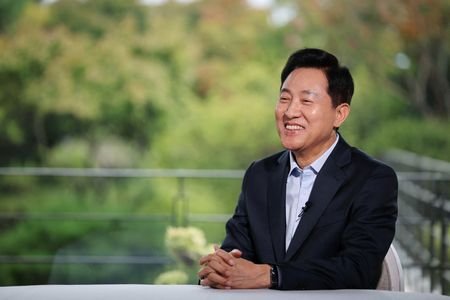
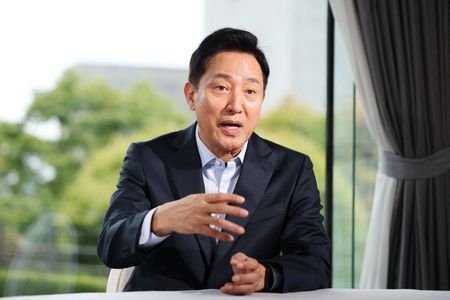
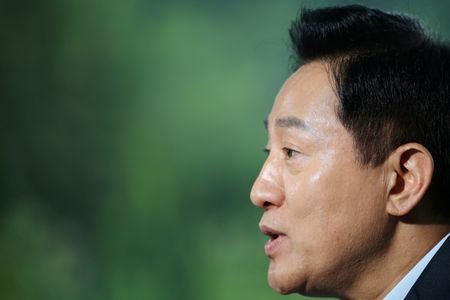
Oh told Reuters he would not surrender "a single centimetre" of the capital's largest planned park to the apartment towers that Lee wants to build as surging home prices batter the president's popularity.
"We remain at odds over Yongsan Park," Oh, who has led South Korea's dominant city on and off for 20 years, said in an interview. "I cannot agree under any circumstances to using it as a site for apartments."
POLITICAL FACE-OFF REFLECTS POLICY DILEMMA
The Lee-Oh clash reflects a global urban-policy conundrum: how megacities can manage severe housing shortages without destroying their liveability and environmental health. With 16,000 people per square km (40,000 per square mile), Seoul is more densely packed than London, New York or Tokyo, putting a strain on both housing and greenery.
Lee's public approval has plunged in the past two months to a record low 37%, a Gallup Korea poll showed on Friday, with real-estate policy the biggest driver of disapproval. Seoul apartment prices climbed for a record 86 consecutive weeks through the first week of September, according to the Korea Real Estate Board.
Lee's centre-left Democratic Party swept most major local races in June elections but suffered a notable setback with the conservative Oh winning another term as Seoul mayor, leaving the president's policies vulnerable to direct resistance and gridlock from the city government.
Oh, a two-time presidential aspirant from the opposition, is considered by political analysts to be a likely contender for the presidency in 2030, while Lee, elected last year, can serve only one five-year term as president. His party will have to defend his policy legacy in the next election.
The sprawling park site near the Han River that bisects Seoul was set to become a public park after more than a century as a military base, first for Japanese colonial occupiers and then for the US, South Korea's major postwar ally.
But in August, Lee proposed building apartment towers in part of the area and stripping protections from Seoul's greenbelt zones and suburban golf courses to increase the land in the capital available for housing. Building houses on the park site would require action by the National Assembly as the space is protected by law.
CONGESTED 'CITY OF WATER AND MOUNTAINS'
Lee acknowledged the strong criticism of his real-estate policies on Friday but stopped short of announcing any structural policy changes.
The land ministry said it would explore part of the area to "provide affordable housing for young people and future generations," stressing that the project will only move forward after establishing a public consensus.
The presidential office referred questions about the matter to the land ministry.
Oh is among many who blame mortgage curbs and higher taxes introduced by Lee for the housing crisis, arguing that reduced borrowing power has failed to cool housing demand and instead pushed up rents.
Loan curbs disproportionately hurt young, first-time buyers because "wealthy individuals who hold plenty of cash find it even easier to purchase homes, whereas young people who do not have immediate cash completely lose the opportunity to buy their very first home," the mayor said.
The land ministry said the country needs to regulate mortgages to curb excessive debt, but it has recently eased borrowing rules for young, first-time homebuyers.
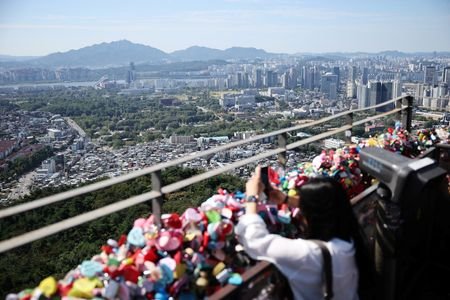
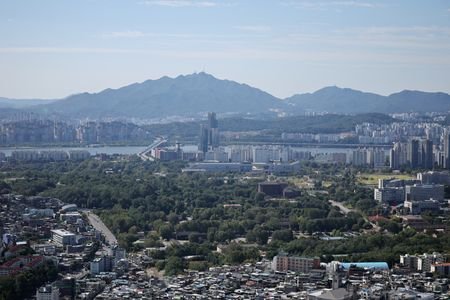
Asked why the park mattered so much to Seoul residents, Oh described the capital as "a city of water and mountains" that nonetheless thirsts for green space, with 60% of citizens living in apartment buildings.
In addition to the river, Seoul is ringed by four inner peaks and four outer peaks, so residents can easily see greenery in the distance.
But green space that people can experience daily — on their work commute, for example — is a different matter, Oh said, adding that Seoul residents have just a fourth of the greenery that Londoners enjoy.
(Reporting by Cynthia Kim in Seoul; Additional reporting by Heejung Jung; Editing by William Mallard)