By Kyu-seok Shim
SEOUL, March 12 (Reuters) - South Korean President Lee Jae Myung has ordered tough disciplinary action against officials responsible for delays in recovering the remains of victims from the 2024 Jeju Air crash that killed 179 people, his office said Thursday.
Lee had expressed regret and offered condolences after an additional probe into the crash found that nine body parts belonging to seven victims had been discovered more than a year after the accident, a presidential aide told a briefing.
The president had instructed authorities to determine why those remains, along with 648 personal items and 155 pieces of aircraft debris, were left unattended for so long, the official said.
A full investigative report into the disaster is pending public disclosure, after missing a one-year deadline.
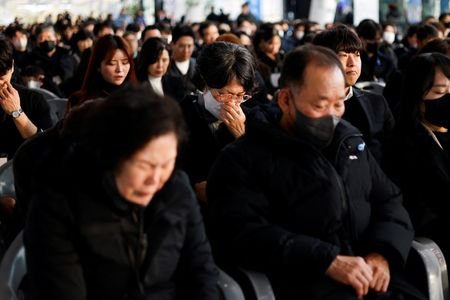
The transport ministry issued an apology on Monday for the delays, but victims' families have criticised the government for leaving remains and belongings abandoned in an open storage area and demanded accountability.
"We are appalled by the transport ministry’s late and inadequate apology, which the families say is like killing the victims a second time," a representative for the families said on Monday.
Another family representative welcomed Lee's statement on Thursday, saying it was "due time" authorities showed some sense of responsibility.
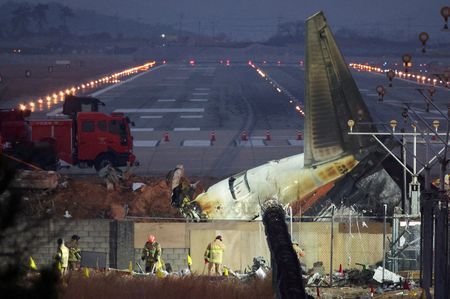
The December 2024 crash involved a Boeing 737-800 which was struck by birds, belly-landed and overran the runway at Muan International Airport, killing almost everyone on board after it struck a concrete support for a localiser antenna. The only survivors were two flight attendants at the rear of the plane.
Thursday's announcement comes after a state audit released this week found that the transport ministry had approved faulty airport‑safety structures for more than two decades, failures linked to the crash.
The audit concluded that a concrete embankment built under a localiser antenna at Muan airport — rather than a frangible structure required under international rules — contributed to the scale of the fatalities.
It also found years of improper certifications and missed inspections involving similar installations at multiple airports.
(Reporting by Kyu-seok ShimEditing by Ed Davies)