By Juliette Jabkhiro, Yann Tessier and Crispian Balmer
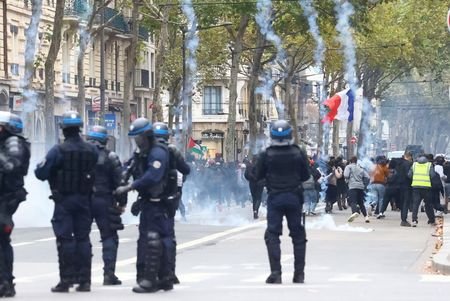
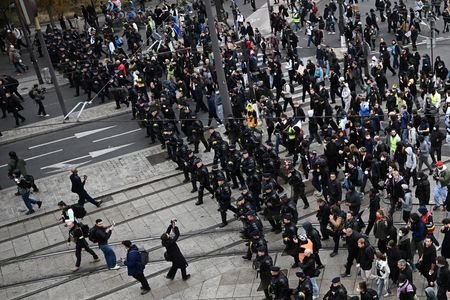
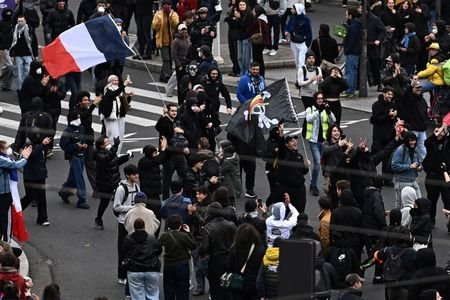
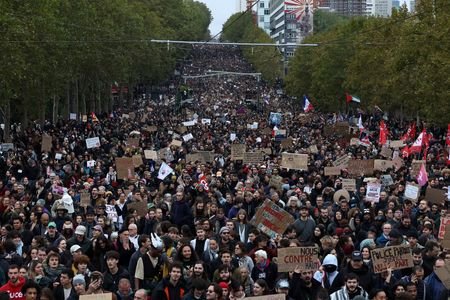
PARIS, Oct 24 (Reuters) - Hundreds of thousands of demonstrators marched in France on Saturday, with largely peaceful rallies giving way to clashes in Paris and Marseille as night fell despite a huge security operation aimed at preventing a repeat of last week's unrest.
The Interior Ministry said 410,000 people took part in protests nationwide, though unions said the true figure was twice as high.
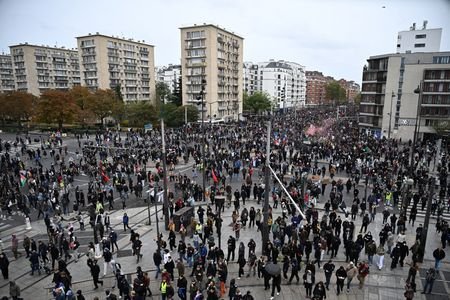
The main demonstration took place in Paris, where around 110,000 people marched on the southeastern fringes of the capital, denouncing rising living costs and growing inequality.
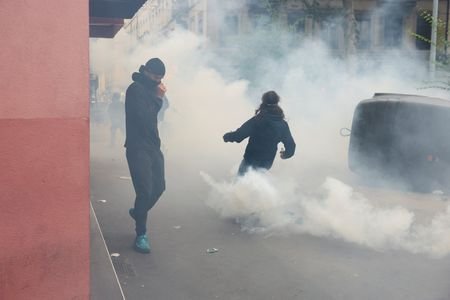
The atmosphere deteriorated sharply after the rally ended. Riot police fired tear gas and water cannon to disperse a group of around 500 hooded youths who hurled stones at officers, a security official said.
In France's second city, Marseille, youths dragged large metal sheets to block a street, set fire to rubbish bins, and hurled rocks and bottles at riot police.
The confrontations continued after sunset and police said two jewellery shops were raided.
Clashes also flared in Lyon, Bordeaux and Grenoble, while police fired volleys of tear gas at demonstrators in Clermont-Ferrand, Lille, Nantes and Nice.
However, the violence was still less intense than a week ago, when looters and vandals went on the rampage in a number of French cities.
POLICE MAKE PRE-EMPTIVE SEARCHES
Authorities deployed 70,000 police officers and gendarmes, 10,000 more than a week earlier, after conceding they had underestimated the scale of the unrest on October 17.
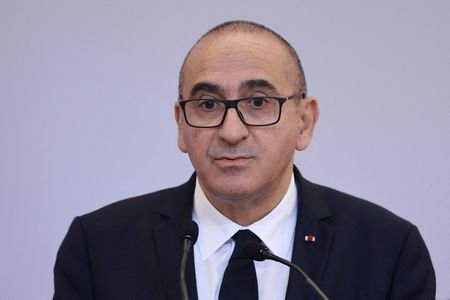
"We have to be ultra, ultra responsive," Interior Minister Laurent Nunez told reporters on Saturday, accusing far-left activists and criminal gangs of seeking to foment violence.
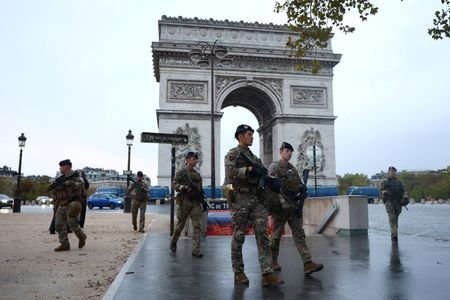
Much of central Paris took on the appearance of a city under lockdown, with shopkeepers boarding up storefronts, museums closing their doors and more than 20 metro stations shut.
Business groups urged retailers to remain closed after thousands of shops and businesses were damaged or looted across France last weekend.
"There are hardly any customers, so it's not really worth staying open," said Oskar, manager of a Kiton boutique in Paris.
Several of the capital's best-known cultural institutions, including the Louvre, the Musee d'Orsay and the Paris Opera, closed for the day as a precaution, leaving tourists frustrated.
"Everything's boarded up and we're not quite sure where we should be," said Xavier Dolliole, a tourist from the US city of New Orleans.
PROTESTS RIPPLE ACROSS EUROPE
The nationwide unrest began with small student demonstrations in suburban Paris last month to denounce school conditions. After it spread into a broader protest against the state of the economy in France, it also prompted demonstrators to take to the streets in neighbouring countries.
On Saturday Belgian police used tear gas and pepper spray as they clashed in Brussels with anti-government demonstrators, while protests took place in a number of Italian cities for a second weekend.
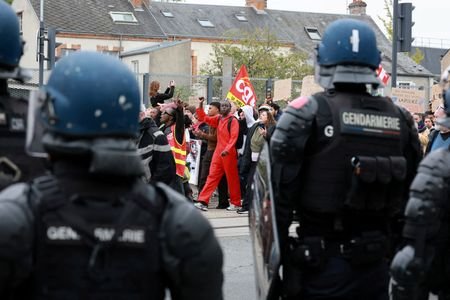
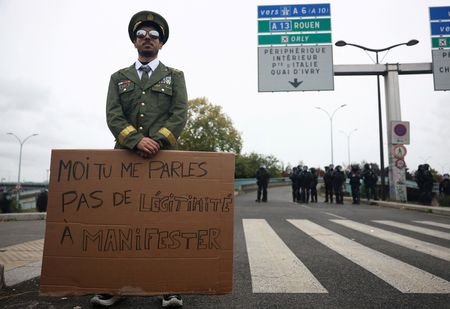
Leftist leaders in France denounced a government move to limit the number of authorised marches in many cities, as well as a last-minute decision to shift the Paris event to the southeastern fringes of the capital.
Hard-left leader Jean-Luc Melenchon, who joined the Paris rally, hailed what he called a "magnificent mass display of collective discipline and self-restraint".
He predicted the protests would continue until President Emmanuel Macron, whose mandate expires next year, addressed the social malaise in France, one of the world's richest nations but with a growing debt mountain that has alarmed investors.
"Given the current situation, I think he will come to understand that this will happen again every week. There is still time for (Macron) to give in. After that, the only thing left to him will be the exit door," Melenchon told reporters.
FAR-RIGHT PARTY HOLDS CONGRESS
Many demonstrators have accused the government of overreacting, as soldiers were dispatched to patrol the Champs-Elysees, a grand boulevard lined with luxury shops and restaurants.
"We shed tears for shops, not for the people who are being impoverished all year round," said Clara Lebbadi, a 22-year-old arts student.
"My friend and I almost didn't come because we were scared, but we came precisely because it's important not to let repression win," she added.
The first authorised march on Saturday passed off peacefully in Orléans, around 120 km (75 miles) south of Paris, where demonstrators rallied against Marine Le Pen's far-right National Rally, which is holding a party congress in the city.
A shooting west of Paris on Friday heightened tensions. A gunman suspected of acting out of Islamophobic hatred killed one person and wounded four others, including a 12-year-old girl.
"We have come to tell the far right, face-to-face, that we are not afraid," said Bally Bagayoko, the mayor of Saint-Denis and a member of Melenchon's France Unbowed party.
(Reporting by Crispian Balmer, Bertrand Boucey, Yann Tessier, Alessandro Parodi in Paris and Elizabeth Pineau in Orleans; Writing by Crispian Balmer. Editing by Mark Potter, Ros Russell and Barbara Lewis)