By Johan Ahlander and Anna Ringstrom
STOCKHOLM, April 1 (Reuters) - Swedish Prime Minister Ulf Kristersson said on Wednesday that his Moderates party would aim to form a majority government that includes the anti-immigration Sweden Democrats if it wins a parliamentary election on September 13.
Opening the door to the Sweden Democrats, while widely expected given their close cooperation with the current right-wing minority government, answers one key question for voters as the election campaigns gather steam.
The opposition centre-left bloc currently leads in polls and the right needs to club together to have a chance of forming a government.
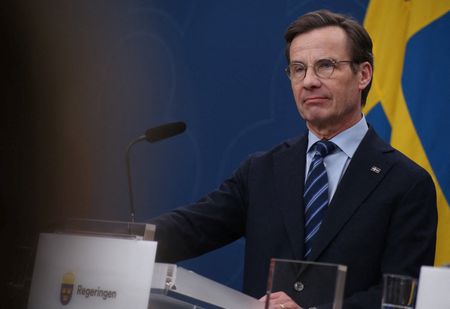
"After the election, we will form a four-party majority government," Kristersson told a press conference. "I will form and, as prime minister, lead that government."
Kristersson said the Sweden Democrats would have a strong influence and important cabinet posts in such a government, citing immigration and integration as areas on which the party might lead.
The Sweden Democrats, the second-biggest party in the 2022 election, were long a pariah in domestic political circles but they have gradually been accepted by right-wing parties, who stand little chance of forming a government without them.
Formed in part by activists with neo-Nazi and white supremacist ties in 1988, the Sweden Democrats apologised last year for their antisemitic and racist past.
The party first entered parliament in 2010 and currently supports the right-wing coalition government in the Riksdag under a far-reaching cooperation deal, but it has no members in the cabinet.
"The news we deliver today promises stability, that is that we will form a majority government on the condition that we win 175 seats in parliament," Sweden Democrat party leader Jimmie Akesson said in the press conference with Kristersson, referring to a majority in the 350-seat house.
Last month, a hurdle to the Sweden Democrats joining a possible post-election right-wing government was removed when the Liberals dropped their long-standing refusal to consider backing a government that includes Akesson's party.
While the opposition centre-left bloc now leads in the polls, the Social Democrats, the biggest party in parliament, face their own issues in cobbling together a ruling coalition that would involve several smaller parties.
(Reporting by Johan Ahlander and Anna Ringstrom; writing by Niklas Pollard; editing by Louise Rasmussen)