By David Brunnstrom
WASHINGTON, June 12 (Reuters) - The leader of Taiwan's main opposition party said on Friday that she had used a visit to the U.S. to correct "many misunderstandings" about her pro-engagement approach to China, amid strong criticism from hawks in Washington.
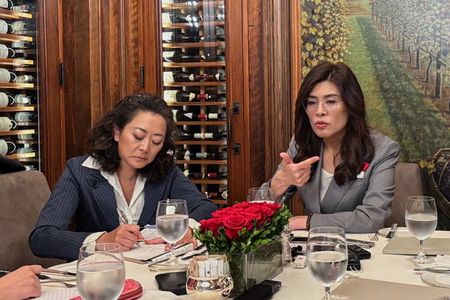
Cheng Li-wun, chairwoman of the Kuomintang (KMT), Taiwan's largest opposition party, has been on a two-week U.S. trip following her April visit to China, where she met President Xi Jinping.
She told reporters she had met nine members of the U.S. Congress from committees dealing with finance, defense and foreign affairs, as well as academics and representatives of think tanks. She said there were "many misunderstandings" about the KMT's approach.
Cheng's party, which along with its small ally the Taiwan People's Party has a majority in parliament, has faced sharp criticism in Washington for cutting by a third government plans to spend an extra $40 billion on arms. China hawks say the spending is essential to strengthen Taiwan's defenses, with Republican Senator Dan Sullivan warning that the KMT was "playing with fire.”
Speaking in Chinese, Cheng said she believed her meetings had allowed her interlocutors to see "the real KMT and the real me," adding in English that she was "honest and candid … and they can tell it when they meet me in person."
She said U.S. think-tank experts had suggested that the KMT should be more proactive in proposing its own defense spending legislation and added that the party was seriously considering this.
"Seeking peaceful dialogue across the Taiwan Strait does not mean we will give up Taiwan's national defense capabilities, still less that we will give up Taiwan's democracy and freedom," she said.
Beijing claims democratically governed Taiwan as its own territory and has never renounced the use of force to bring it under its control.
The U.S. is bound by law to provide Taiwan with the means to defend itself and has traditionally been its most important international backer and arms supplier, despite the lack of formal diplomatic ties.
Cheng praised both U.S. President Donald Trump and Chinese leader Xi, welcoming their summit last month as contributing to peace and stability.
She declined to comment on Trump's remark after meeting Xi that a pending $14 billion U.S. arms sale to Taiwan was a "very good negotiating chip", words that caused alarm in Taipei. She said the issue had not come up in her Washington meetings.
Asked her impression of Xi, she said that he had been "very gentle and very nice and very real," adding that this suggested a desire to resolve the Taiwan issue peacefully.
(Reporting by David Brunnstrom; Editing by Don Durfee and Sanjeev Miglani)