(In reporting credits, corrects spellings of Matt Spetalnick and Washington)
By Sarah Kinosian, Marianna Parraga and Gram Slattery
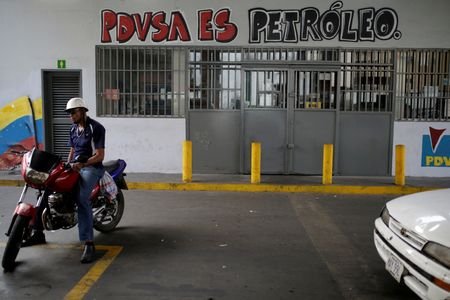
CARACAS/MIAMI, Sept 5 (Reuters) - The billionaire who helped broker the Trump administration’s sweeping long-term oil deal with Venezuela was until recently a target of U.S. money-laundering investigations involving funds embezzled from the state-owned oil company PDVSA. Now, after assisting U.S. authorities ahead of the capture of authoritarian leader Nicolas Maduro, Alejandro Betancourt is Washington’s key partner in an unusual oil agreement with Caracas.
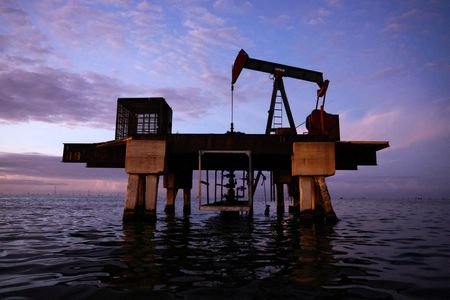
According to last week’s announcement, the U.S. gains access to about one-fifth of Venezuela’s crude reserves for decades. The Pentagon’s Office of Strategic Capital takes a 35% stake in North American Blue Energy Partners (NABEP), Betancourt’s company and a known crude producer in Venezuela. The State Department gets the right to buy 20% of NABEP’s oil at cost, and preferential access to the remaining 80% of output.
The deal marks a striking change of fortune for Betancourt, who four people familiar with U.S. policy in Venezuela said was key to U.S. strategy and planning in the lead-up to the January 3 operation that removed former President Maduro from power and flew him to New York to face charges of drug-trafficking, which Maduro denies.
Asked about the investigations of Betancourt, a U.S. official who declined to be named said most of the legal challenges were nearly a decade old — and that he currently has no legal problems in the United States. NABEP’s record of pumping oil in Venezuela made Betancourt the best partner to help boost output under the arrangement, the official said.
Reuters could not determine precisely when U.S. federal prosecutors paused their investigation into Betancourt or whether it came in exchange for his cooperation with the Trump administration.
Sarah Chouraqui, NABEP’s lawyer, said Betancourt had a strong record of operating in complex energy markets. “The allegations in question have been examined extensively by authorities in multiple jurisdictions, and no charges have been brought against him,” she said in an email.
Chouraqui did not address questions about his assistance to the Trump administration or his legal cases.
INFORMATION THAT HELPED ENFORCE U.S. BLOCKADE
In the months before Maduro’s capture, the billionaire provided information that helped enforce a U.S. naval blockade targeting sanctioned oil tankers operating in Venezuela, which led to the seizure or interdiction of more than a dozen vessels, according to the four people who spoke on condition of anonymity. He also facilitated negotiations with officials including Delcy Rodriguez, who became interim president after Maduro’s capture.
The Venezuelan government did not respond to requests for comment.
After Maduro’s removal, Betancourt’s role as a key intermediary continued, helping broker oil deals and other partnerships and continuing to assist communications between Washington and Caracas to kickstart Venezuela’s economy, according to seven sources.
In January, Betancourt helped broker a key oil trading agreement that has led to the export of more than 135 million barrels of crude and fuel to the United States, Europe, India and the Caribbean so far, according to vessel monitoring data and six people with knowledge of the negotiations. That’s about half of all oil exports through the end of August.
Reuters could not determine his exact role in the discussions.
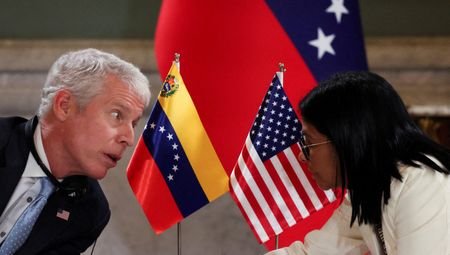
Betancourt has also popped in on meetings at Venezuela’s Miraflores presidential palace, according to two people familiar with the matter. He was also at Miraflores during this week’s visit by U.S. Energy Secretary Chris Wright, Wright told reporters, though Betancourt did not appear with Wright and Rodriguez at a signing ceremony for oil deals.
Betancourt has been investigated in the United States, Spain and Switzerland but never indicted.
Earlier this year U.S. federal prosecutors in Florida paused their investigation into Betancourt in connection with an alleged plan that involved embezzling over $1 billion from Venezuela’s state-owned oil company and laundering it through real estate in Miami and bank accounts in Malta and Switzerland.
Two of those people said U.S. prosecutors had been subsequently discouraged by supervisors from investigating Betancourt further.
Prosecutors on the case were not given a rationale, four people familiar with the case said.
After the investigation stalled, U.S. officials pressured the Swiss government to ease its inquiries into the tycoon, said four people familiar with the matter. Switzerland, which was also investigating Betancourt for money-laundering, dropped its request to extradite him from the United Kingdom in May, said the sources.
The Zurich Public Prosecutor’s Office declined to comment on whether the United States influenced the decision to withdraw its extradition request, but said the case against Betancourt was still proceeding.
"The extradition request was withdrawn because of particular aspects of UK extradition law, which we cannot discuss in detail,” the Office said. “This step concerns only the extradition proceedings in the UK. The criminal proceedings against the accused are otherwise unaffected and will continue."
The withdrawal was unusual, said Mark Pieth, a Swiss legal scholar and anti-corruption expert. “You would not do that if the case is continuing,” he said.
The United Kingdom’s Home Office declined to comment.
A YOUNG GENERATION OF BUSINESS LEADERS
Betancourt is a prominent member of the so-called Bolichicos — a younger generation of business people who amassed fortunes during the administration of former Venezuelan leader Hugo Chavez. His company Derwick Associates won roughly $2 billion in government contracts to build power plants during the country's electricity crisis in the 2010s — some without competitive bidding — despite having little construction experience.
Government data later showed many of the plants operated at a fraction of their intended capacity or not at all, as Venezuela's power grid continued to suffer widespread blackouts. Betancourt and Derwick have repeatedly denied wrongdoing and said the facilities were completed and that later failures resulted from mismanagement by state authorities. Rodriguez told a press conference on Wednesday that all legal proceedings against Betancourt’s companies in Venezuela were dismissed years ago.
In 2012, Betancourt entered into a partnership with state-controlled company PDVSA to operate mature fields in western Venezuela. These would eventually become the core production of NABEP, which Betancourt co-founded with Florida billionaire Harry Sargeant in April 2024. Sargeant sold his shares in NABEP last month.
Mauricio Claver-Carone, a Miami businessman and former Trump administration adviser who implemented U.S. policy in Caracas in an unofficial role, told Reuters last month that Betancourt is a useful intermediary between the Trump administration and Rodriguez because he understands the oil business in both countries. He added that Betancourt had been helpful to the first Trump administration.
But several former U.S. intelligence officials, prosecutors and diplomats privately expressed concern regarding Betancourt's influence on U.S. policy, because of the previous investigation in the U.S. and ongoing investigation in Switzerland, as well as his proximity to high-ranking officials from the former Hugo Chavez and Maduro governments.
Federal prosecutors are “scratching their heads,” said one former prosecutor with knowledge of the situation.
Before the Miami-based investigation into Betancourt was put on hold, six sources said he had been identified as an unnamed unindicted co-conspirator in an alleged plan by former Venezuelan energy officials and their associates to launder more than $1 billion misappropriated from the state-owned PDVSA oil company. Ten people have been indicted since 2018.
In Spain, authorities launched a new investigation into Betancourt for money laundering last year involving $4 billion allegedly embezzled from PDVSA, according to Spanish newspaper El Pais.
Reuters was unable to determine if he remained under investigation.
Spain’s National Court and the Venezuelan state oil company did not respond to requests for comment.
Once he was free to leave the UK, Betancourt traveled to Venezuela in late June and again in July, both times departing from West Palm Beach, Florida, according to flight manifests seen by Reuters.
Betancourt’s lawyer Chouraqui did not comment on his travel.
(Reporting by Sarah Kinosian in Caracas, Marianna Paragua in Houston and Gram Slattery in Washington; Additional reporting by Dan Rosenzweig-Ziff in Washington, Alexandra Ulmer in San Francisco, Matt Spetalnick in Washington and Tim Gardner in Caracas. Editing by Julia Symmes Cobb and Suzanne Goldenberg)