Islam has within its intellectual and spiritual architecture some of the most profound paradigms ever offered to humanity for understanding existence—nature, history, morality, power, and the human self. It does not merely present rituals; it constructs a philosophy of becoming. In its vision, the human being is not a passive observer of destiny but a moral agent shaped to rise above instinct, ego, and fear—an elevated human ideal not unlike the refined and morally transcendent figure imagined in Goethe’s writings, yet rooted firmly in accountability before the Divine. Islam seeks to cultivate a personality that is just in judgment, disciplined in conduct, compassionate in social engagement, and courageous in the defense of truth. It does not reduce peace to passivity; rather, it frames peace as the outcome of justice, restraint, sacrifice, and principled strength. It is therefore not merely a religion in the narrow sense, but a comprehensive code of life—ethical, social, political, and spiritual.
It commands believers to stand firm when tyranny rises, to protect the weak when oppression spreads, and to resist injustice wherever it attempts to silence the vulnerable. It calls them to bow before Allah in humility, to establish prayer as discipline of time and conscience, to fast in Ramadan as mastery over desire, and to undertake pilgrimage to Mecca as a lived demonstration of unity beyond race, class, and geography. It obligates the giving of Zakat so that wealth circulates and dignity is restored to the poorest of the poor. And it teaches Jihad in its complete meaning: the internal struggle to conquer prejudice, arrogance, greed, and moral weakness, and the external responsibility to defend family, nation, and humanity against aggression and tyranny within ethical bounds. When a decision is made to confront injustice, Islam demands total integration—heart aligned with conviction, soul aligned with purpose, body aligned with action—without surrendering faith or succumbing to fear, even when death stands as a possibility. For the cause remains singular and uncompromising: to be a peaceful human being, to respect all lives and faiths, to reject tyranny, and to stand against injustice in every possible way.
 Within this moral and spiritual framework stands a short yet explosive chapter of the Qur’an: Surah Al-‘Adiyat (Qur’an 100:1–11). In just eleven verses, it paints a cinematic scene that moves from the thunder of galloping horses to the silent exposure of the human heart on the Day of Judgment. It is a chapter that begins with speed and ends with scrutiny; it opens on the battlefield and closes in the courtroom of divine justice.
The surah begins:
وَالْعَادِيَاتِ ضَبْحًا
By those (horses) that run, panting. (Qur’an 100:1)
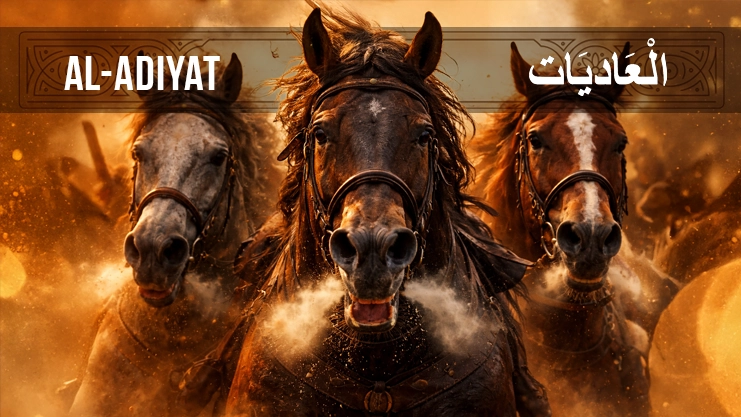
The image is immediate and intense. One can almost hear the heavy breathing of the horses, their nostrils flared, their chests rising and falling as they charge forward. The Arabic word ḍabḥan conveys more than ordinary breath; it suggests a deep, labored exhalation that emerges when a body has surpassed its comfort and entered the realm of exertion beyond limit. This is not casual movement. It is total output.
The horse knows the danger ahead. It senses the tension of war, the clash of steel, the uncertainty of survival. Yet it does not hesitate. Why? Because it carries a rider, a master whose command it obeys without question. The animal’s loyalty is complete. It does not calculate risk in philosophical terms. It responds with action.
The next verse intensifies the momentum:
فَالْمُورِيَاتِ قَدْحًا
Then those that strike sparks (with their hooves). (Qur’an 100:2)
 Here the Qur’an draws attention to the sparks produced as hooves strike stone. It is a vivid physical detail. The friction between iron-shod hoof and rock produces flashes of fire. Speed converts into heat; motion becomes ignition. The scene is not exaggerated poetry but a realistic depiction of kinetic force transformed through contact and resistance. The horses are not merely moving—they are generating energy that alters their surroundings.
Then comes the strategic moment:
فَالْمُغِيرَاتِ صُبْحًا
Then those that launch a raid at dawn. (Qur’an 100:3)
Dawn is significant. It is the threshold between darkness and light. After traveling through the night, when bodies crave rest and minds seek relief, the assault is launched. This is discipline beyond comfort. The horse does not argue with timing. It does not demand delay. It obeys.
The surah continues:
فَأَثَرْنَ بِهِ نَقْعًا
And they raise thereby clouds of dust. (Qur’an 100:4)
The rising dust clouds disorient the enemy. Visibility decreases; confusion spreads. In modern terminology, this is psychological strategy—creating uncertainty and panic. Loyalty in motion changes the environment itself. The atmosphere shifts because of commitment.
Then comes the most dangerous moment:
فَوَسَطْنَ بِهِ جَمْعًا
And penetrate into the midst of the enemy. (Qur’an 100:5)
The horses plunge into the heart of the opposing force. There is no safe perimeter. No comfortable distance. They enter the center of danger. Retreat is uncertain. Risk is total.
Up to this point, the imagery has focused on animals in battle. Yet the Qur’an is not glorifying violence for its own sake. It is using the example of disciplined loyalty to make a moral comparison. The shift is sudden and powerful:
إِنَّ الْإِنسَانَ لِرَبِّهِ لَكَنُودٌ
Indeed, mankind is ungrateful to his Lord. (Qur’an 100:6)
After describing the unwavering loyalty of animals, the verse contrasts it with human ingratitude. The Arabic term kanūd signifies a person who focuses on hardship while ignoring blessings, who complains about scarcity while living amid abundance. It is a diagnosis of the human psyche. One setback overshadows a thousand gifts. One loss erases memory of countless gains.
The next verse deepens the moral indictment:
وَإِنَّهُ عَلَىٰ ذَٰلِكَ لَشَهِيدٌ
And indeed, he is himself a witness to that. (Qur’an 100:7)
The human being cannot plead ignorance. Conscience testifies. The heart knows its own tendencies. Self-awareness exists, even if self-correction does not follow. There is an internal courtroom long before the final one.
Then the root of the problem is identified:
وَإِنَّهُ لِحُبِّ الْخَيْرِ لَشَدِيدٌ
And indeed, he is intense in his love of wealth. (Qur’an 100:8)
Here, khayr refers to material wealth. The surah exposes the central distraction of humanity: attachment to possession. The same intensity that could be directed toward moral excellence is often redirected toward accumulation. The human also “pants,” but frequently for profit rather than principle.
The surah then moves to its final scene:
أَفَلَا يَعْلَمُ إِذَا بُعْثِرَ مَا فِي الْقُبُورِ
وَحُصِّلَ مَا فِي الصُّدُورِ
Does he not know that when what is in the graves is scattered, and what is in the hearts is brought forth? (Qur’an 100:9–10)
This is resurrection paired with revelation. Bodies emerge from graves. Secrets emerge from hearts. It is not only physical revival; it is moral exposure. Intentions long hidden are made visible. Motivations concealed beneath actions are uncovered. Why was charity given? Why was silence maintained? Why was anger unleashed? Nothing is erased. Everything is retrieved.
The surah concludes:
إِنَّ رَبَّهُم بِهِمْ يَوْمَئِذٍ لَّخَبِيرٌ
Indeed, their Lord, on that Day, is fully aware of them. (Qur’an 100:11)
The name Al-Khabeer signifies One who possesses complete and intimate knowledge. Not only actions but intentions are known. Not merely outward forms but inward realities are examined.
Thus, Surah Al-‘Adiyat (Qur’an 100) becomes more than a description of war horses. It becomes a mirror for the human soul. The unwavering loyalty of animals becomes a benchmark against which human inconsistency is measured.
The lesson extends beyond the battlefield. It speaks to daily life. If a horse can risk its existence for a temporary master, how should a human respond to the Creator who grants life itself? If an animal can show steadfast obedience without awareness of metaphysical reward, how much more should a conscious being act with gratitude and purpose?
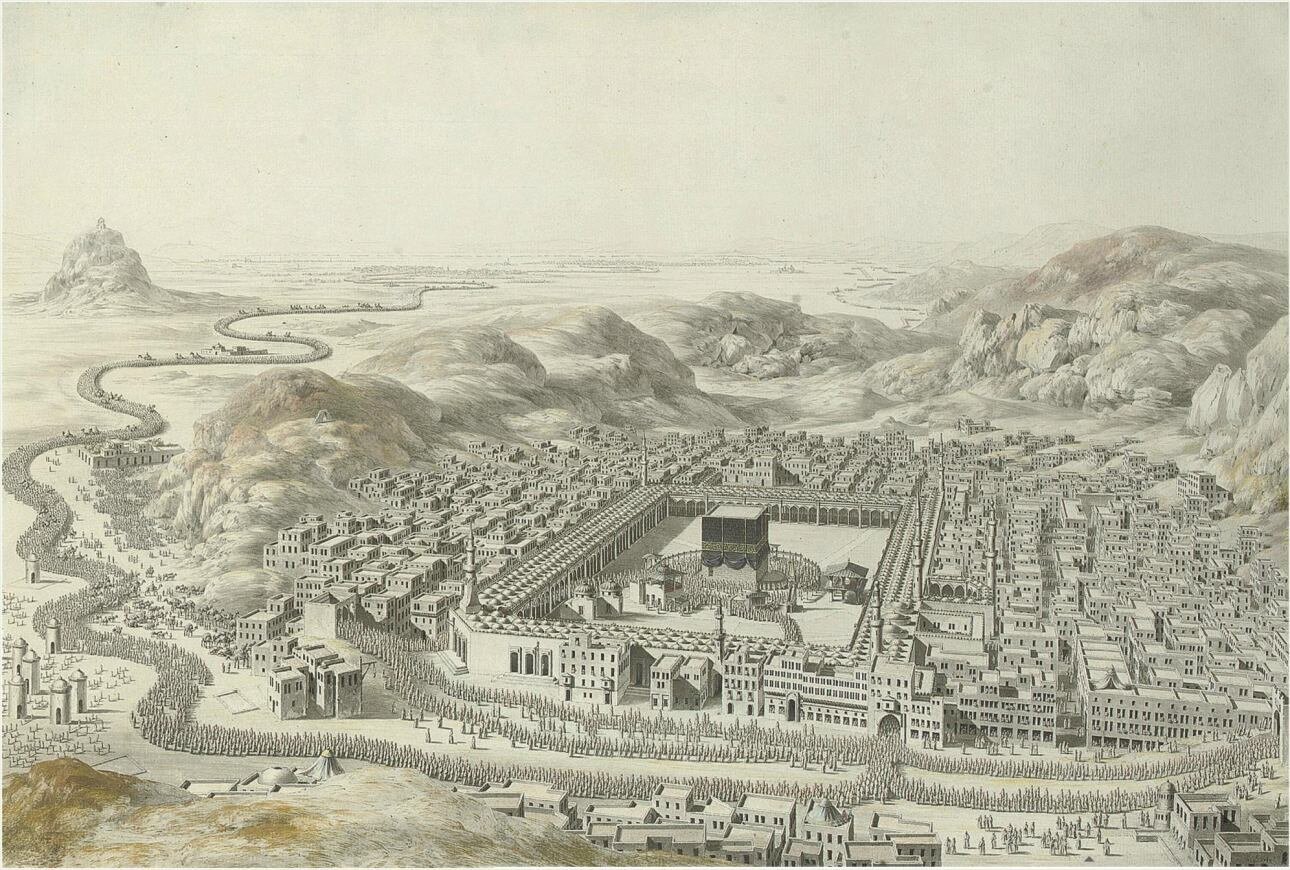
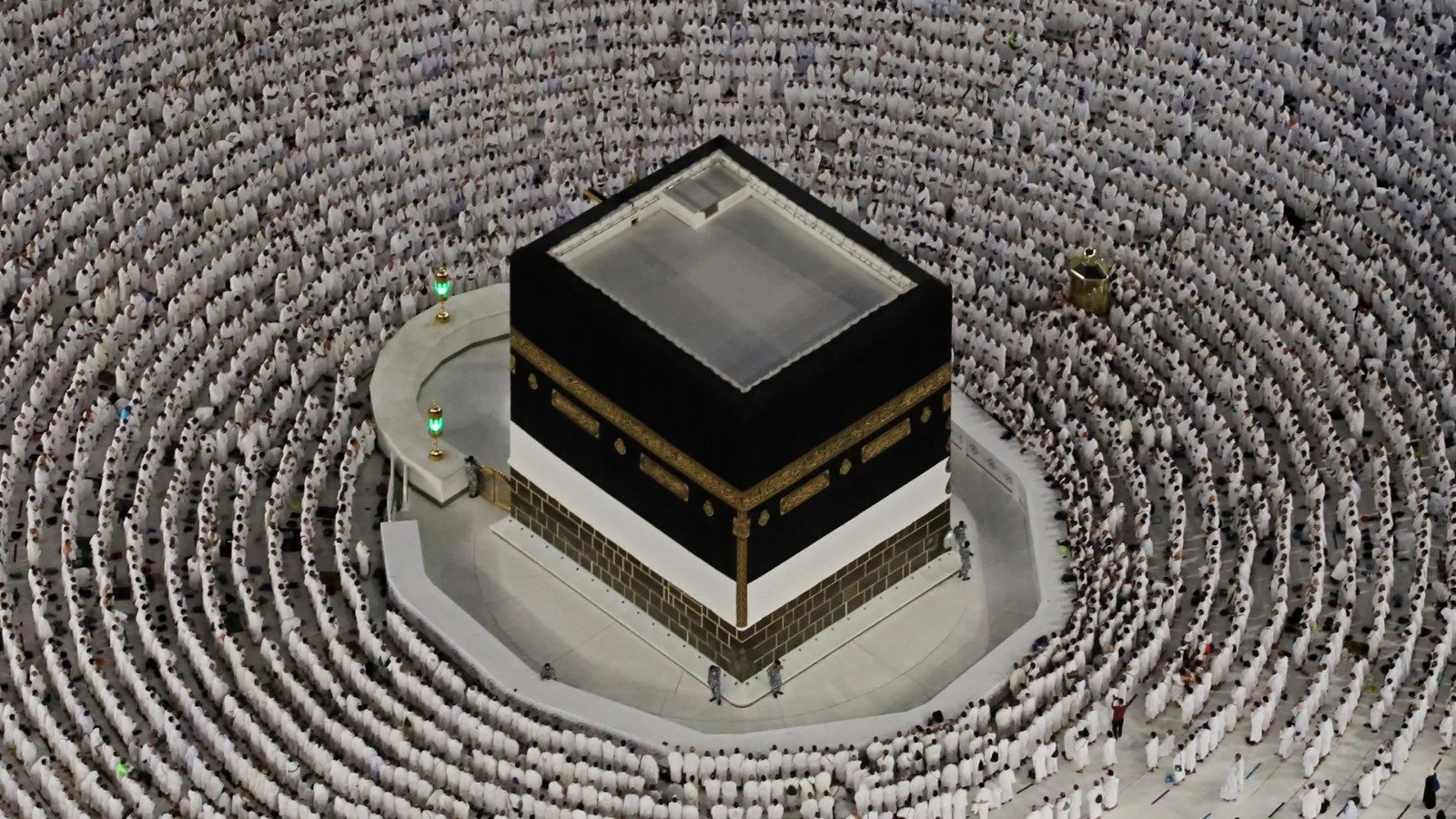 Islam’s broader ethical framework reinforces this message. The five daily prayers discipline time. Fasting disciplines desire. Zakat disciplines wealth. Pilgrimage disciplines ego and unites diverse peoples in a shared ritual of humility. Internal Jihad disciplines the self, confronting arrogance, envy, greed, and prejudice. External struggle, when justified, is bounded by ethical limits: protection of innocents, defense against aggression, and restoration of justice. All these practices aim to produce a human being who aligns inner intention with outer action.
The surah ultimately asks: For whom are we running? Every human life is a race. Energy is expended. Breath is spent. Time is consumed. The crucial question is direction. If the race is toward wealth alone, dissatisfaction will persist, for accumulation has no natural endpoint. If the race is toward moral excellence and divine pleasure, meaning replaces anxiety.
The horses in Surah Al-‘Adiyat run with total unity of body and purpose. Heart and muscle act together. There is no fragmentation. In the same way, Islam calls for integration—faith and action, belief and conduct, spirituality and justice. To bow in prayer while ignoring oppression is incomplete. To speak of peace while tolerating tyranny is inconsistent. To seek personal success while neglecting the vulnerable contradicts the ethical core of the faith.
The surah’s final image—the exposure of hearts—reminds us that sincerity is central. One may appear brave yet act for pride. One may give charity yet seek praise. One may struggle outwardly yet neglect the inner battle against ego. The true measure is alignment between intention and action.
In this way, Surah Al-‘Adiyat encapsulates a profound moral philosophy within eleven verses. It begins with galloping hooves and ends with divine knowledge. It contrasts animal loyalty with human ingratitude. It moves from battlefield dust to the unveiling of hidden motives. It challenges the reader to reflect on commitment, gratitude, and purpose.
Islam, as a complete code of life, seeks to transform the human being into a balanced moral agent—courageous yet compassionate, disciplined yet merciful, devoted yet socially responsible. The ultimate goal is not conflict but peace; not domination but justice; not fear but faithfulness.
And so the surah leaves us with a penetrating reflection: We are all running. Breath is leaving our chests with every passing moment. The question is not whether we are striving; it is toward what end. If our striving is guided by gratitude, justice, and sincere devotion, it elevates us. If it is driven solely by accumulation and ego, it diminishes us.
On the Day when graves open and hearts are revealed, the measure will not be speed alone but sincerity of direction. The example of the horse becomes symbolic: unite heart and body, remain steadfast in purpose, and dedicate your strength to a cause greater than self-interest. In doing so, one fulfills the ethical vision that Islam sets before humanity—a vision of loyalty to truth, resistance to tyranny, compassion for creation, and accountability before the One who knows all that lies within.
⸻
Citation Note:
This reflection has been inspired and shaped by reading the beautiful Surah Al-‘Adiyat in the Holy Qur’an, its translation, and the thoughtful reflection of a fellow Muslim.
⸻