By Jan Lopatka
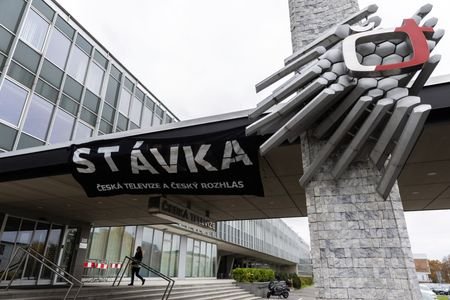
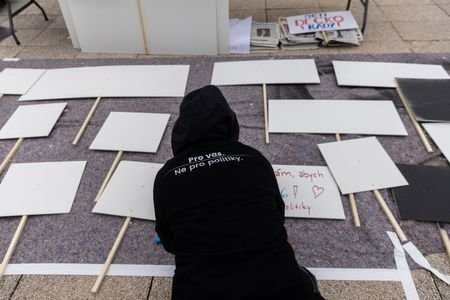
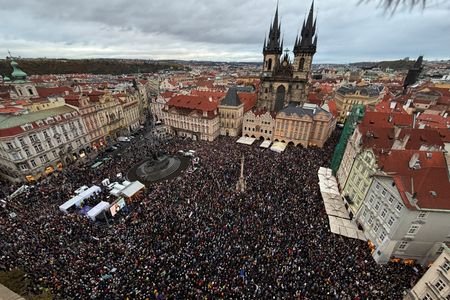
PRAGUE, Nov 3 (Reuters) - Thousands of protesters, including university students and artists, took to the streets in Prague and other cities on Tuesday as Czech public television and radio workers held a one-day strike against a government plan to cut financing and move funding to the state budget.
Workers and demonstrators called the plan an attempt to hurt the broadcasters' independence and viability, and they demanded that the government scrap the planned reform. The strike also led to broadcast curbs.
The strike escalates a fight over the future of the broadcasters that a 2025 Reuters Institute survey found were among the country's most followed and most trusted news sources. The government's bill passed a preliminary vote last month and now awaits further debate in parliament.
Czech Television's 24-hour news broadcast showed a darkened newsroom and moderators dressed in black reading, unusually, from a script.
The government of billionaire Prime Minister Andrej Babis, backed by the far-right Freedom and Direct Democracy (SPD) and eurosceptic Motorists parties, has frequently accused private and public media of bias. The coalition wants to cancel a 205-crown ($9.43) monthly household broadcasting fee — currently used for funding — in its overhaul.
Opposition parties have compared the proposed changes to reforms in Hungary under former Prime Minister Viktor Orban, a Babis ally who built an array of pro-government media during his 16 years in office.
"This proposal, if passed, will give the government coalition tools to politically influence the content of both public media," Czech TV reporter Jan Molacek, a member of the strike committee, said.
The government parties introduced the bill unexpectedly on a Friday last month, curbing debate and forcing a preliminary vote before dawn on the Saturday.
On Tuesday, media workers and supporters marched from the Czech Television headquarters to Prague's Wenceslas Square, where thousands gathered to back their demands.
"I want the media to continue to be free," said student Alena Jechova, 23.
CHANGES POSSIBLE IN FURTHER DEBATE
Critics say the funding shift to the budget would remove the relationship between the media and paying viewers, and funding decisions would become open to political pressure.
A 15% financing cut proposed as part of the change would reduce public television's nominal budget to the level of 2008 and radio's to that of 2005. The media have called such cuts unbearable.
Babis reiterated on Monday that the government was merely meeting a promise to lighten the financial burden on the public.
"There is no fight over democracy. Nobody wants to take over the public media or bring them under state control," he said, adding that changes to the bill could be made in further debate.
Molacek said a funding change was not impossible but needed to be based on a thorough debate and backed by legal safeguards against meddling.
($1 = 21.7320 Czech crowns)
(Reporting by Jan Lopatka; Editing by Xevi Fontdegloria and Hugh Lawson)