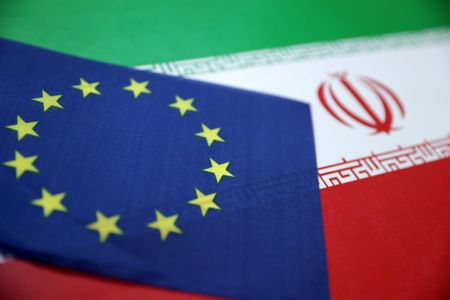
NICOSIA, April 24 (Reuters) - German Chancellor Friedrich Merz suggested on Friday that the European Union could ease sanctions on Tehran as part of a comprehensive deal that would end the Iran war, but other EU leaders struck a more cautious note.
The 27-nation EU has imposed sanctions on Iran for years, including travel bans and asset freezes for senior officials and entities, in response to human rights violations, nuclear activities and military support for Russia.
U.S. officials have suggested a comprehensive deal covering Iran's nuclear and missile programmes and the re-opening of the Strait of Hormuz could bring a lasting end to the U.S.-Israeli war with Tehran, beyond the current ceasefire.
After an EU summit in Cyprus, Merz said the bloc could gradually ease sanctions on Iran in the event that a comprehensive agreement was reached.
European leaders have been largely sidelined in the current Middle East conflict but some European officials see the bloc's sanctions as a possible way for the EU to be involved in a diplomatic solution.
"The easing of sanctions can be part of a process," Merz told reporters after the Nicosia summit.
"No one has objected to that," he said of the summit deliberations. "It is, so to speak, part of the contribution we can make to advance this process and, hopefully, lead to a permanent ceasefire."
But European Council President Antonio Costa, the chair of the summit, told a press conference after the end of the meeting: "It is too early to talk about relieving any kind of sanctions."
European Commission President Ursula von der Leyen said sanctions relief could only come after clear evidence of fundamental changes of course from Iran.
"We believe that sanctions relief should be conditional on verification of de-escalation, particularly on progress on the international effort to contain its nuclear threat, and on a change to the repression of its own people," she told the same press conference.
(Reporting by Bart Meijer, Andreas Rinke, Andrew Gray, Michele Kambas and Julia Payne; writing by Ingrid Melander and Andrew Gray; Editing by Hugh Lawson)