By Corina Pons, Tom Little and David Latona
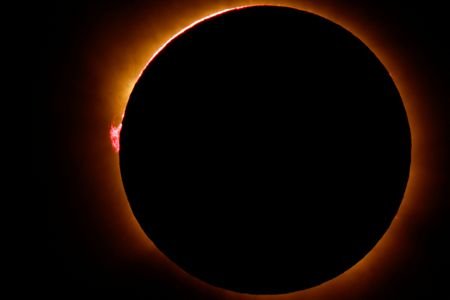
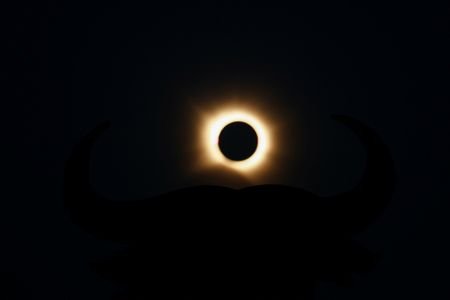
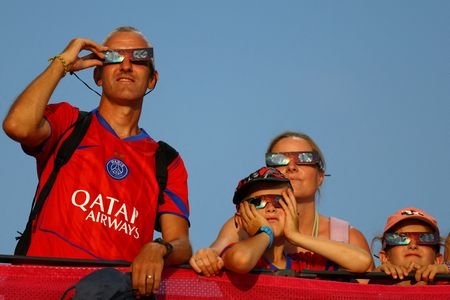
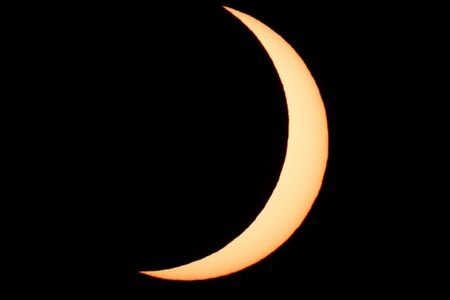
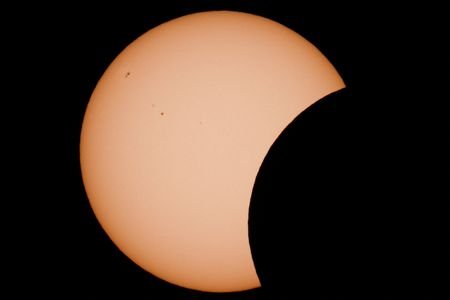
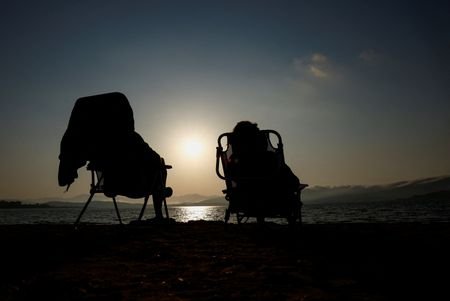
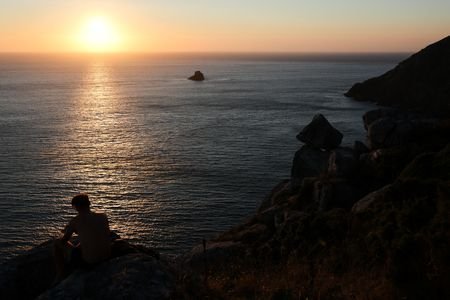
MADRID/REYKJAVIK, Aug 12 (Reuters) - Spectators across Spain watched in wonder, some whipping off their protective glasses and rising to their feet in unison, as a rare total solar eclipse swept across the north of the country on Wednesday evening, plunging it into darkness.
Spain deployed a massive police contingent and set up special viewing spots across rural areas that offered the best views of the spectacle.
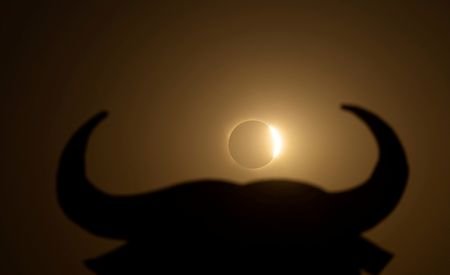
Viewers in Buitrago de Lozoya, a rural district north of Madrid, clapped and cheered as the sky dimmed and Baily's beads - bright points of sunlight that shine around the edge of the moon during a total eclipse - glistened on the horizon just after 8:30 p.m. (1830 GMT), lasting barely a minute.
"It's impressive how the colours return little by little after totality - first the reds, then the blues - just like at dawn and sunset, totally deceiving your brain," said economist Diego Fernandez, 32.
Rafael Jiménez, 50, a resident of Madrid, said the event felt like science fiction. "It was an absurd scene; we even got soaked when the garden sprinklers kicked in," he said. "And then, just like that, we were watching the sunset again."
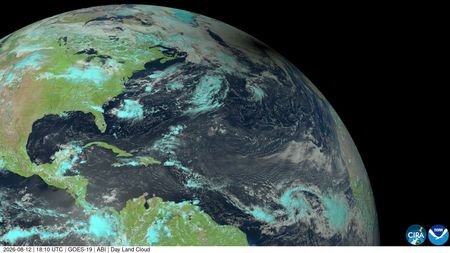
Spain's turn with the eclipse followed shortly after a less remarkable spectacle over much of overcast Iceland, although a break in the clouds in the far west of the Nordic country allowed holidaymakers and locals a glimpse of the celestial phenomenon. The eclipse was hidden behind clouds in central Reykjavik although the darkness of the totality was still evident.
"It was like a whole day just came at once and I felt goosebumps because it just made us think about ... the shortness of life, how time can be different and it depends on your perspective," lawyer Eduarda Ortiz, 33, told Reuters in the Icelandic capital.
Millions of people gathered in Iceland and northern Spain to witness Western Europe's first total solar eclipse in 27 years.
Brian May, former guitarist for the rock band Queen, was among them. He travelled to an observatory in Spain's Teruel province and chronicled the experience on his Instagram page.
"Here we go, the sun is disappearing. It’s amazing," he said as the eclipse reached its climax and bystanders burst into cheers and applause after a countdown.
In Spain, authorities were expecting up to 6 million visitors in mostly rural areas under the eclipse's path across the north of Spain and the Balearic Islands.
POLICE, PLANES AND HELICOPTERS ON STANDBY
The Iberian Peninsula last witnessed a total solar eclipse in 1912, but another is due on August 2, 2027, and an annular eclipse will follow in January 2028, completing the so-called "Iberian Eclipse Trio".
The uncanny sensation when day briefly turns to twilight and some animals fall quiet, while the moon passes directly between Earth and the sun, has often been seen through history as an omen of cosmic struggle or a sign of divine power.
For Spain, the event has been a chance to showcase its less-travelled regions and draw tourists from its overcrowded beach resorts. Some seized the opportunity to get married, according to local press reports.
The eclipse took place in one of the country's highest-risk periods for wildfires, with emergency crews fighting various fires on Wednesday, including a large one in the southern Andalucia region.
Authorities rolled out a large-scale police operation and public safety campaign to make sure the crowds did not set off wildfires.
A small fire erupted near an eclipse viewing point in the town of Peñíscola, in the Valencia region, local authorities said. The fire began in a vehicle and spread to 33 more before firefighters brought it under control, they said. Emergency crews, including aircraft, were dispatched to the area.
The authorities dispatched 25,000 police officers to guarantee security around the eclipse observation sites and deployed nearly 100 planes and helicopters.
As of late Wednesday, no wildfire incident tied to eclipse chasers was reported.
ECLIPSE FEVER IN THE LAND OF SAGAS
In Reykjavik, glasses that allow spectators to view the phenomenon without damaging their eyes have been sold out for days, as the country of roughly 400,000 people welcomed up to 80,000 visitors.
Totality reached Iceland's westernmost coast at about 5:44 p.m. (1744 GMT), casting the far west of the island nation into total darkness for up to 2 minutes and 13 seconds.
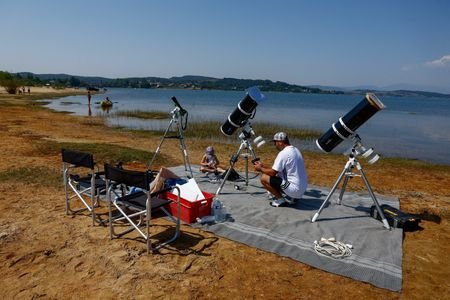
The event has drawn both casual observers and "eclipse chasers", enthusiasts who crisscross the globe to be in the path of totality whenever and wherever an eclipse occurs.
In Spain, 43-year old Gema, who did not give her last name, said as she left the Buitrago de Lozoya viewing point: "Everybody tells you about it, but it is more beautiful than you imagine."
(Reporting by Corina Pons, David Latona, Joan Faus, Andrei Khalip, Leonardo Benassatto, Guillermo Martinez and Pietrop Lombardi in Spain; Tom Little and Matteo Negri in Rome, Jagoda Darlak in Gdansk and Stine Jacobsen in Denmark; Writing by David Latona and Niklas Pollard; Editing by Andrei Khalip, Nick Zieminski, Philippa Fletcher, Emelia Sithole-Matarise, Rod Nickel, Edmund Klamann and Deepa Babington)