By Jana Choukeir and Eman Abouhassira
TAIZ, Yemen/DUBAI, Sept 14 (Reuters) - U.S. President Donald Trump said on Monday that Iran wanted to reach a deal with Washington, signalling a possible diplomatic opening as fighting across the Middle East widened and threatened global oil supplies.
"The failing Nation of Iran wants to make a deal, quickly and badly. I will determine whether or not the U.S.A. will choose to engage - The concept of which we are open to," Trump wrote on Truth Social.
He made his comments came after Gulf Arab states postponed a planned meeting with Iran and Yemen's Iran-aligned Houthis launched a fresh attack on Saudi Arabia, highlighting fears the conflict could spread further across the region.
The Houthis said they fired dozens of missiles and drones at a military airbase in Khamis Mushait in southern Saudi Arabia, targeting aircraft hangars, radar systems, runways and ammunition depots in retaliation for Saudi airstrikes in Yemen.
Saudi authorities issued emergency alerts there and in three other southern cities which have previously come under Houthi fire.
The Houthis have advanced rapidly in Yemen in recent days, capturing territory including Perim Island at the mouth of the Red Sea on Friday. A separate attack the same day, which Riyadh blamed on Iran-backed fighters in Iraq, knocked out Saudi Arabia's east-west pipeline, a key route that allows Gulf oil exports to bypass the blockaded Strait of Hormuz.
OIL PRICES JUMP
Crude oil prices rose more than 4% on Monday when the market reopened after the weekend's developments, before paring some gains during U.S. morning trade.
The politically sensitive average retail price of diesel in the United States hit a new all-time high above $6.23 a gallon.
Traders said a prolonged shutdown of the Saudi pipeline could cut off as much as 4% of global oil supply. Satellite imagery has shown fire damage along parts of the route, though Riyadh has not said when operations might resume.
Oman had been due to host a meeting on Monday with Iran and Gulf states to discuss negotiations aimed at reopening Hormuz, the world's most important oil shipping lane, largely closed since the U.S. and Israel attacked Iran at the end of February.
But Oman's Foreign Minister Sayyid Badr Albusaidi announced overnight that the meeting had been postponed. Iran said the postponement was at the request of Saudi Arabia.
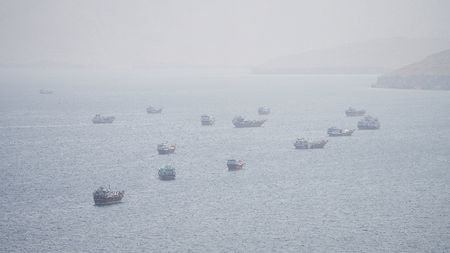
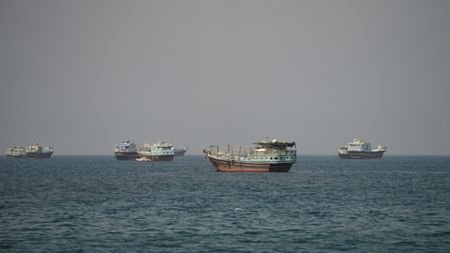
Iran meanwhile published a list of 77 ships it said had violated its operating protocols in Hormuz and warned they could face fines, detention or confiscation on future transits.
U.S. Energy Secretary Chris Wright said on Monday the average number of ships crossing the strait covertly with U.S. support was increasing. But independent monitors have suggested oil flows could have dropped off this month since fighting intensified again after a quiet August.
EXPANSION OF WAR TO YEMEN POSES DILEMMA FOR TRUMP
The renewed Yemen conflict poses another challenge for Trump, who faces pressure from Gulf allies to help contain the Houthis but has sought to avoid opening a major new front in the regional war.
Saudi Arabia has led a coalition battling the Houthis since 2015, but the conflict had largely quietened under a ceasefire in recent years. Fighting has reignited this month, with the Houthis pushing back forces aligned with the internationally recognised government.
The International Organization for Migration estimates 82,000 Yemenis have fled fighting since the start of the month as the Houthis swept into cities, including the historic Red Sea port of Mocha last week.
Aisha Muhammad, an elderly woman burning twigs to heat a kettle in government-held territory near Taiz, told Reuters she had left behind two daughters and three sons who had been unable to escape.
"They can't even go out to the market to get food and drinking water. They are being blocked and shot at, so they are trapped inside their homes," she said. "They cannot reach us, and we cannot return to them. This is a trial from God."
Saudi state media reported that Crown Prince Mohammed bin Salman met U.S. regional commander Admiral Brad Cooper in Jeddah on Monday.
Three sources have told Reuters that Washington has so far resisted Saudi requests for direct military intervention beyond intelligence support. Trump said over the weekend he had spoken with the crown prince and that the Houthis had also contacted Washington urging it to stay out of the conflict.
The United States bombed Houthi targets for two months in 2025 before Trump halted the campaign after reaching a ceasefire with the group.
Trump, who attended a golf tournament at one of his resorts in Ireland, said over the weekend he expected the Iran war to end shortly after November's U.S. midterm elections, after which oil prices would "drop like a rock".
(Reporting by Reuters in Taiz, and Jana Choukeir, Eman Abouhassira, Elwelly Elwely, Nayera Abdallah in Dubai, Daphne Psaledakis in Washington; Writing by Peter Graff and Ros Russell; Editing by Alex Richardson)