By Bo Erickson and Parisa Hafezi
WASHINGTON/UNITED NATIONS, Sept 25 (Reuters) - US President Donald Trump and Chinese President Xi Jinping turned to the Middle East war at their summit on Friday, as Iran pressed Washington to accept a seven-day plan to reopen the Strait of Hormuz and halt regional fighting.
China is highly dependent on the flow of Middle Eastern oil, which has been disrupted by Iranian threats on tankers leaving the Strait of Hormuz and the advance of Iranian-allied Houthis along chokepoints in the Red Sea.
Xi urged the United States and Iran to return to the June framework agreement that led to a short-lived ceasefire and continue negotiations toward a broader settlement, according to China's state news agency Xinhua.
Trump, meanwhile, warned Xi against providing support to Iran and received assurances that China would not do so, the US ambassador to China said on Friday, the final day of Xi's three-day state visit.
The flurry of diplomacy underscored the global stakes of the seven-month-old conflict, which has disrupted oil flows through one of the world's most critical shipping lanes and drawn in regional and world powers.
Xi's visit coincided with the United Nations General Assembly, where Iran and the US engaged in diplomacy through Qatari mediators.
Iran welcomed Xi's push for a return to the June framework, but also placed renewed emphasis on its peace proposal, formally unveiled on Thursday.
"Iran has conveyed to the United States through Qatar a concrete seven-day plan. If the necessary conditions are met, the strait can be reopened, a normal maritime passage restored within seven days. The choice now rests with the United States," Iran's Foreign Minister Abbas Araqchi told reporters at the United Nations on Friday.
"The seven-day timeline will start as soon as the United States accepts this plan," he said.
Washington has yet to publicly respond to the Iranian offer, but a US official, speaking on condition of anonymity, said, "We are having positive and constructive discussions through the mediators, and we continue to discuss the nuclear issues."
If the US agrees, the warring parties could start wider talks "on mutually agreed subjects," Araqchi said. Tehran would reopen the Strait of Hormuz and hostilities would end on all fronts, including Lebanon. The plan in turn requires the United States to lift its blockade on Iranian ports, release Iran’s frozen funds, and waive its oil sanctions.
But separately, a senior Iranian official told Reuters that Iran will show no flexibility over its nuclear program even if the United States accepts its peace deal. Iran would grant no concessions over its rights, including enriching uranium or shipping its highly enriched uranium out of the country, the official said.
Trump has vowed Iran will never develop nuclear weapons.
RETURN TO DIPLOMACY?
The Iranian seven-day proposal comes after previous attempts at diplomacy have failed to end the war, which began on February 28 with US and Israeli strikes.
Since then the war has alternated between pauses and renewed strikes, killing thousands while degrading Iran's conventional forces and damaging Iran's already ailing economy.
Iran and its allies have retaliated by extending the conflict throughout the region. Iran has struck US allies in the Gulf with drones and missiles while its Houthi allies in Yemen have targeted Saudi interests. Iranian-aligned militias in Iraq were blamed for a pipeline attack that temporarily took more Saudi oil off the market. All the while, Iranian-backed Hezbollah has been engaged with Israeli forces in Lebanon.
WARNING TO CHINA
The US warning to China came amid reports that China had supplied Iran with shoulder-fired air-defense missile launchers and that Tehran had found ways to evade sanctions on its oil sales with Chinese help.
David Perdue, Trump's ambassador to Beijing, said in a CNBC interview that Trump reiterated to Xi that direct or indirect support for Iran was "totally unacceptable."
Asked separately on Fox News if that meant China would stop assisting Iran, Perdue said, "They assured us yesterday they're not doing that."
The war's widening toll was also visible on the Arabian Peninsula, where Saudi Arabia's allies moved to shore up the kingdom's defenses.
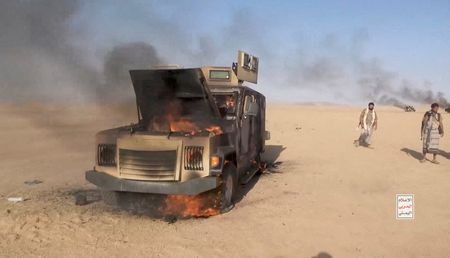
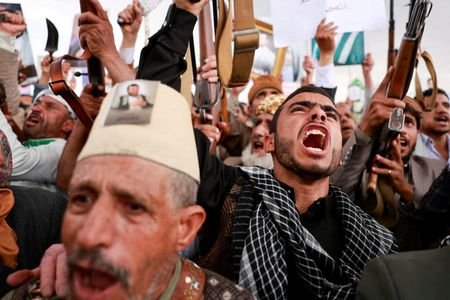
With the Saudi-backed, internationally recognized Yemeni government under assault from Iran-linked Houthi fighters, and Houthi missiles striking inside Saudi Arabia, allies of the kingdom have united to show support.
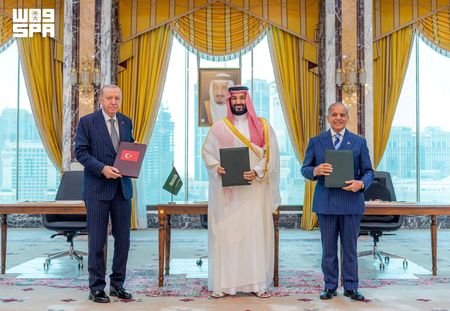
Defense officials of Turkey and Pakistan, both partners in a joint defense pact with Saudi Arabia, met in Riyadh on Friday to review the security situation and discuss intelligence cooperation, military coordination, and integrating forces, the Saudi defense ministry said in a statement.
The statement came a day after Saudi, Pakistani and Turkish foreign ministers met within the framework of the Mecca Joint Defense Agreement.
The violence in Yemen has prompted a new humanitarian crisis, the United Nations children's agency said on Friday, reporting a rise in acute malnutrition among children.
(Reporting by Bo Erickson in Washington and Parisa Hafezi at the United Nationas; Additional reporting Hatem Maher, Yasmine Ghania and Ahmed Tolba in Cairo, Timour Azhari in Riyadh, and Tuvan Gumrukcu in Ankara; Writing by Aidan Lewis, Ros Russell and Daniel Trotta; Editing by Gareth Jones, Alex Richardson, Andrew Heavens and Sanjeev Miglani)